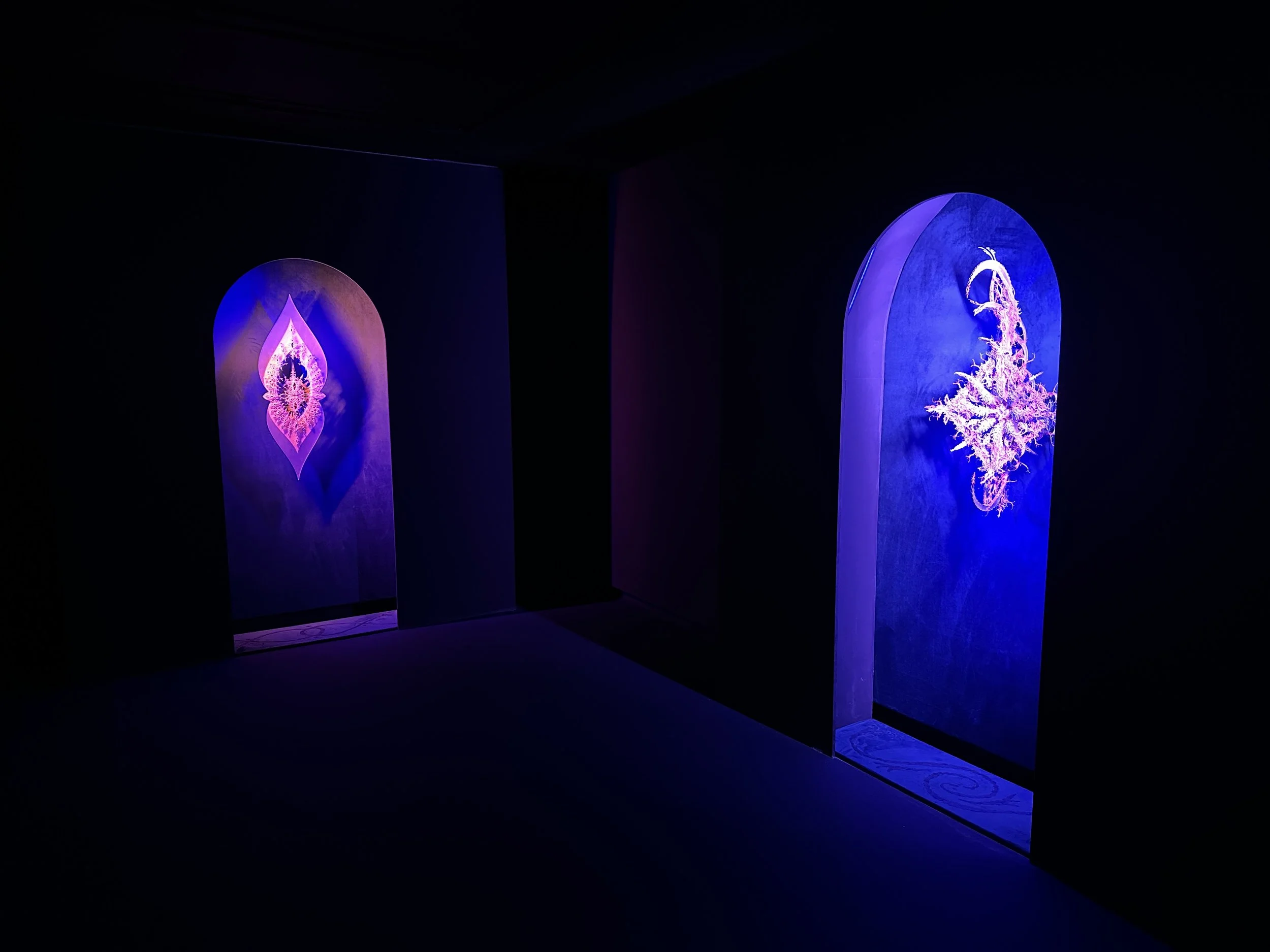
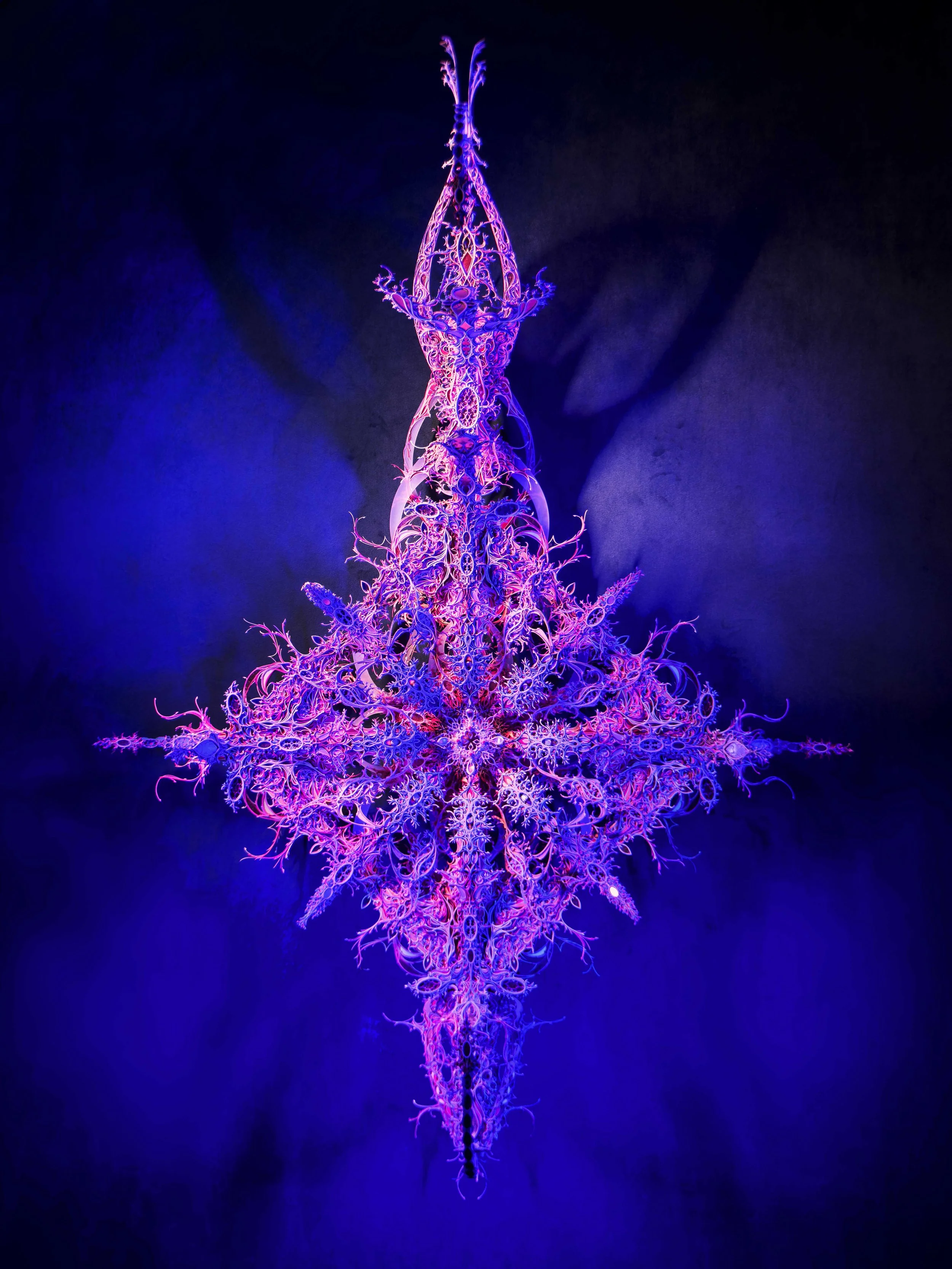
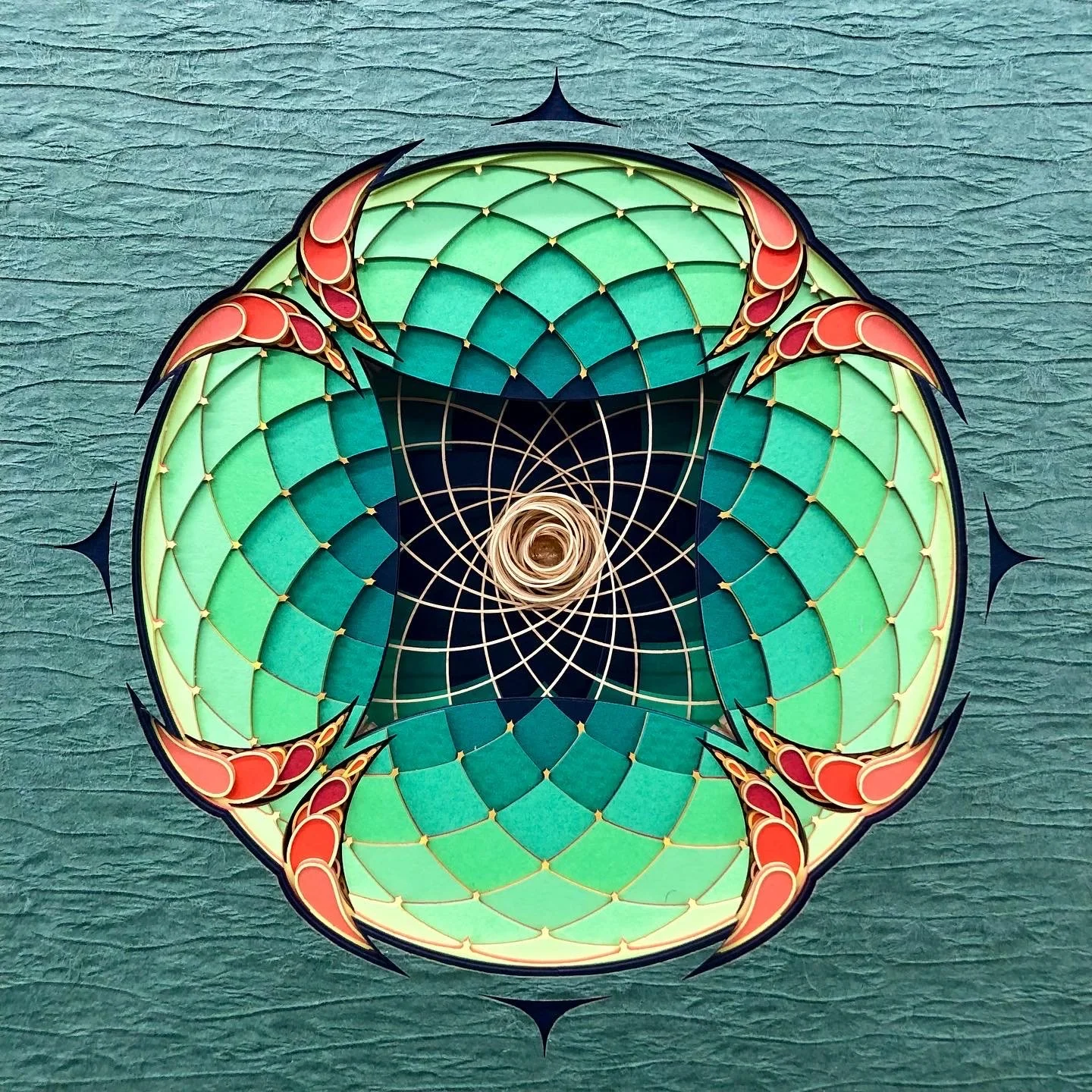
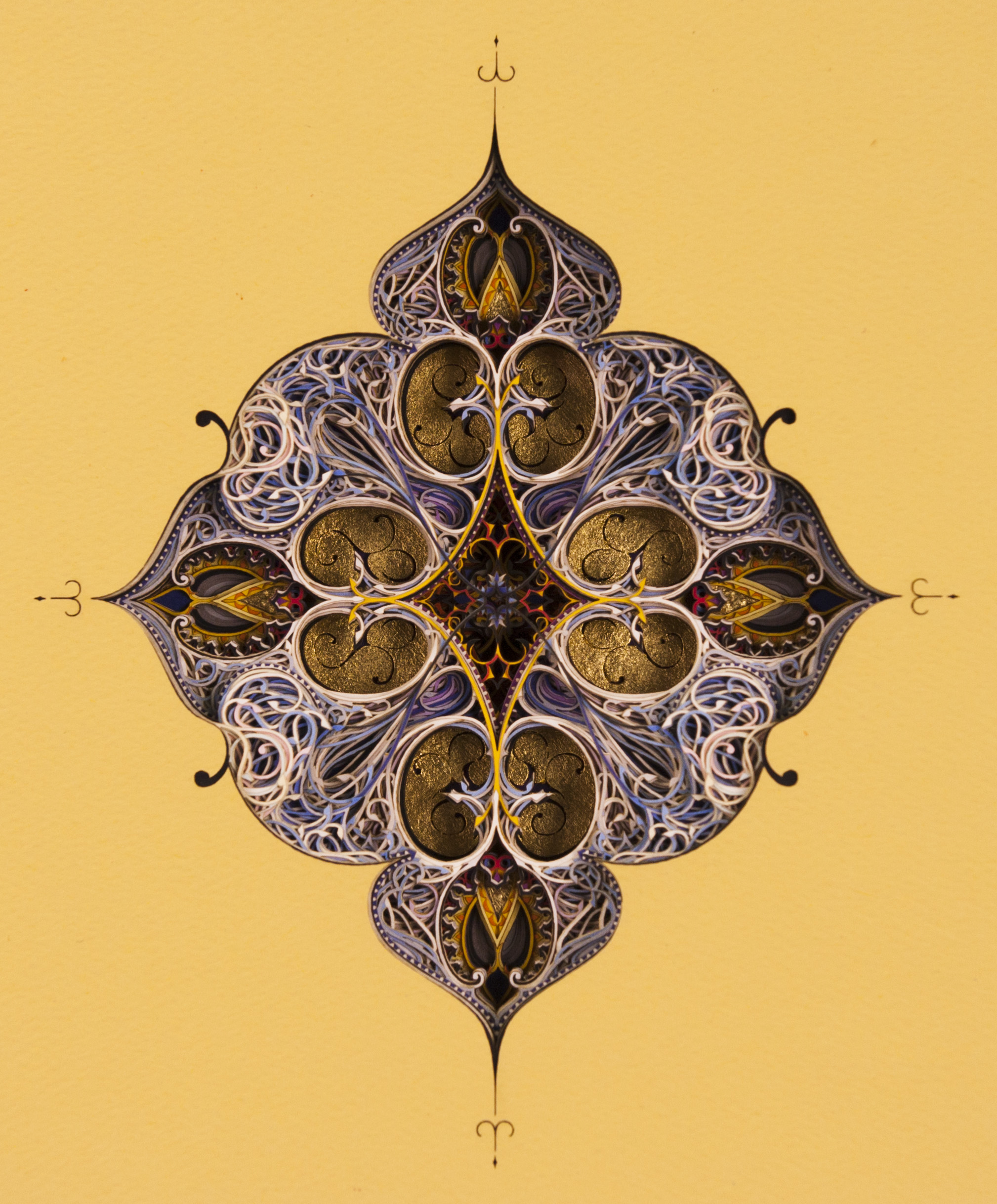
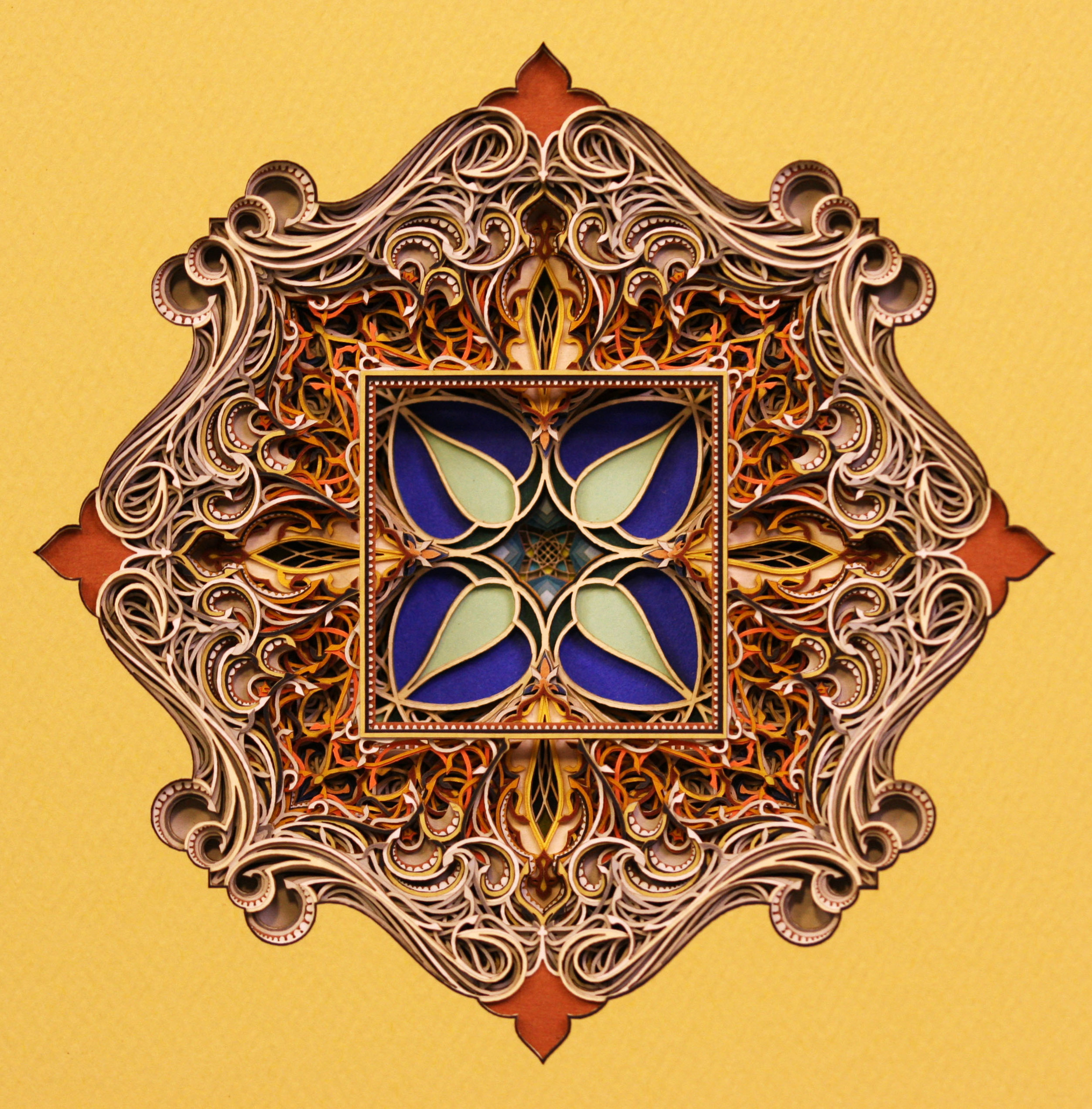
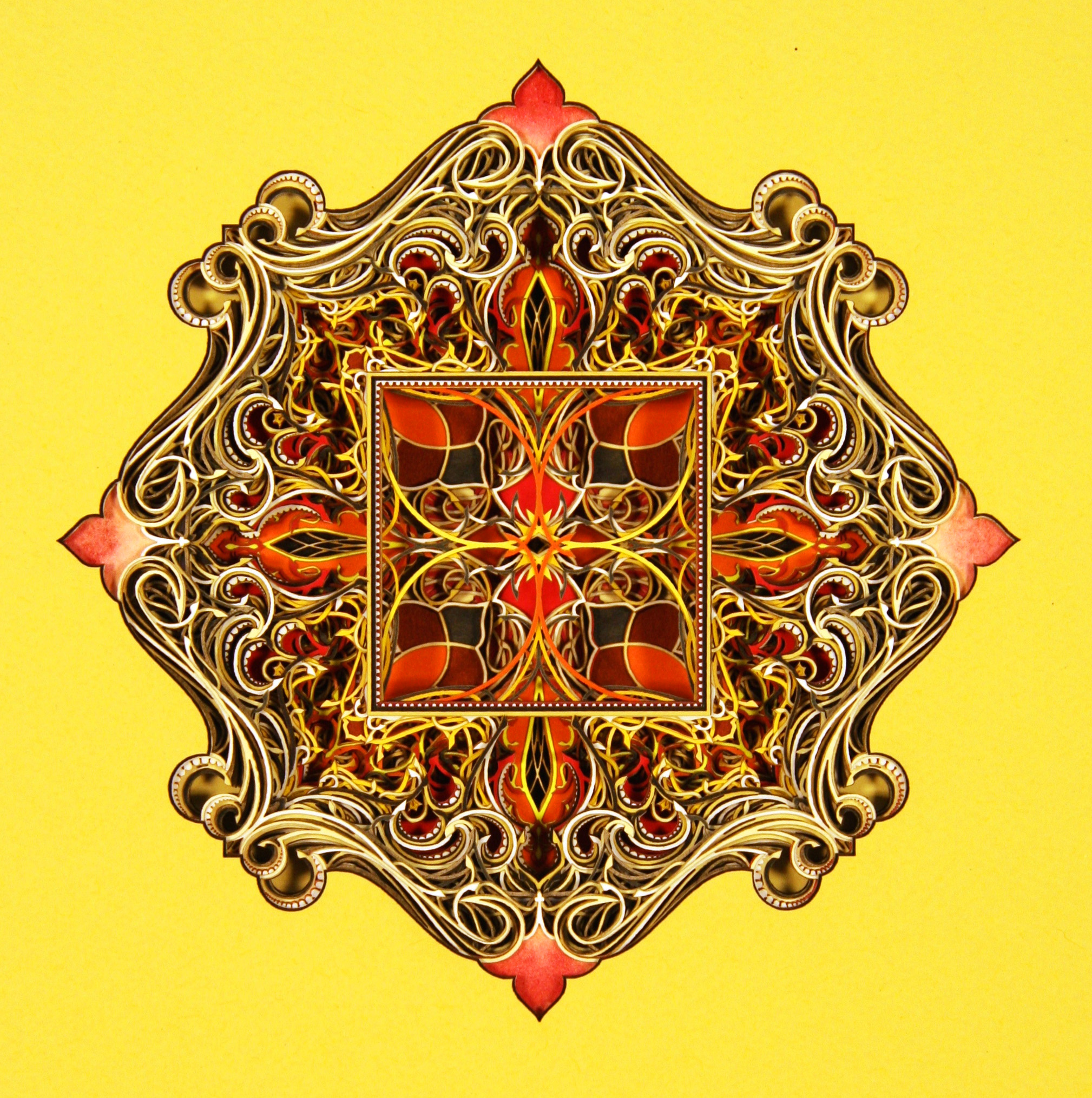
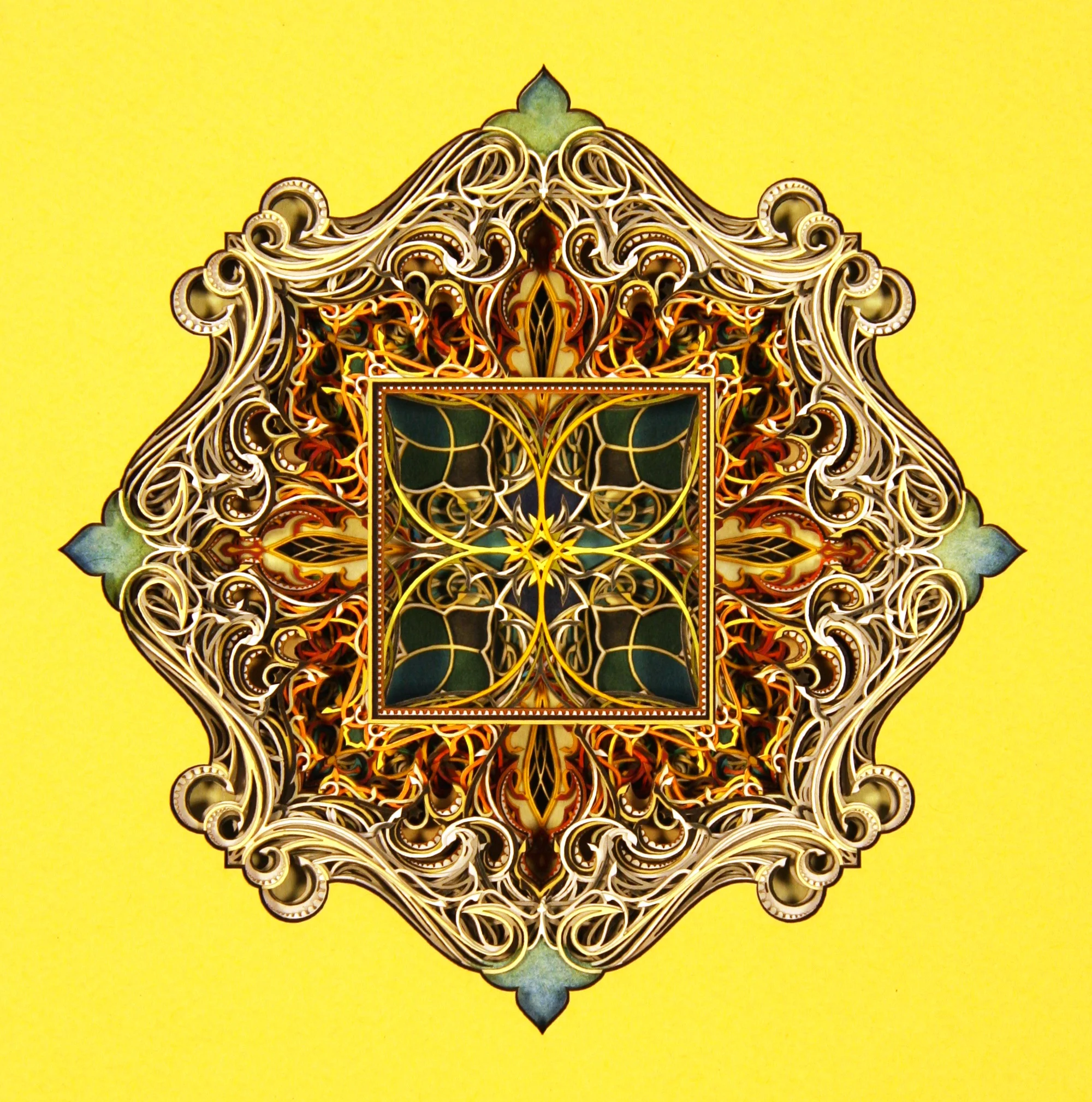
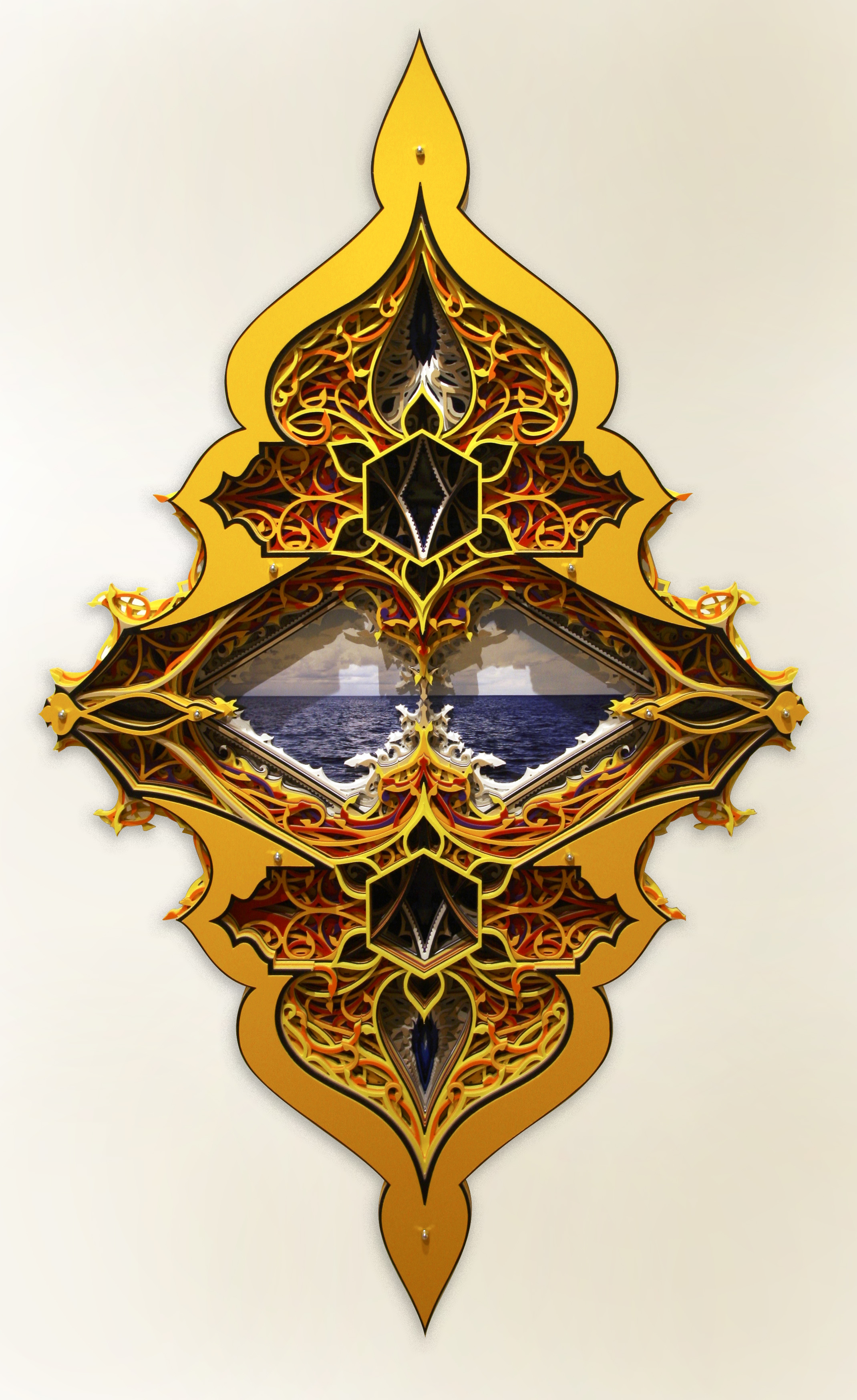
I witness the sublime whenever I am out in the Ipswich Bay of Massachusetts. As a child I would stare out at the horizon for hours while my dad was fishing. There is beauty in this place- the simple division of ocean and sky met with the complexity of space, a boat as a tiny point floating over land over one hundred feet below, miles of sky above, a mile back to land to the west and even more to east. But the real motivation for this artwork is a bigger story.
It was my Dad’s love and intelligence that gave me a life-defining gift at a specific time in my childhood, floating on a boat in this place. For those Ipswich water people, we were out about halfway to Jeffery’s Ledge at a spot where, back in the day you could anchor and always catch Cod. It was glassy calm at the time, sunny, and cool, and hypnotically quiet. I was eight I think. Looking out to the east, I had a concluding thought:
“Dad, the horizon is the straightest line there is, right?
My dad is literally a genius, and was a leading engineer working on steam turbines for ships at GE in Lynn. Growing up, he always had answers that were way more than confirmations, starting with a preemptive signal like well, actually, or almost- you see, and ..what’s really neat is..”. This meant if you were game, we were heading into an enthusiastic exchange of discovery that would conclude with some kind of historical or philosophical revelation.
“Well, if you measured the horizon for straightness with accurate instruments, you will find the curvature of the earth. If you keep on measuring something, nothing is perfect.”
This last part bothered me. With my 3 years of public school education that gave me nothing but perfect answers, I had an argument.
“What about the tools to measure with? If they can see what’s off about a line, then they must be perfect.” Yup – nailed it!
“Actually, in engineering we use tolerances where a fine degree of accuracy is needed, but in theory, you could measure something forever. Its like this for everything we make, like a car or a boat, but also for everything we see, like the sky, the water, the stars… nothing is actually perfect, it is exactly what it is at any give moment- and that can change depending on who is looking.”
After about a solid five minutes of silence while I processed this new and extremely disturbing thought at the time, I started crying and could not be consoled. I think he talked the whole way back toward land and up the Ipswich river, but I did not hear a thing. It was like the entire world was suddenly flung into doubt.
My Dad gave me the paradox of the infinite, and throughout my childhood I applied it to just about everything. It fit nicely with sports, music, and art, where my own actions could aim for accuracy, but was way more fun and interesting when something was done or created as if it never existed before, or would be impossible to duplicate. It did not match up well with many people, like being sarcastic at the wrong time, or rudely dropping out of useless arguments when it seemed like someone only saw things as right or wrong.
And then there was religion and my young Catholic faith. By about twelve or so when I was confirmed, the idea of God was replaced with the idea of infinity, and church, catechism, and the sacraments fell into place as tolerances. It took me a while to see the ethical and moral beauty faith can provide after digging into philosophy and art history in college. Kierkegaard and Campbell really helped me reconcile my faith as a personal and artistic endeavor, allowing me to understand my own ethical values as transient tolerances and ultimately idealistic paths, as in Ithica.
Ironically, this was one of the last representational paintings I made before fully embracing non-objectivity and aiming my studio processes toward novelty and discovery.
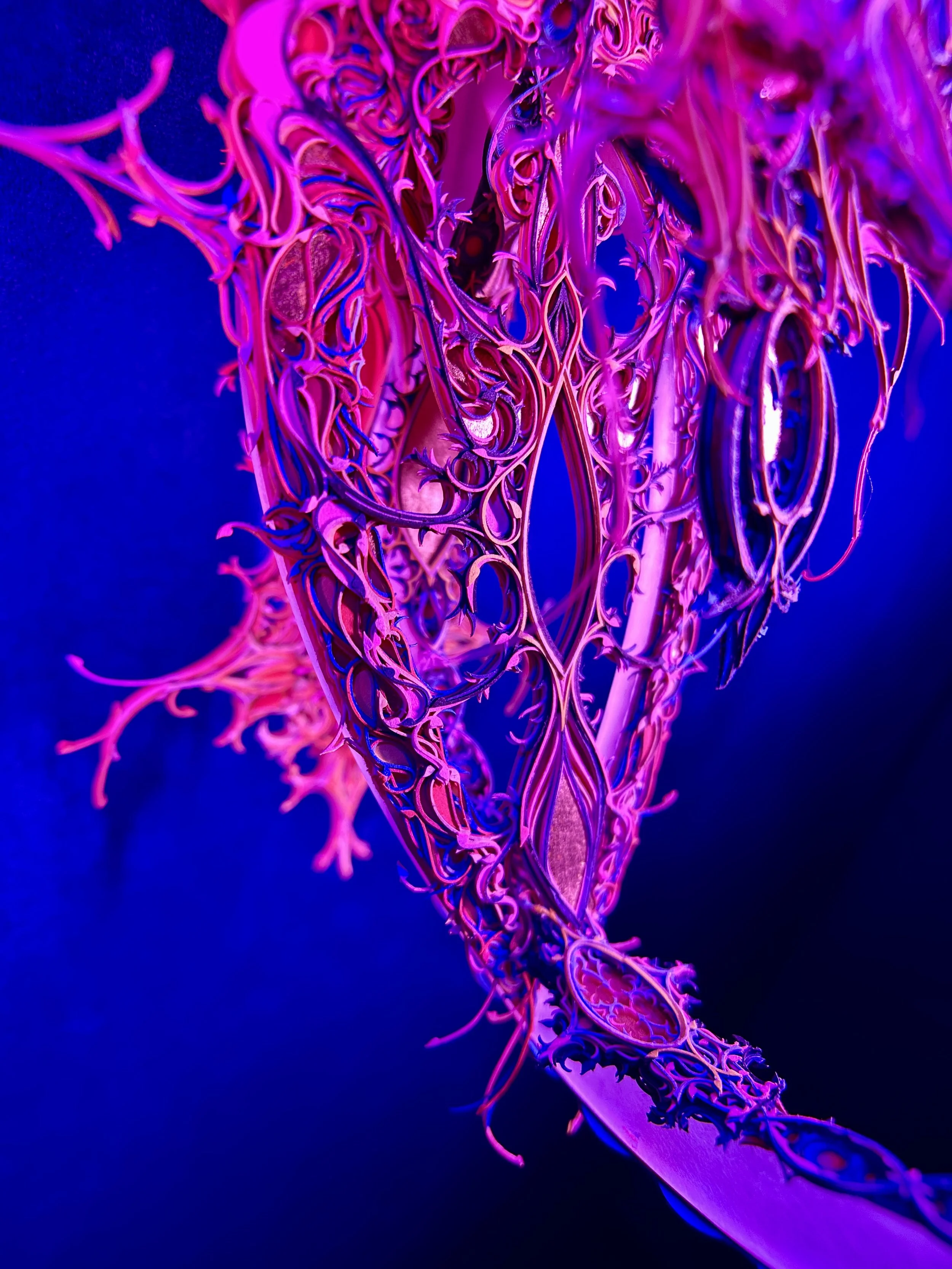
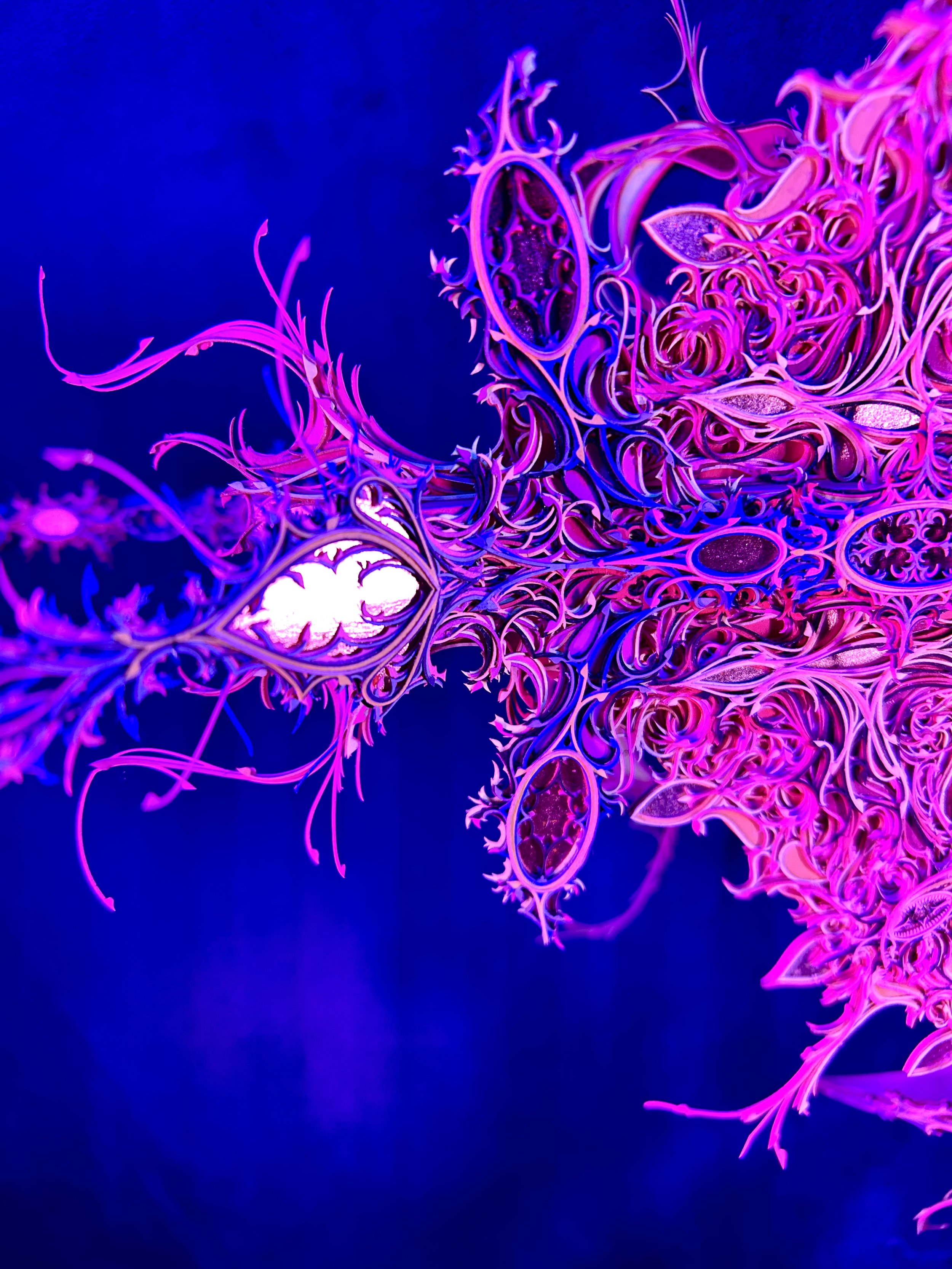
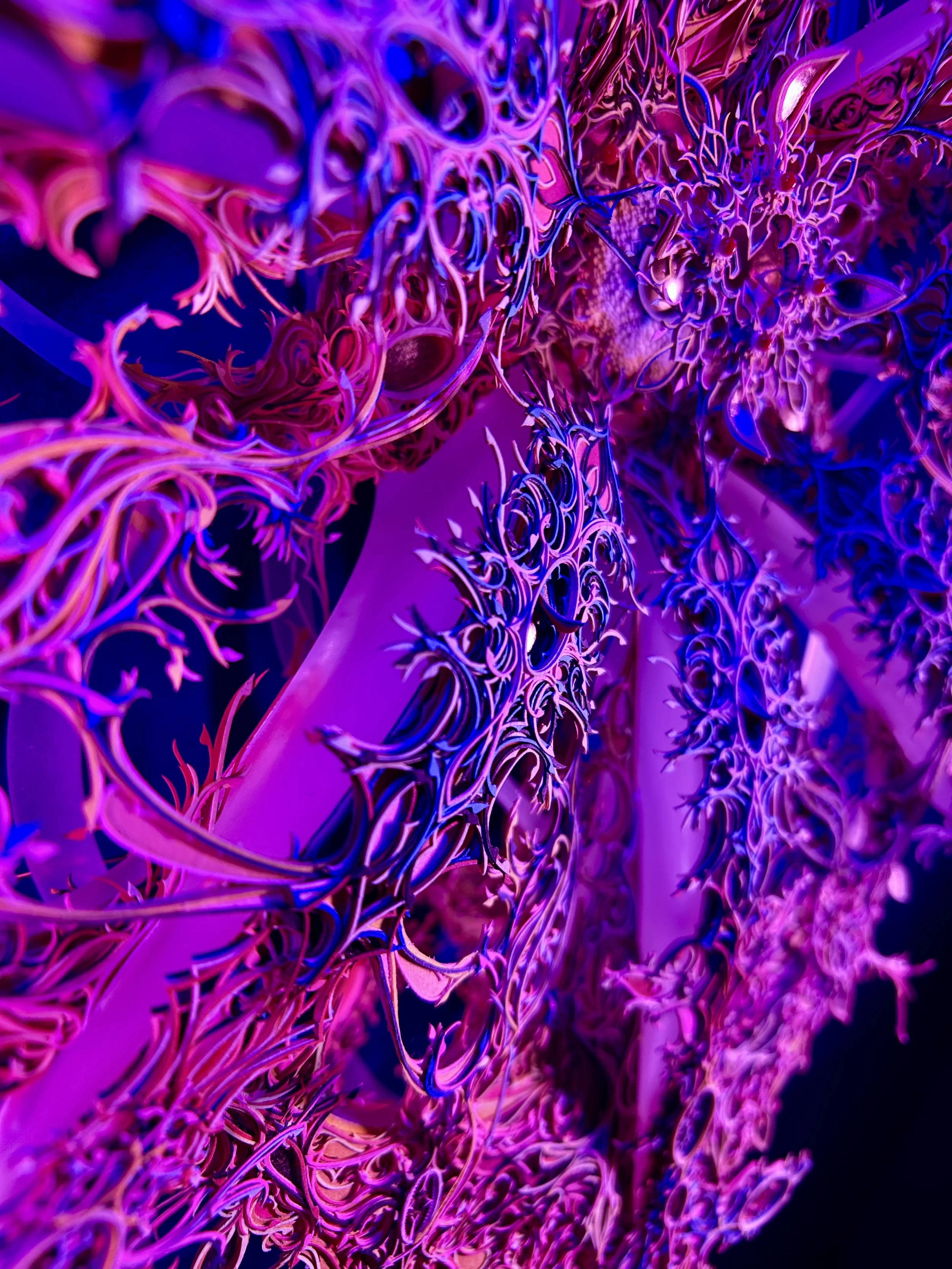
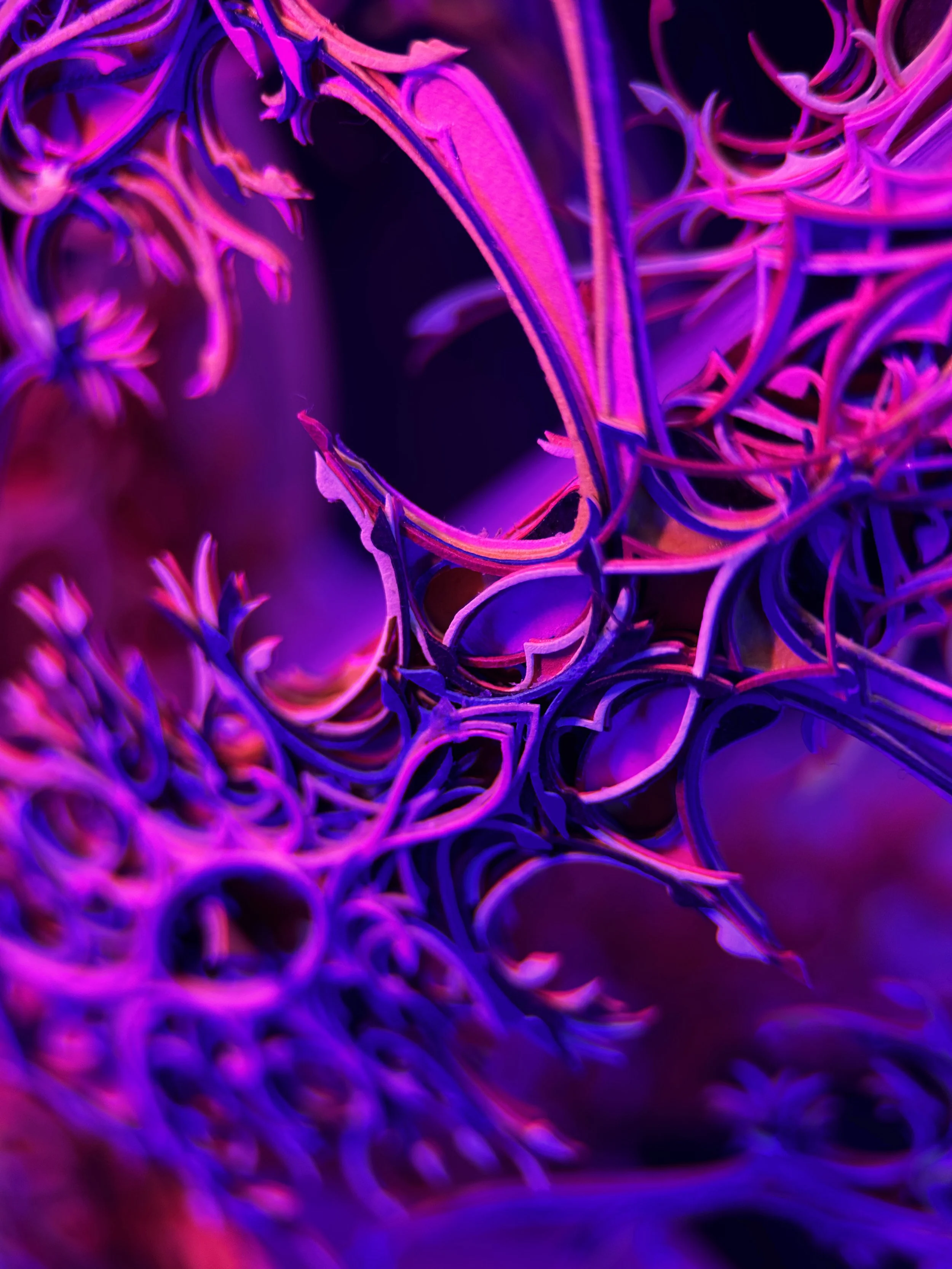
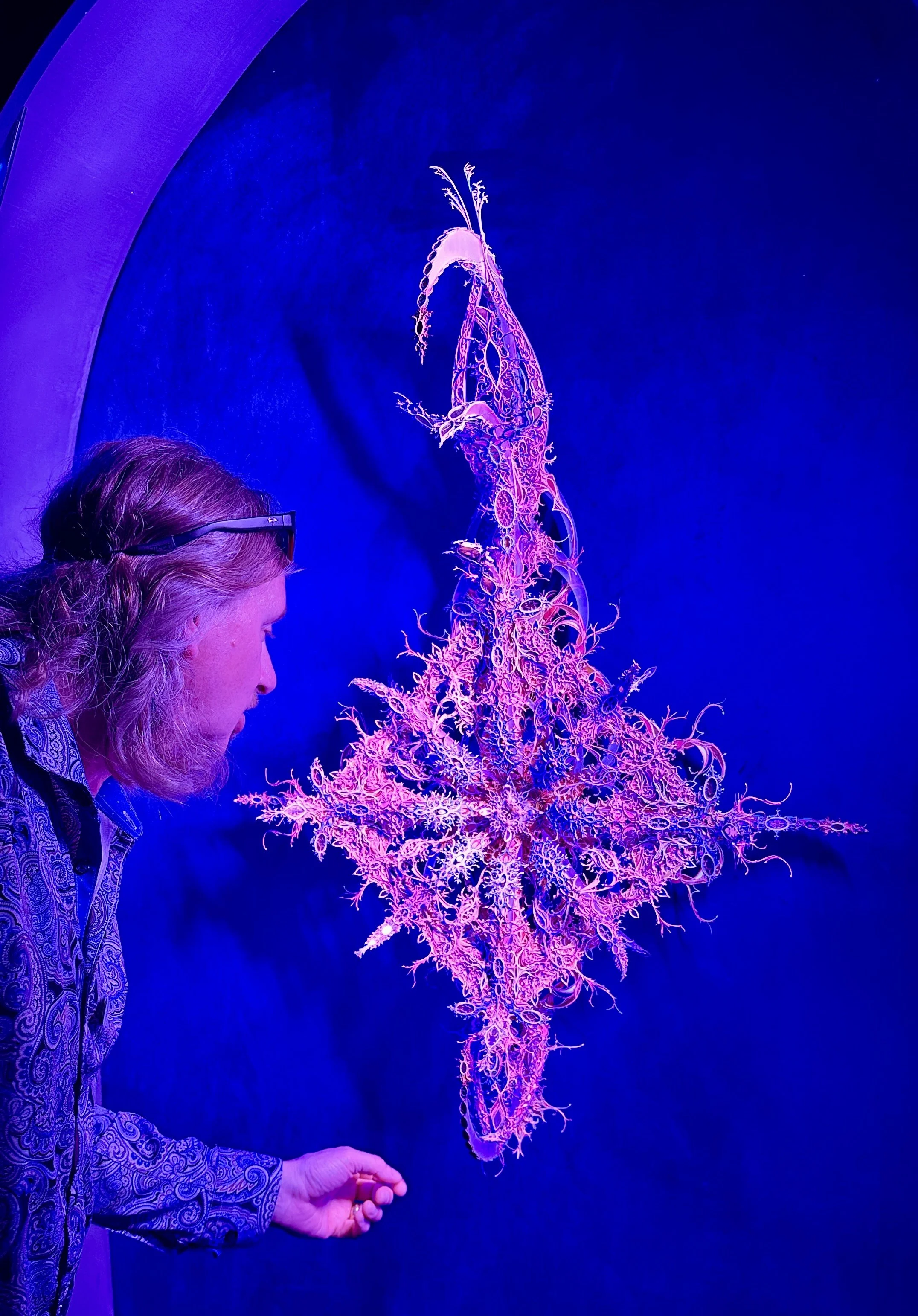
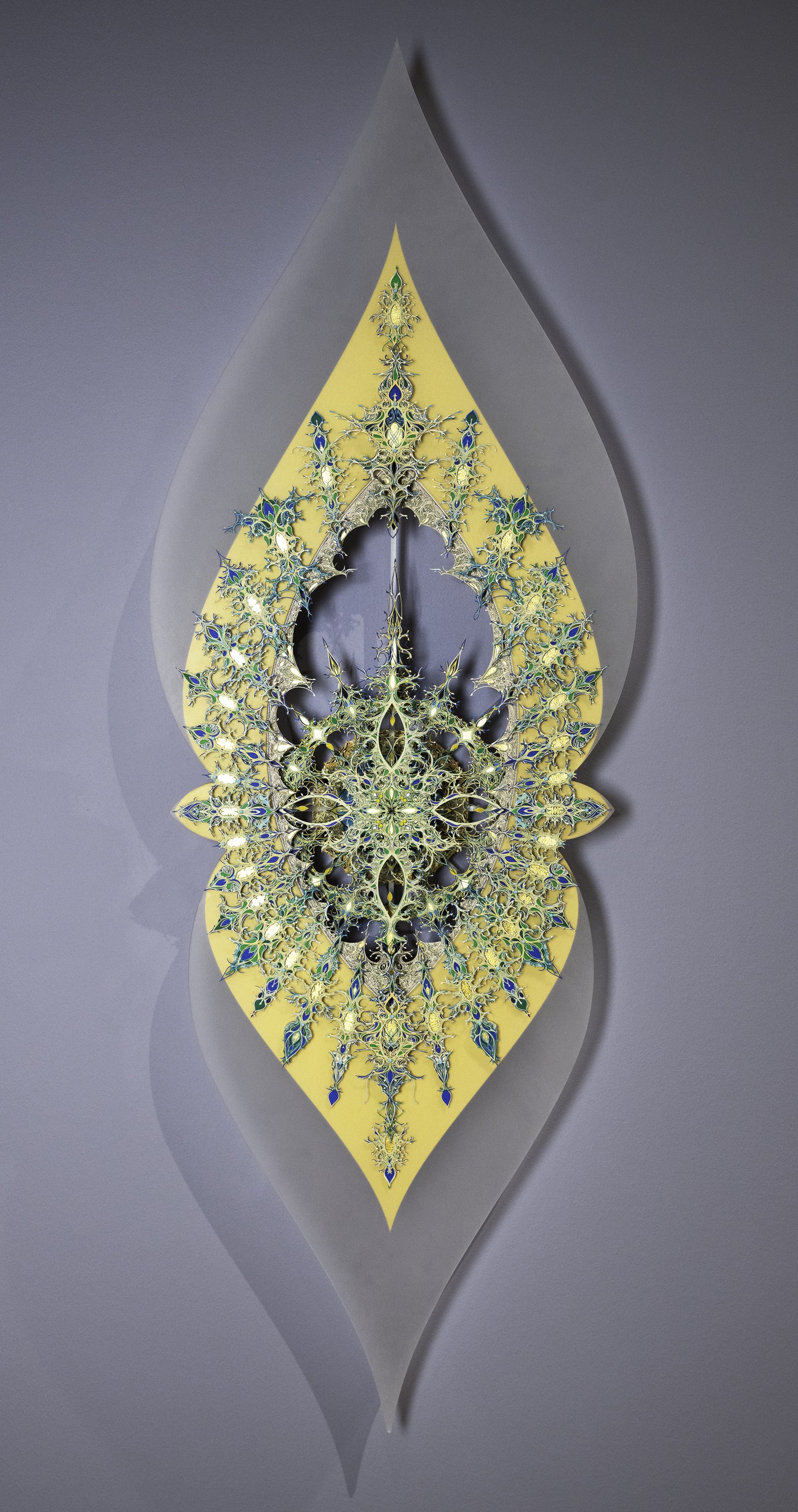
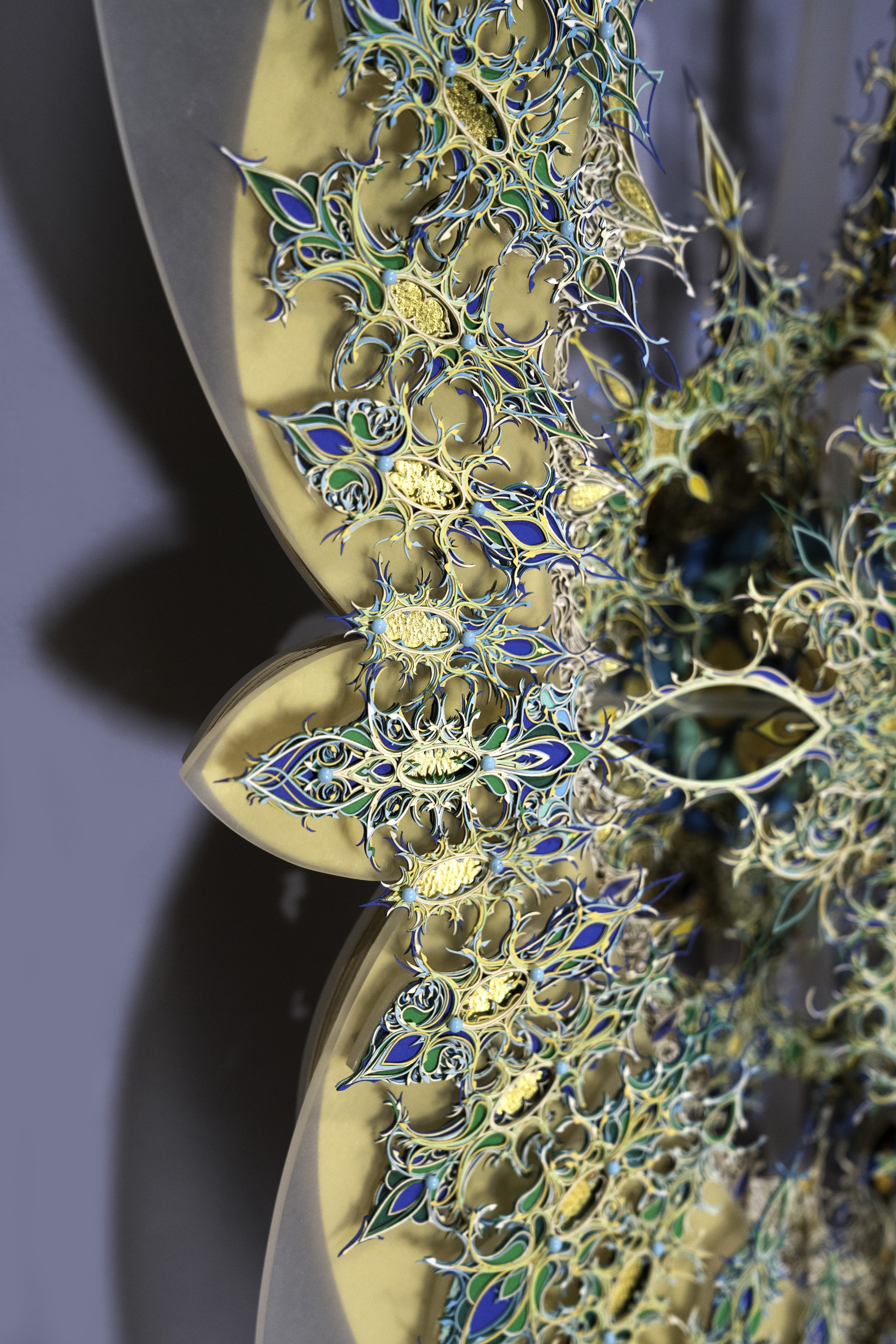
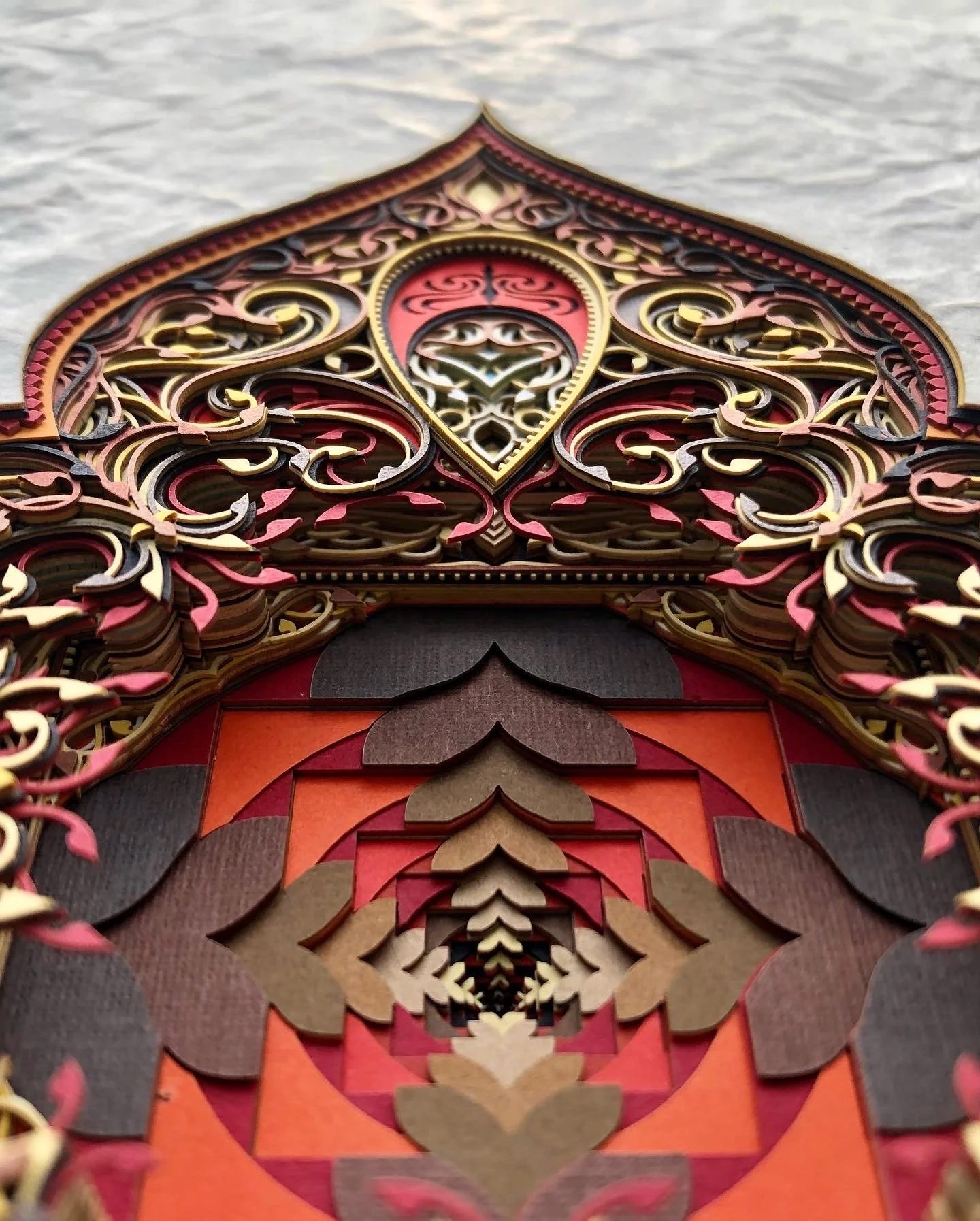
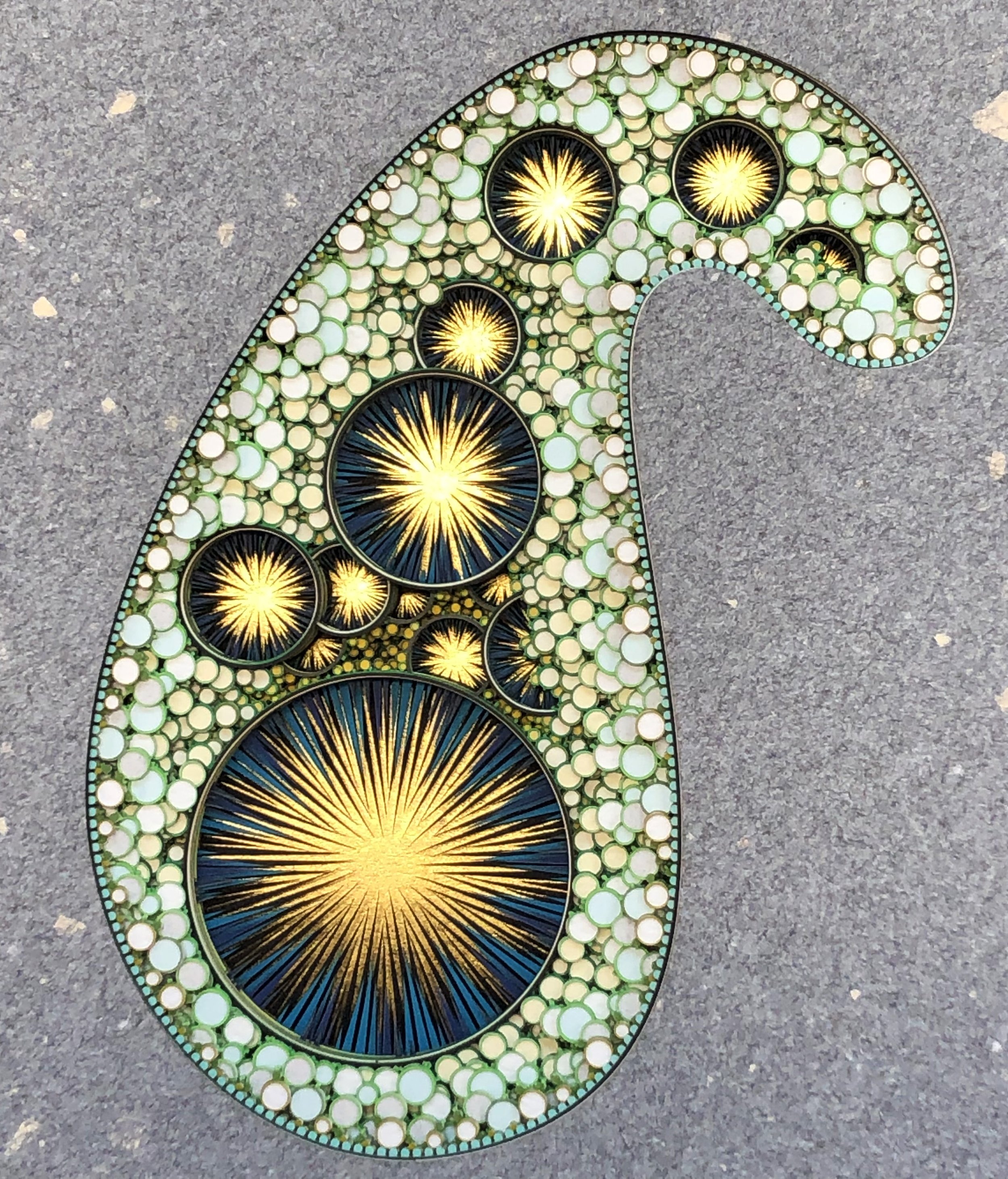
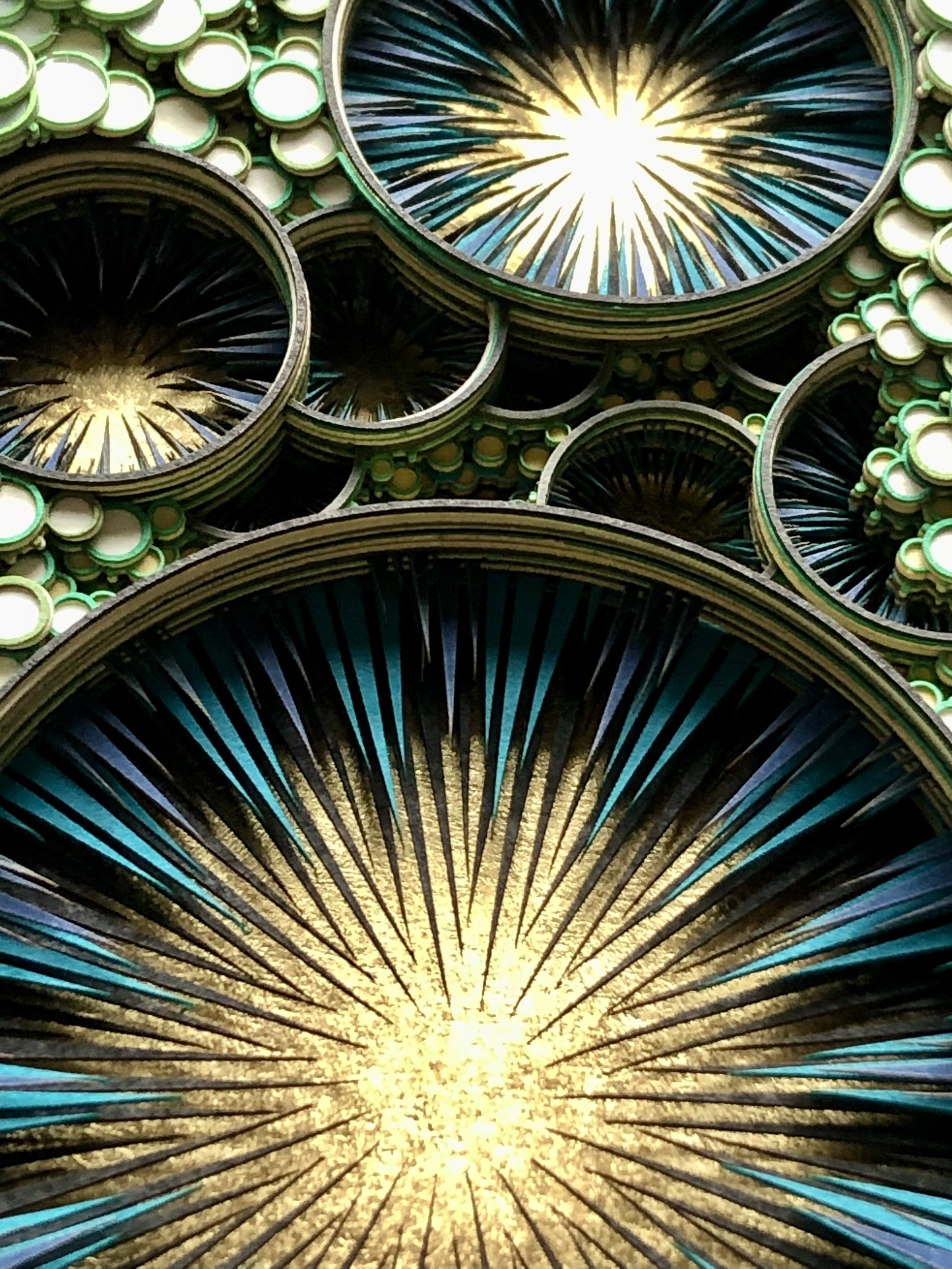
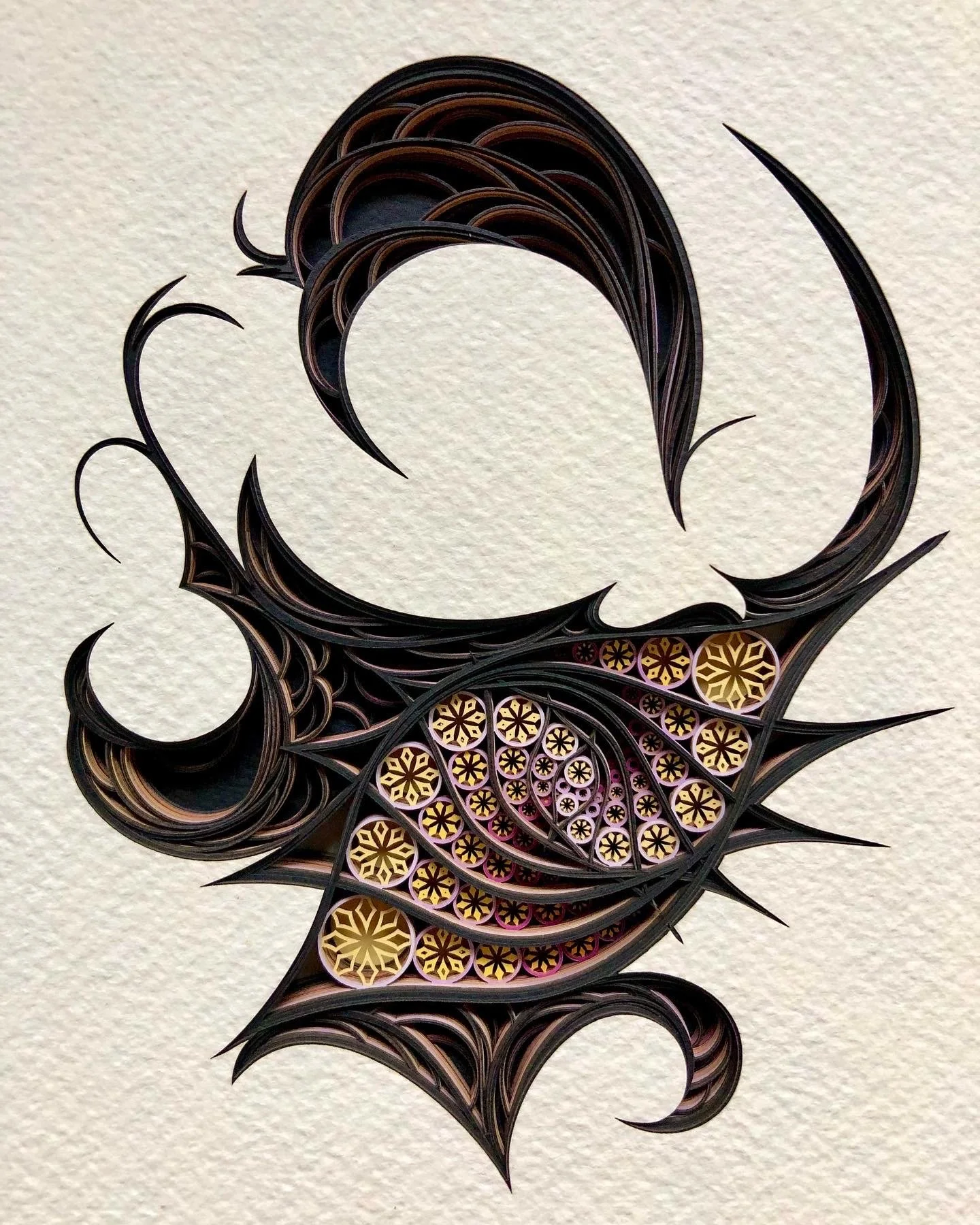
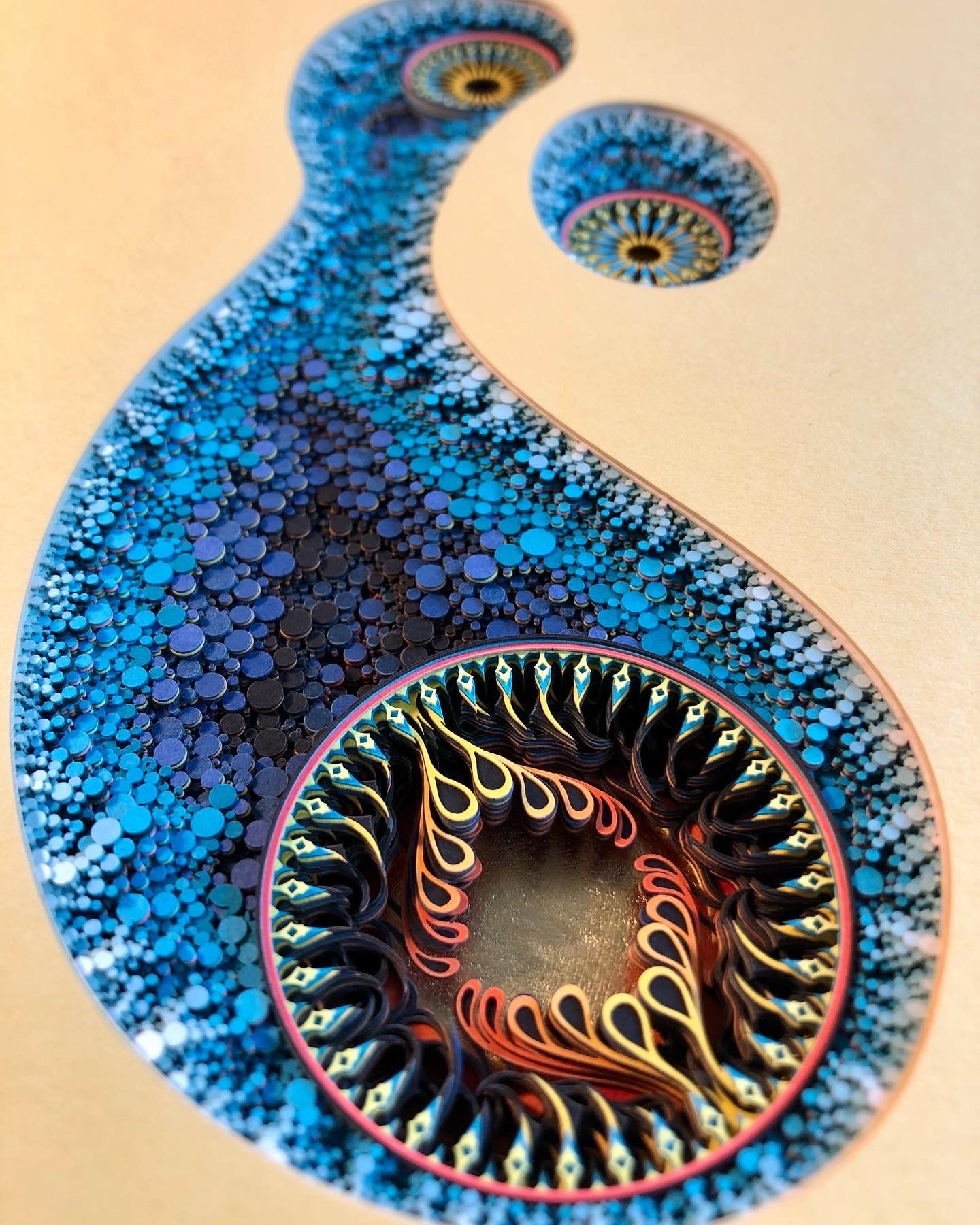
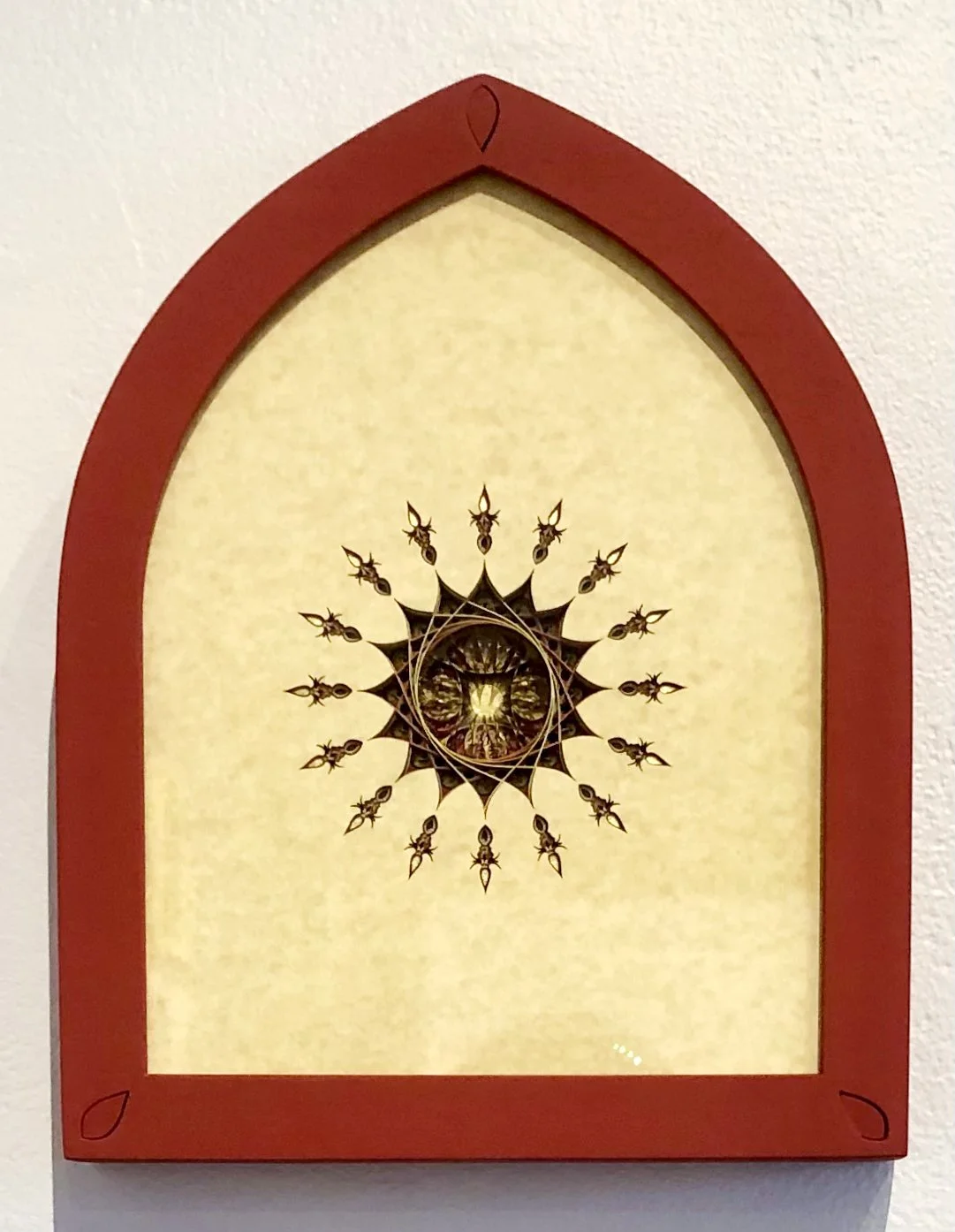
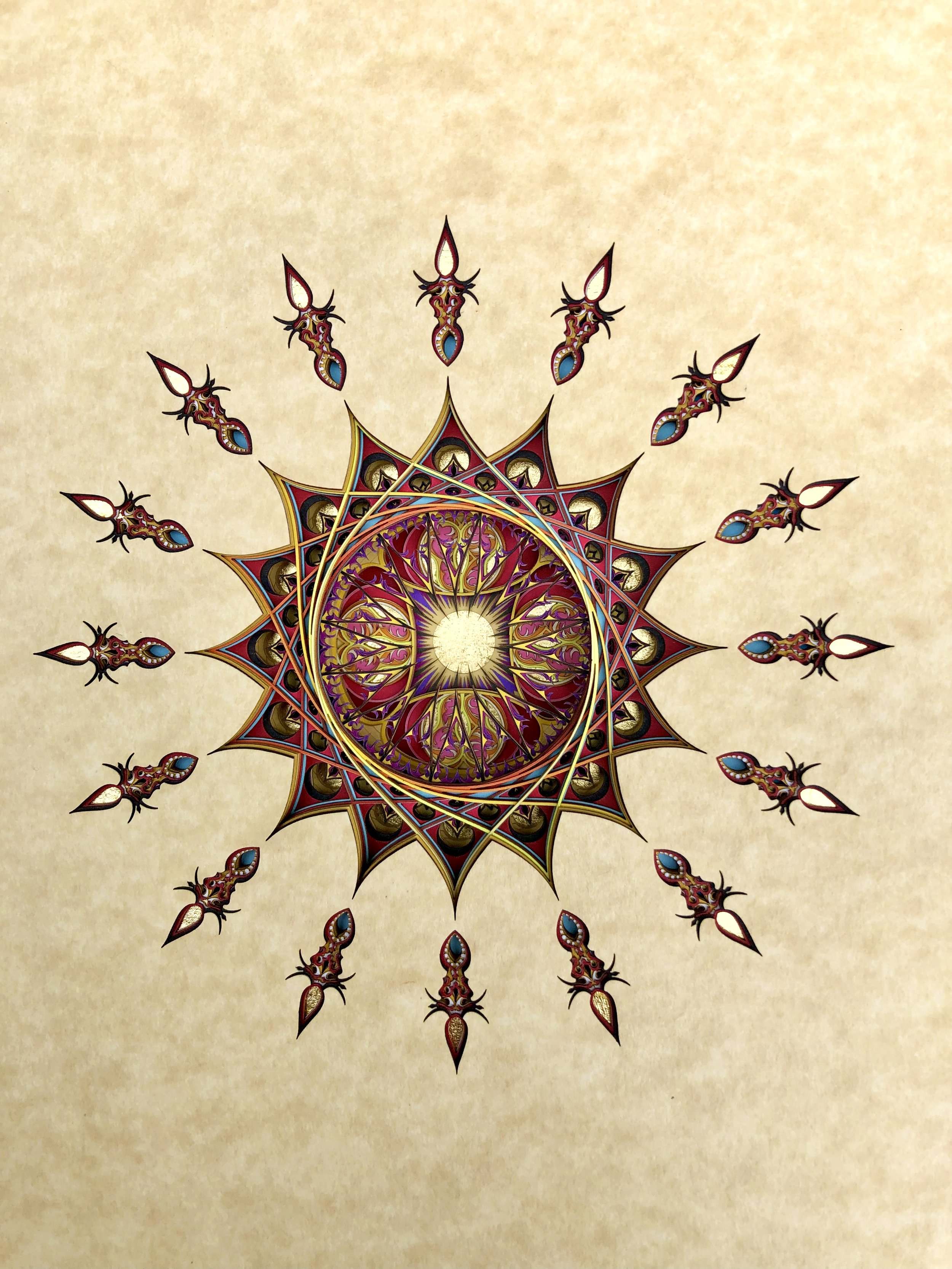
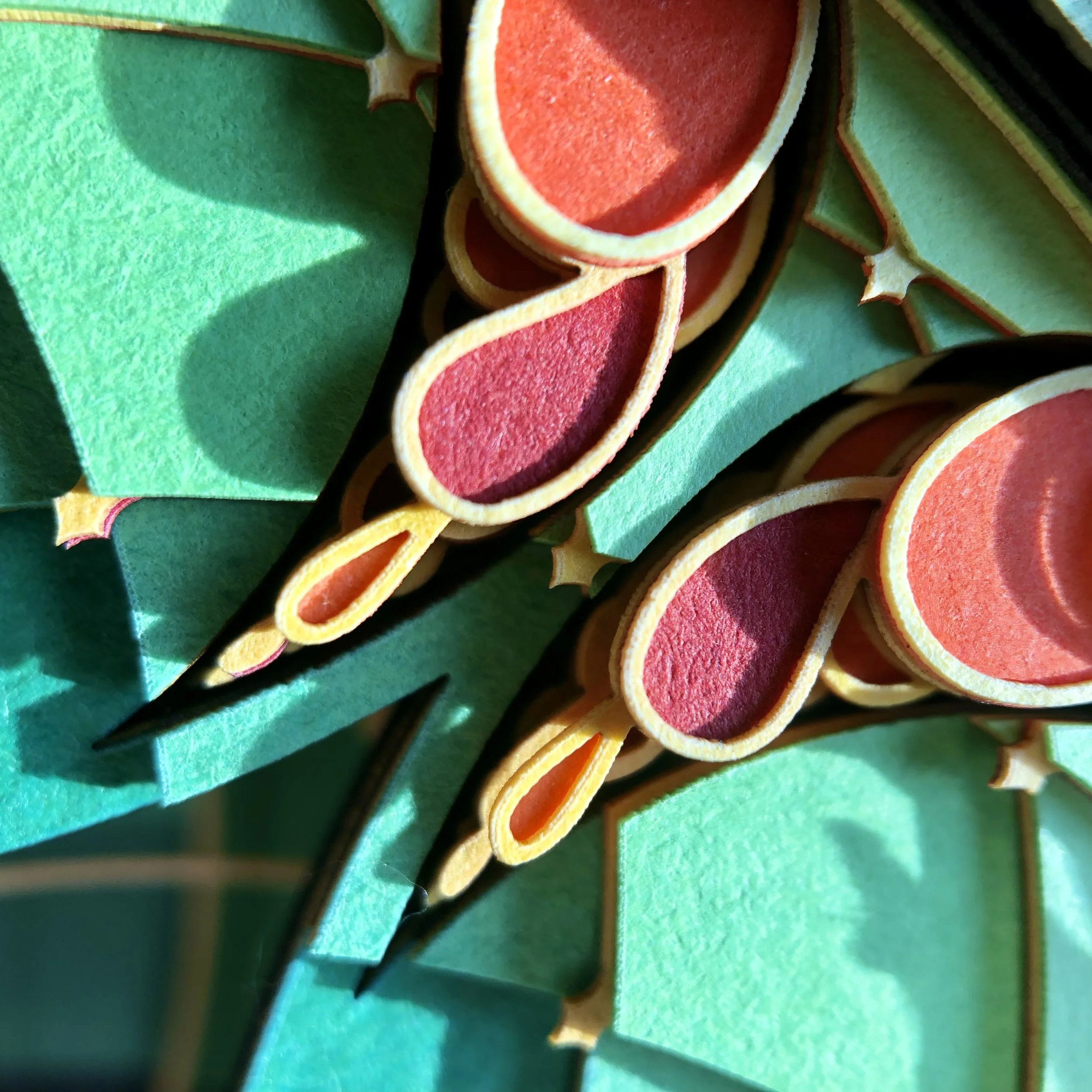
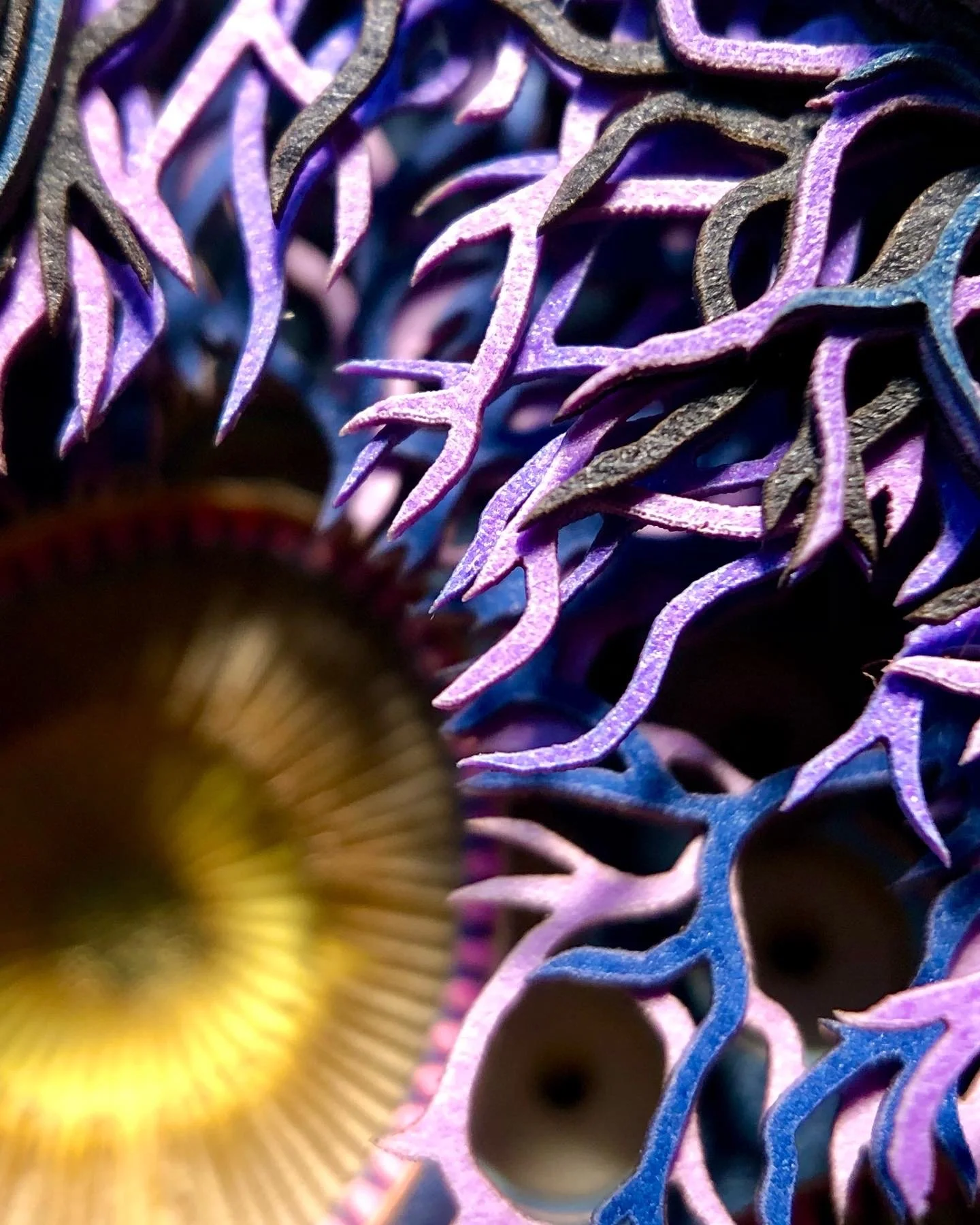
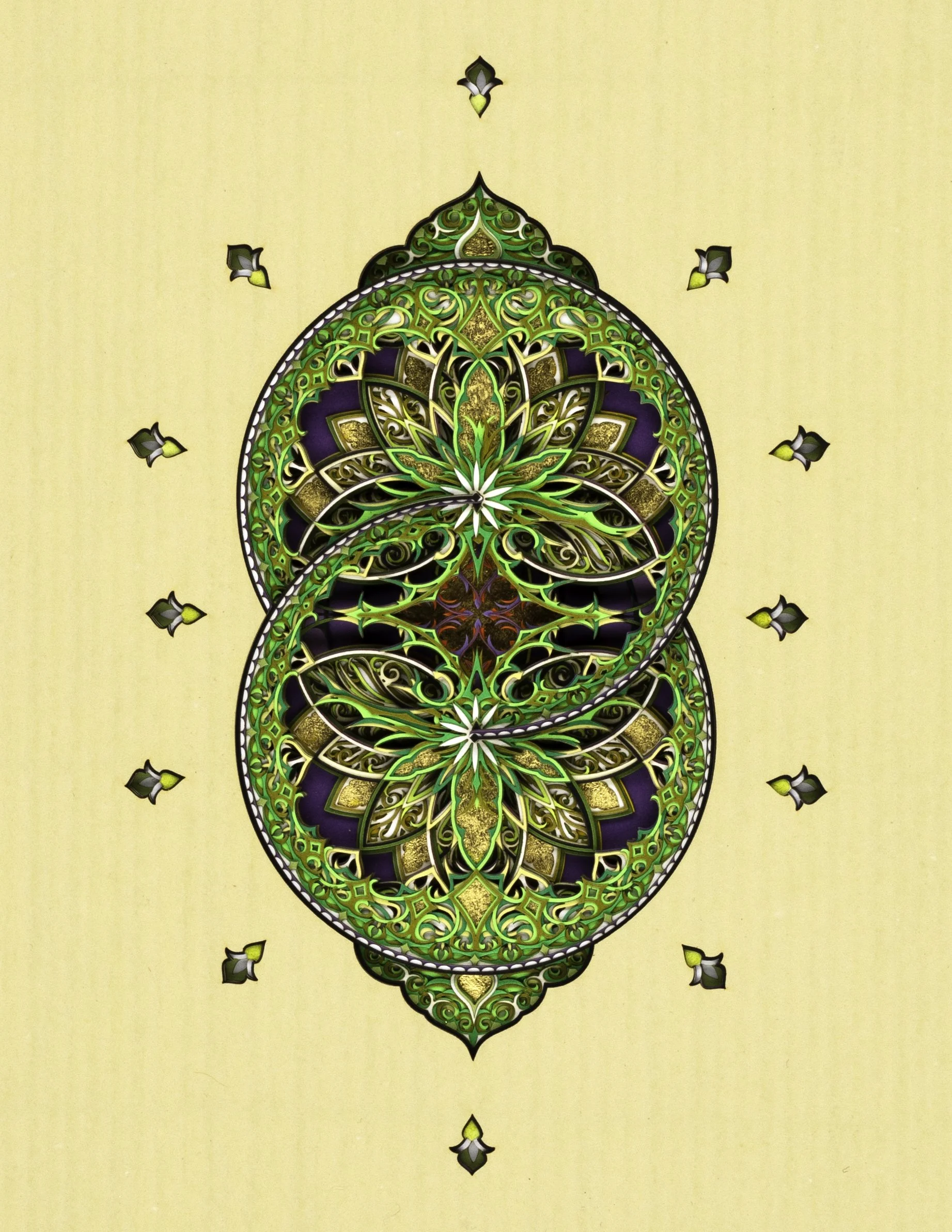
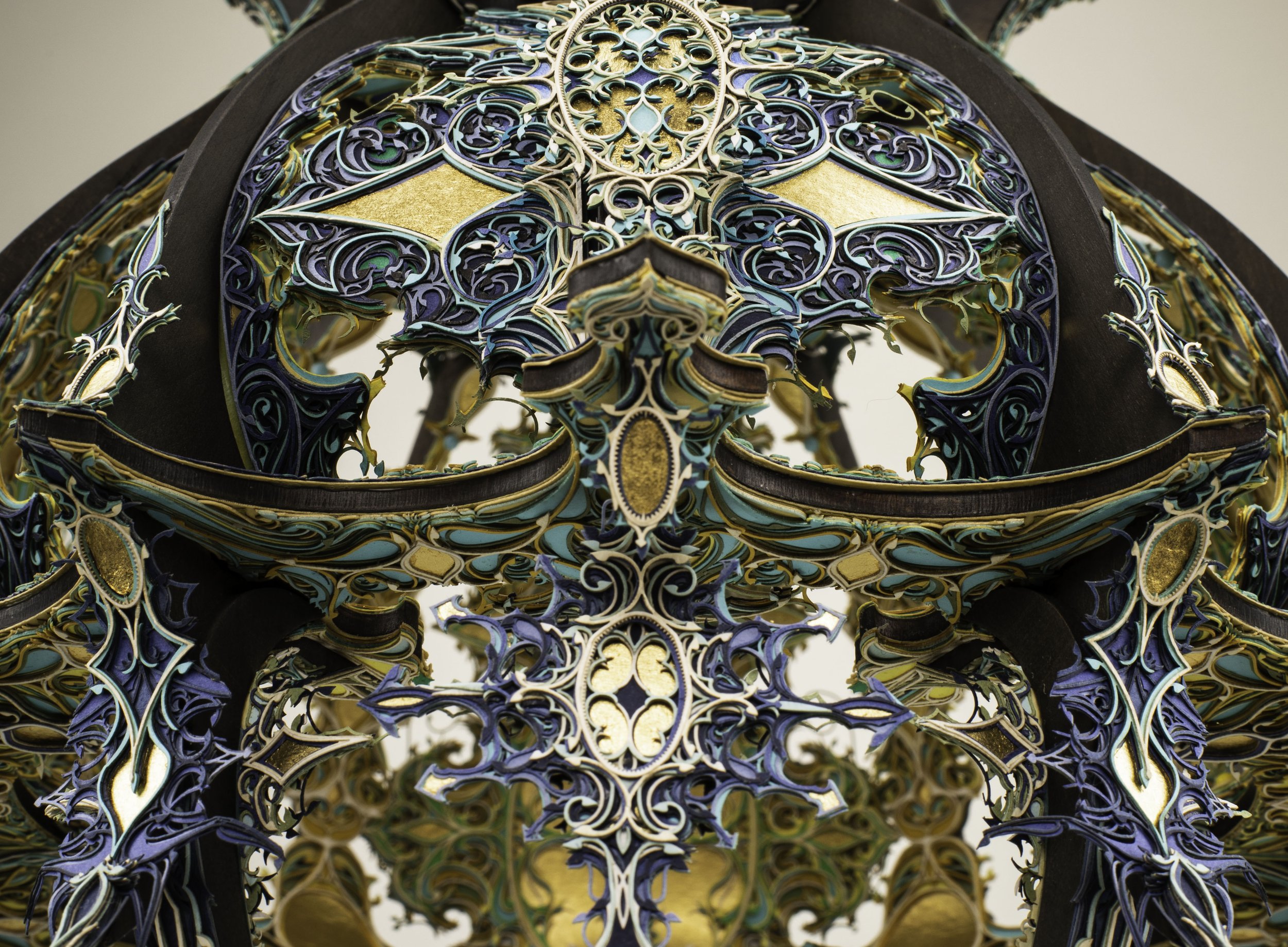
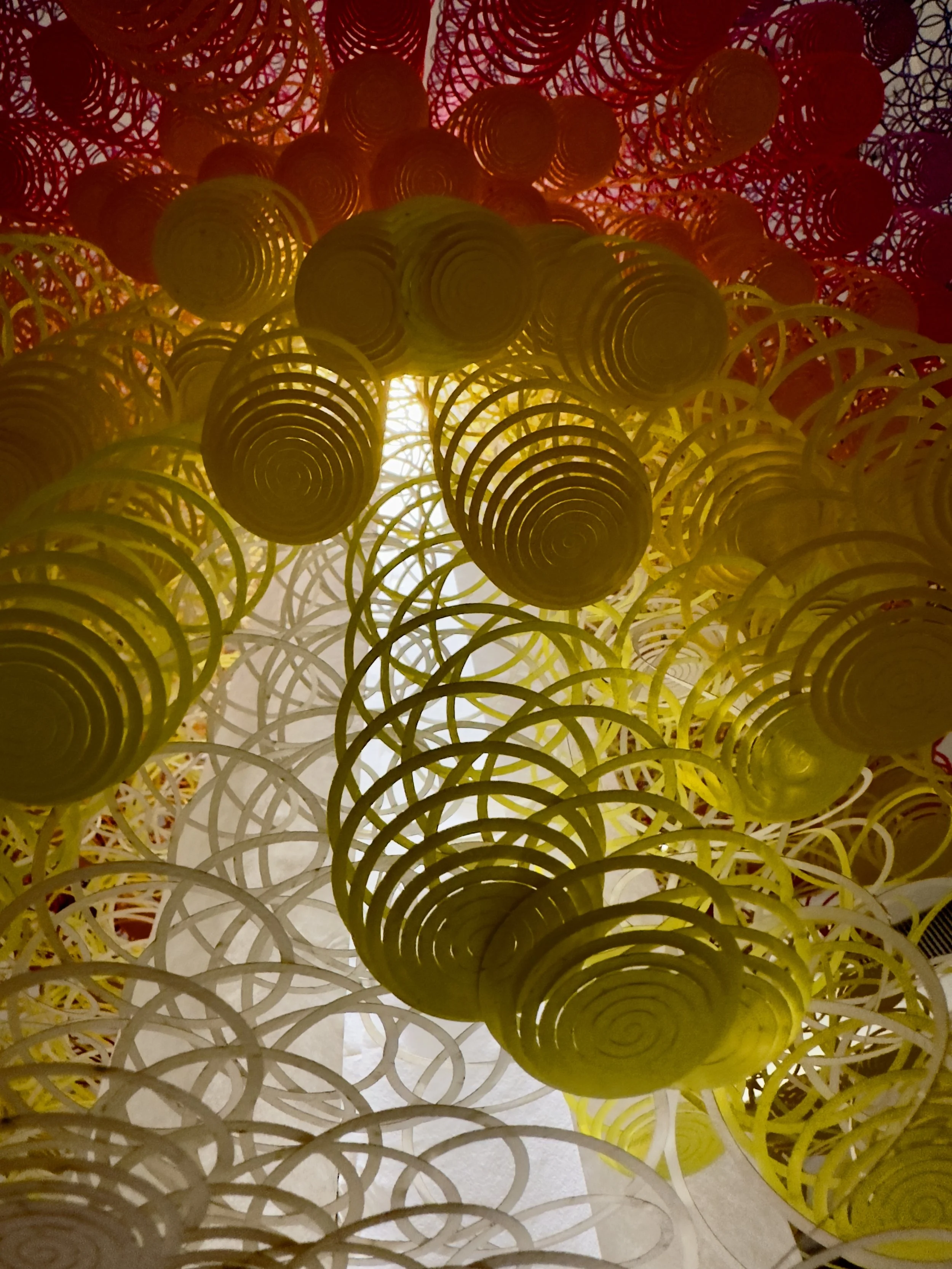
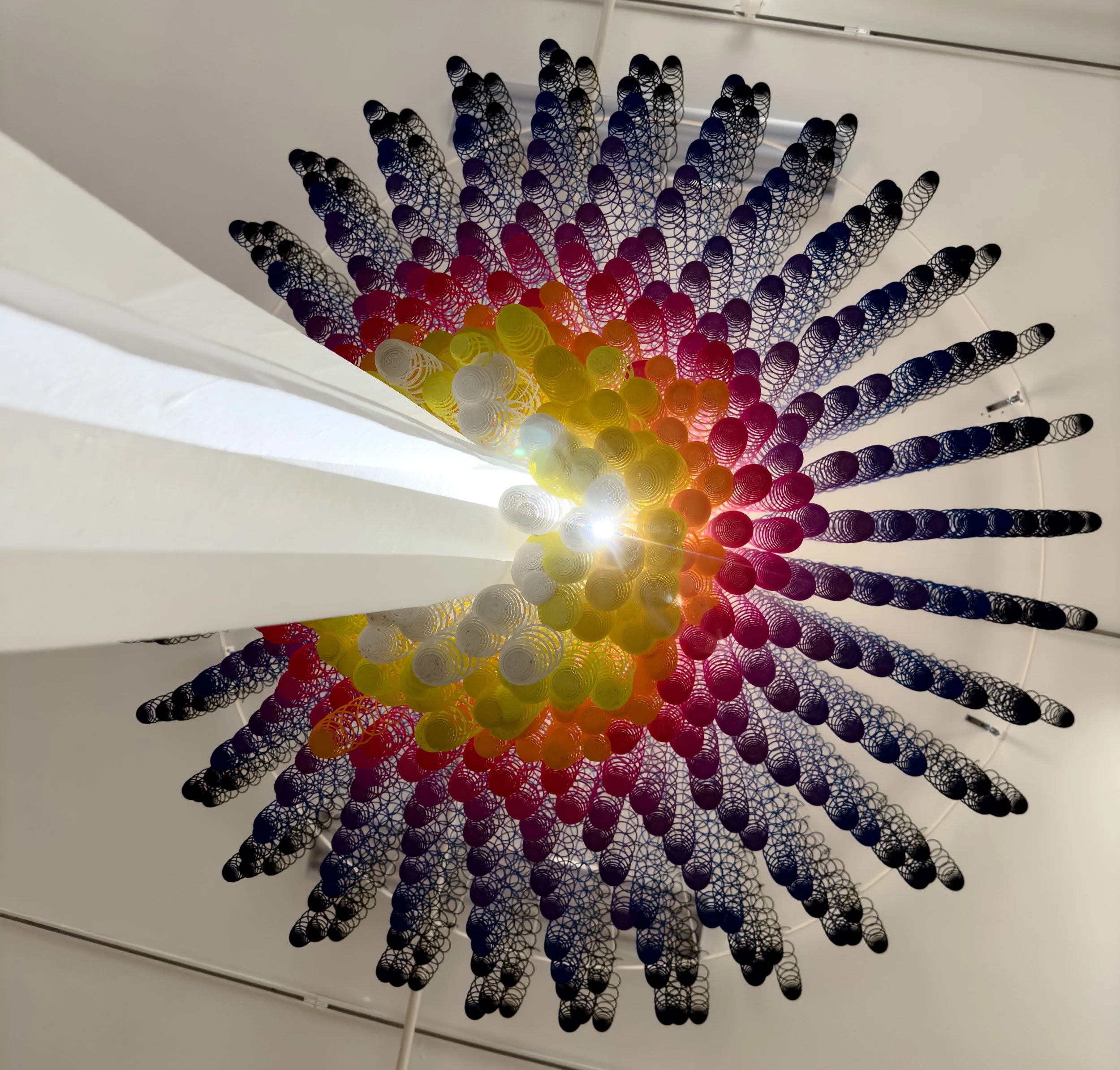
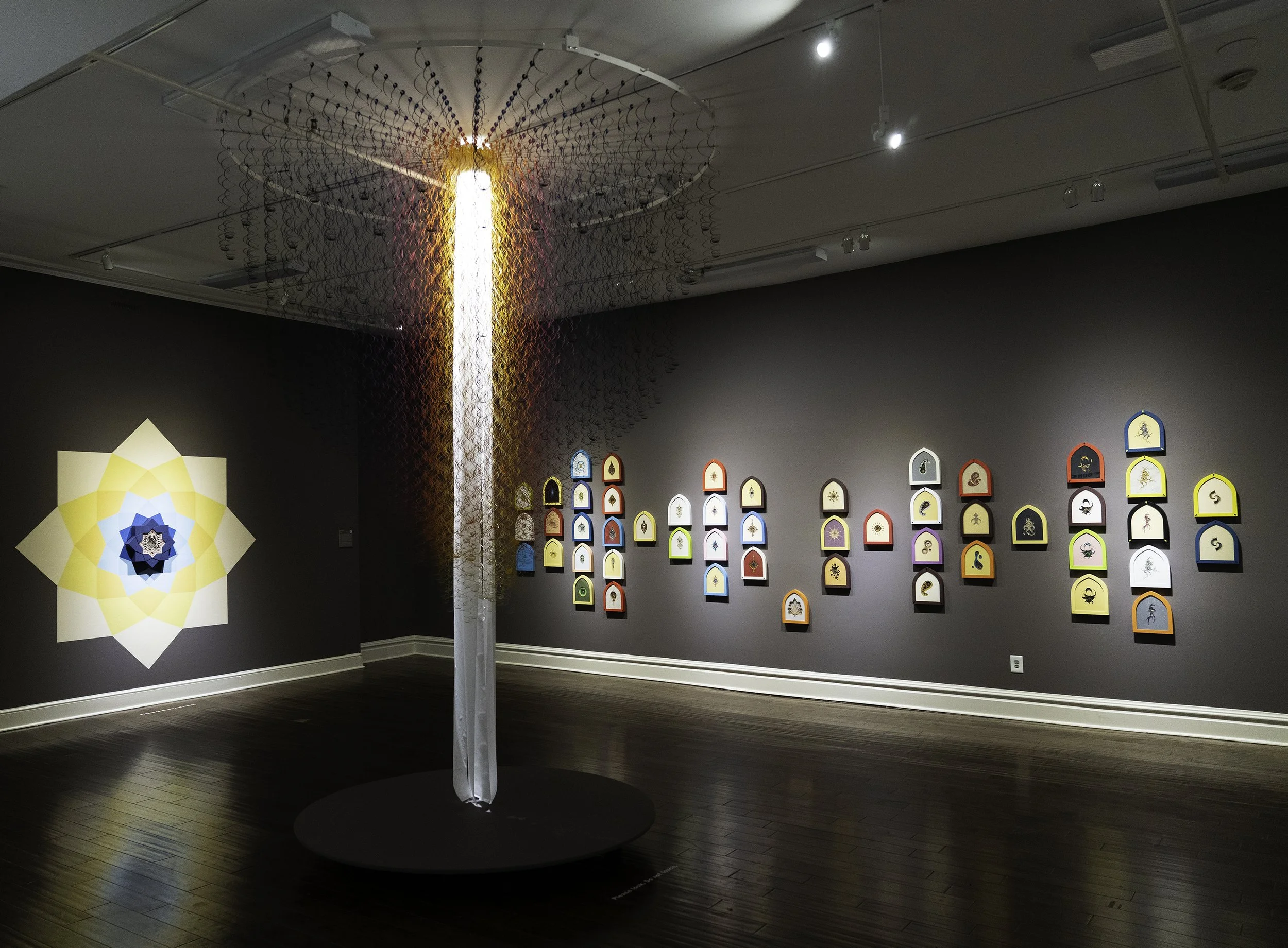
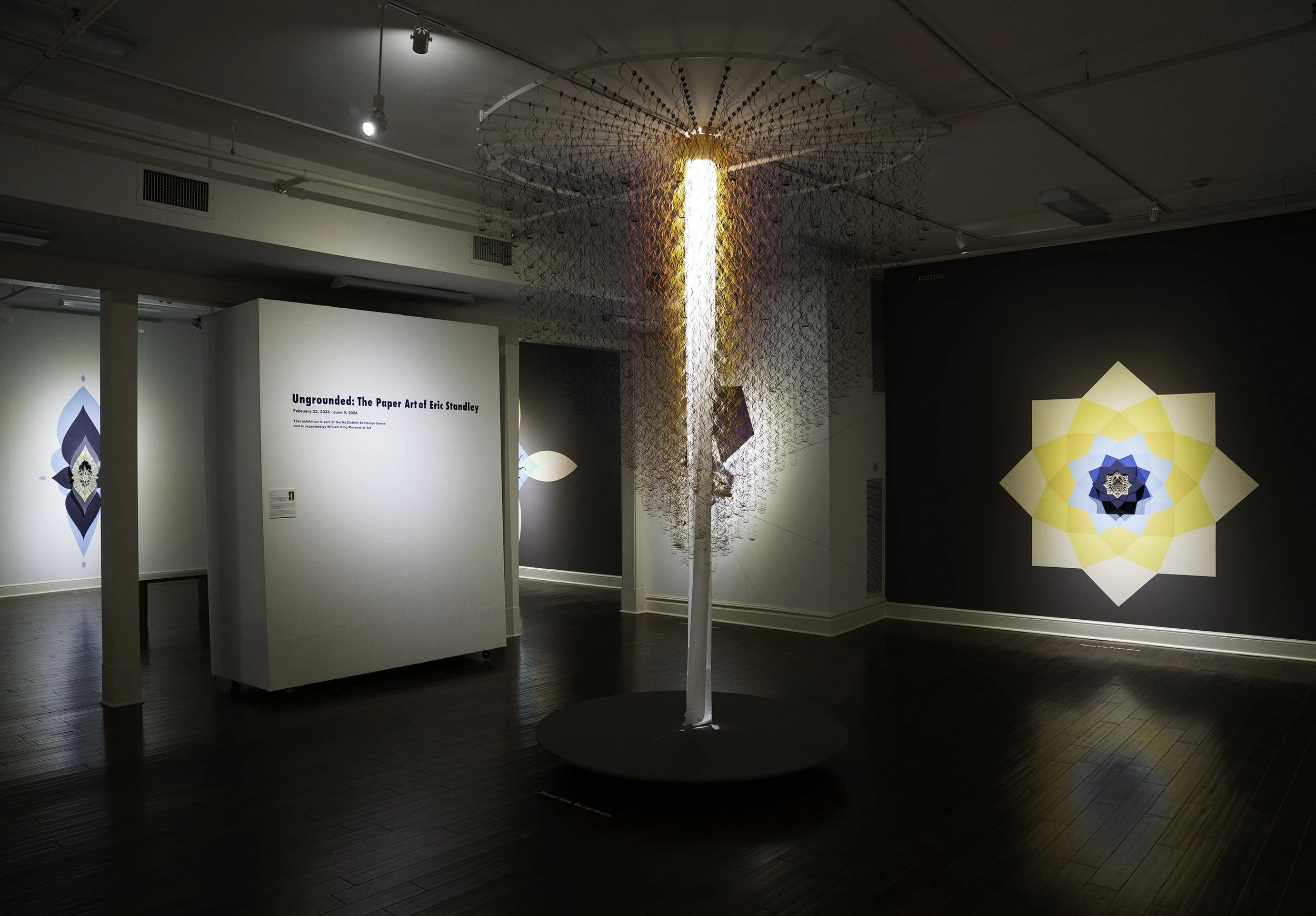
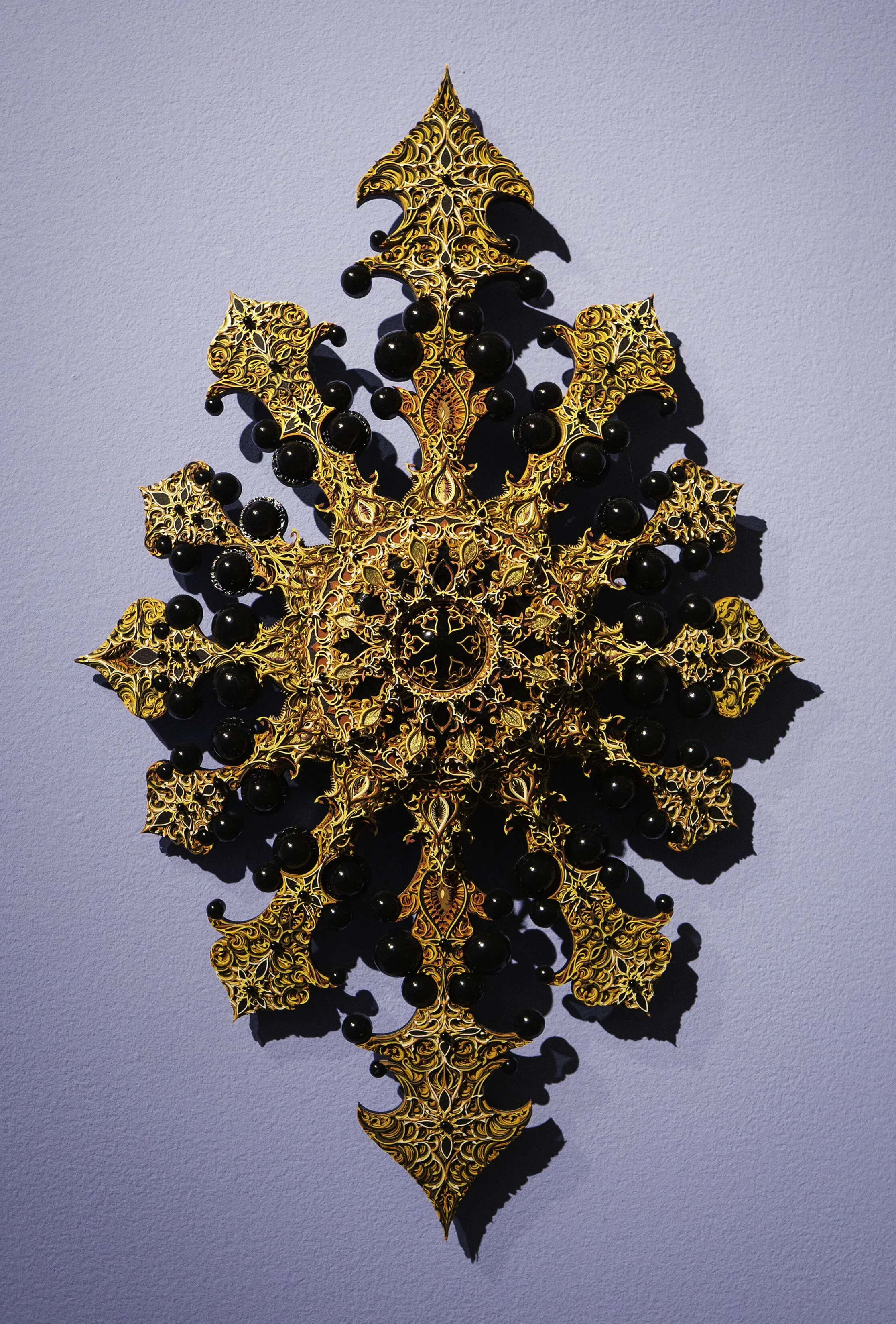
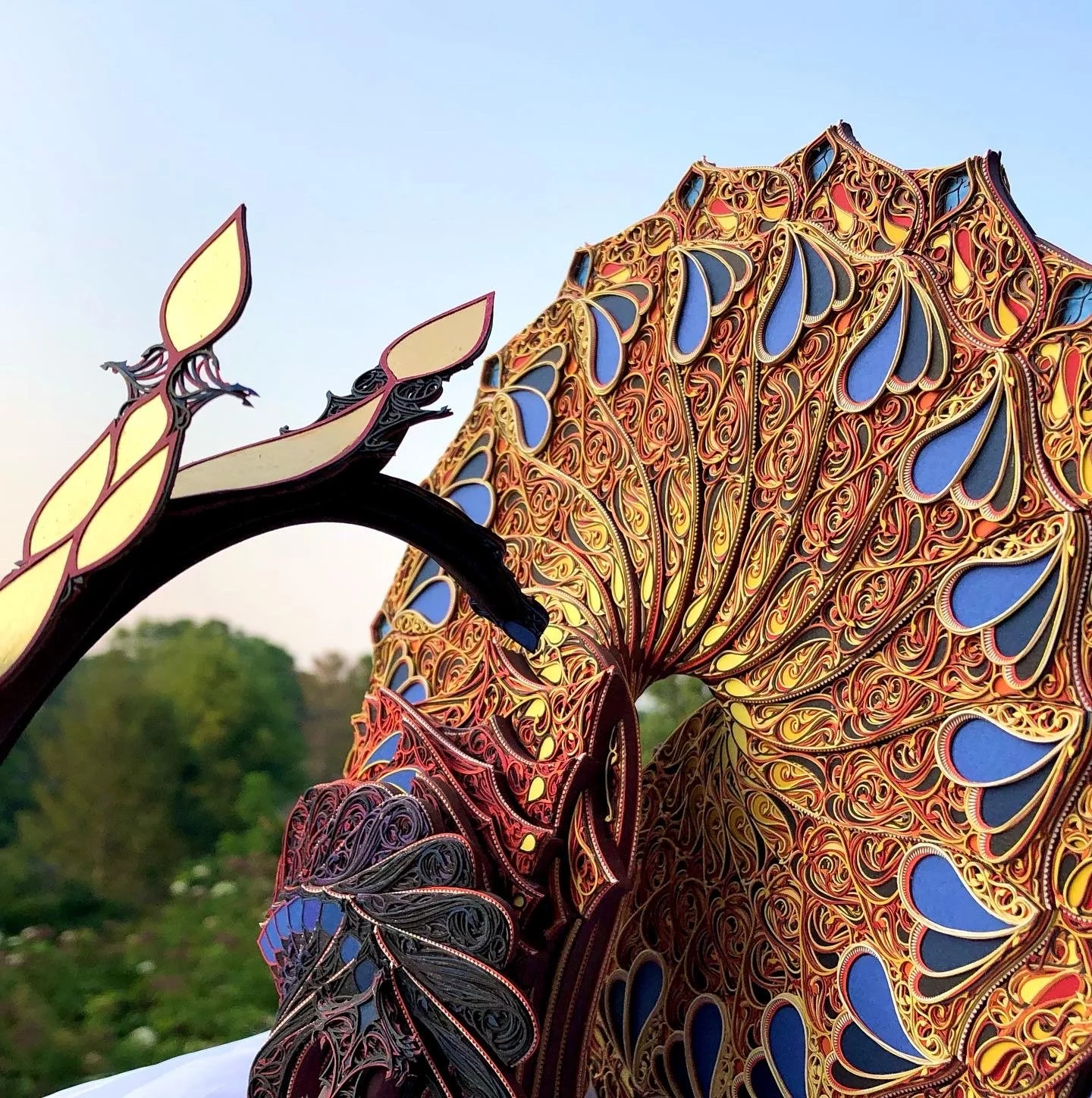
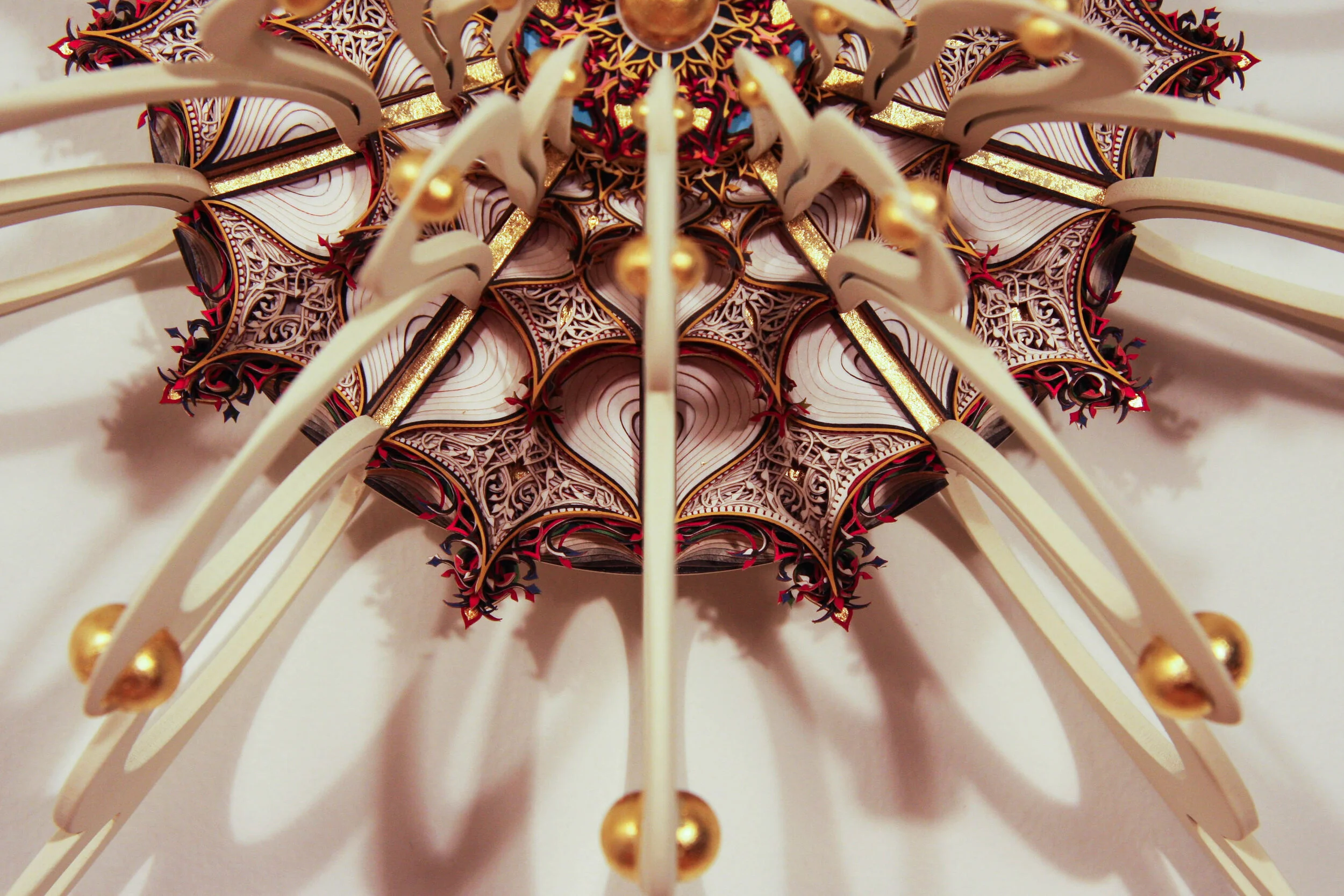
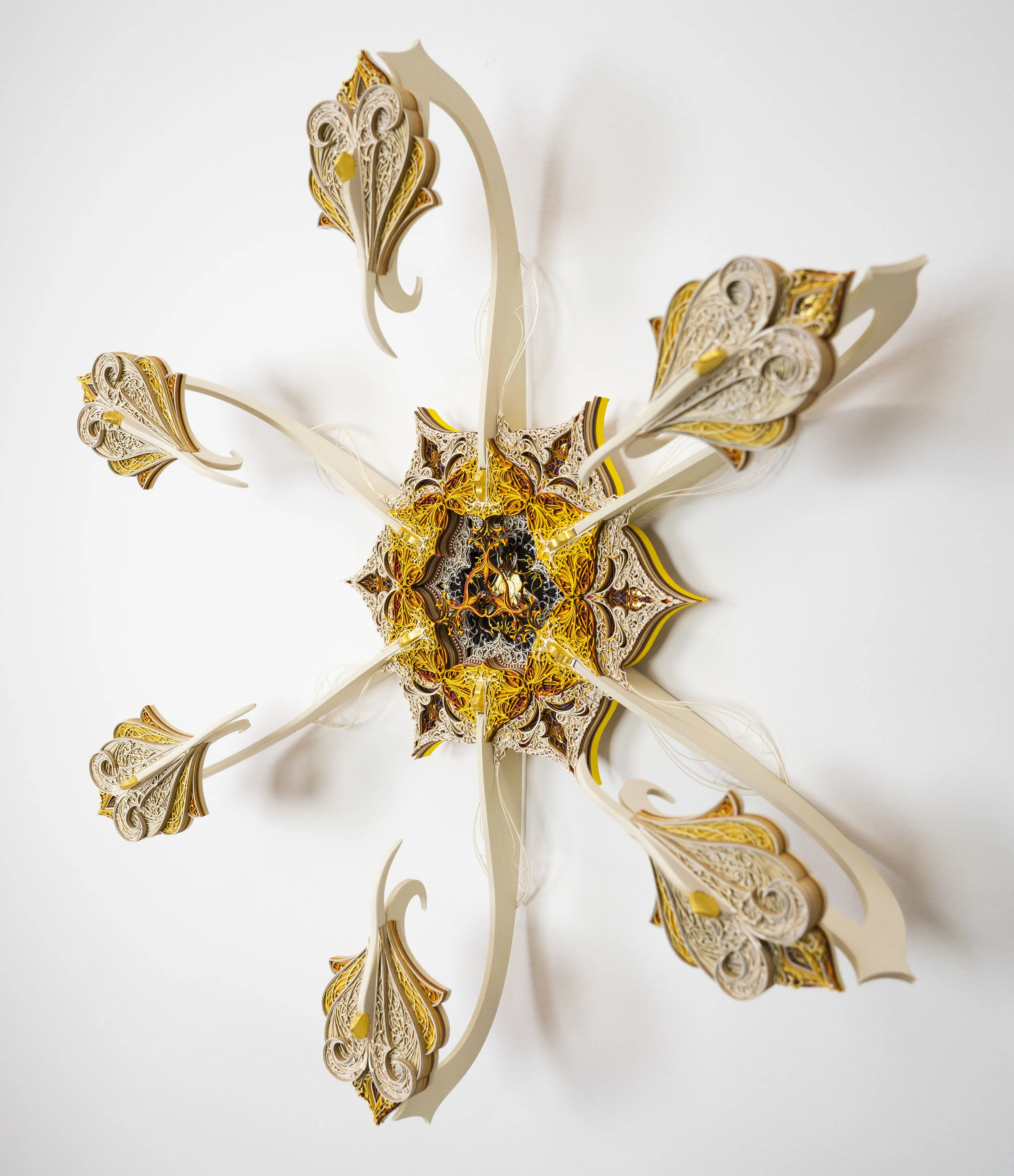
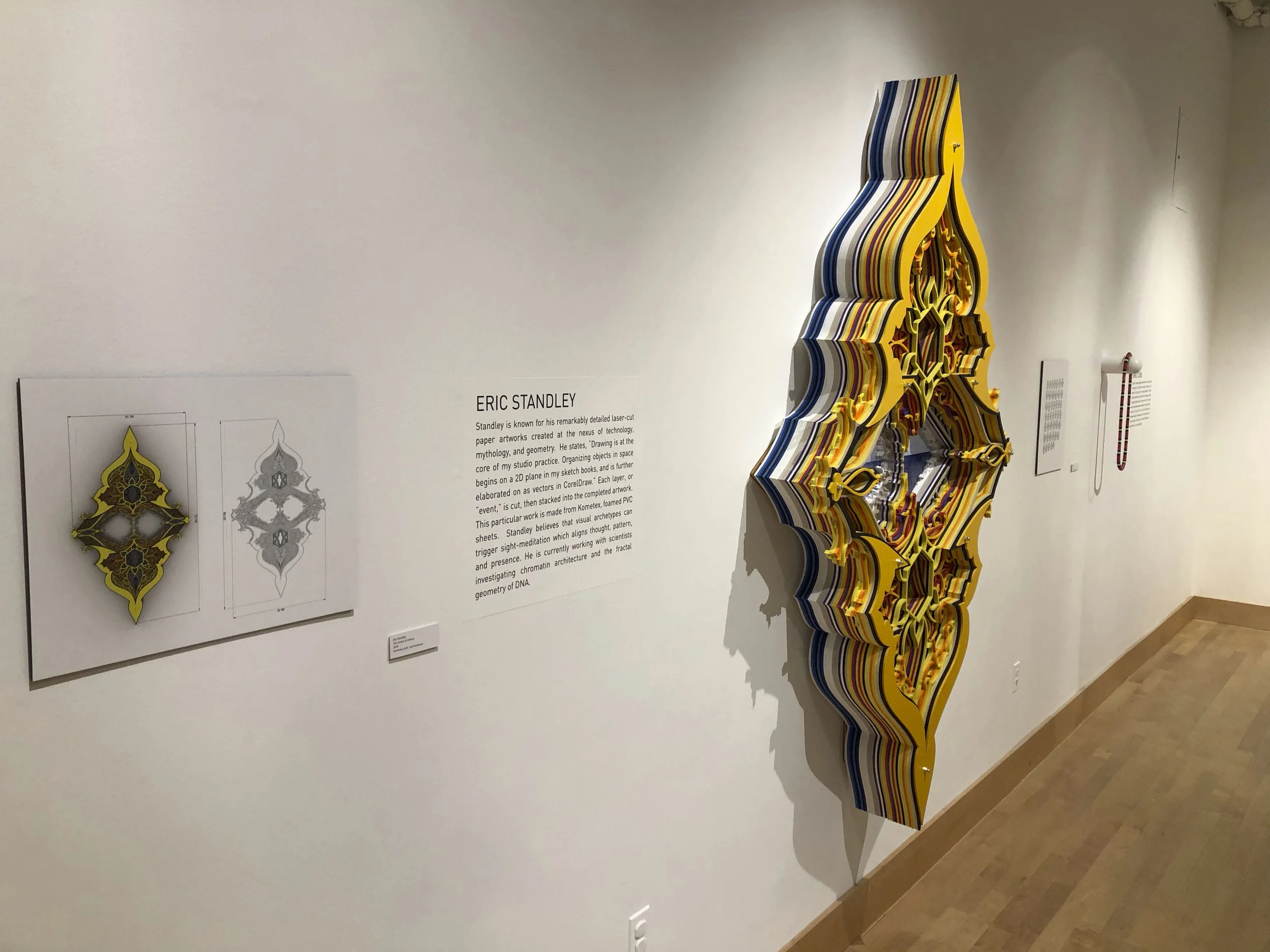
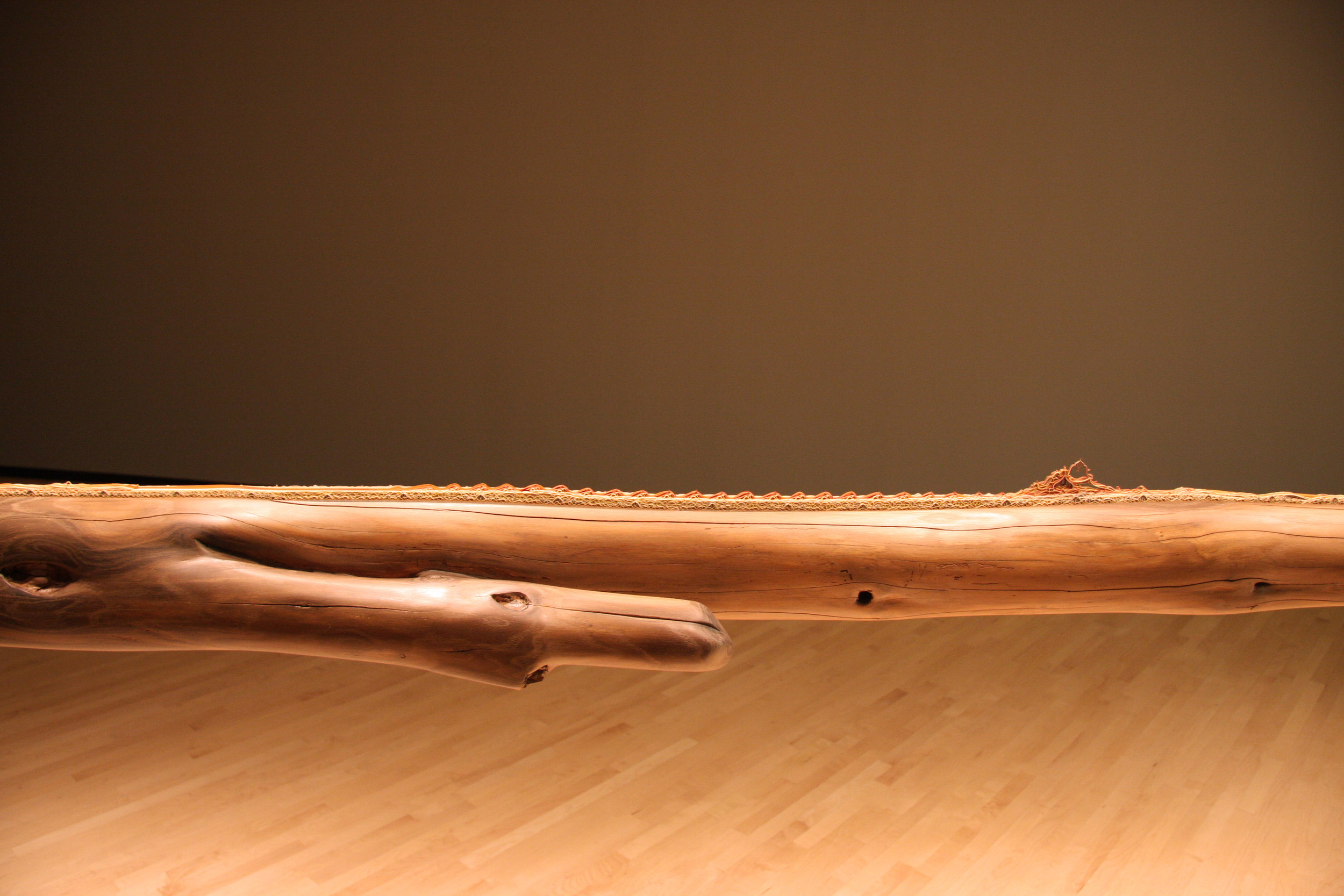
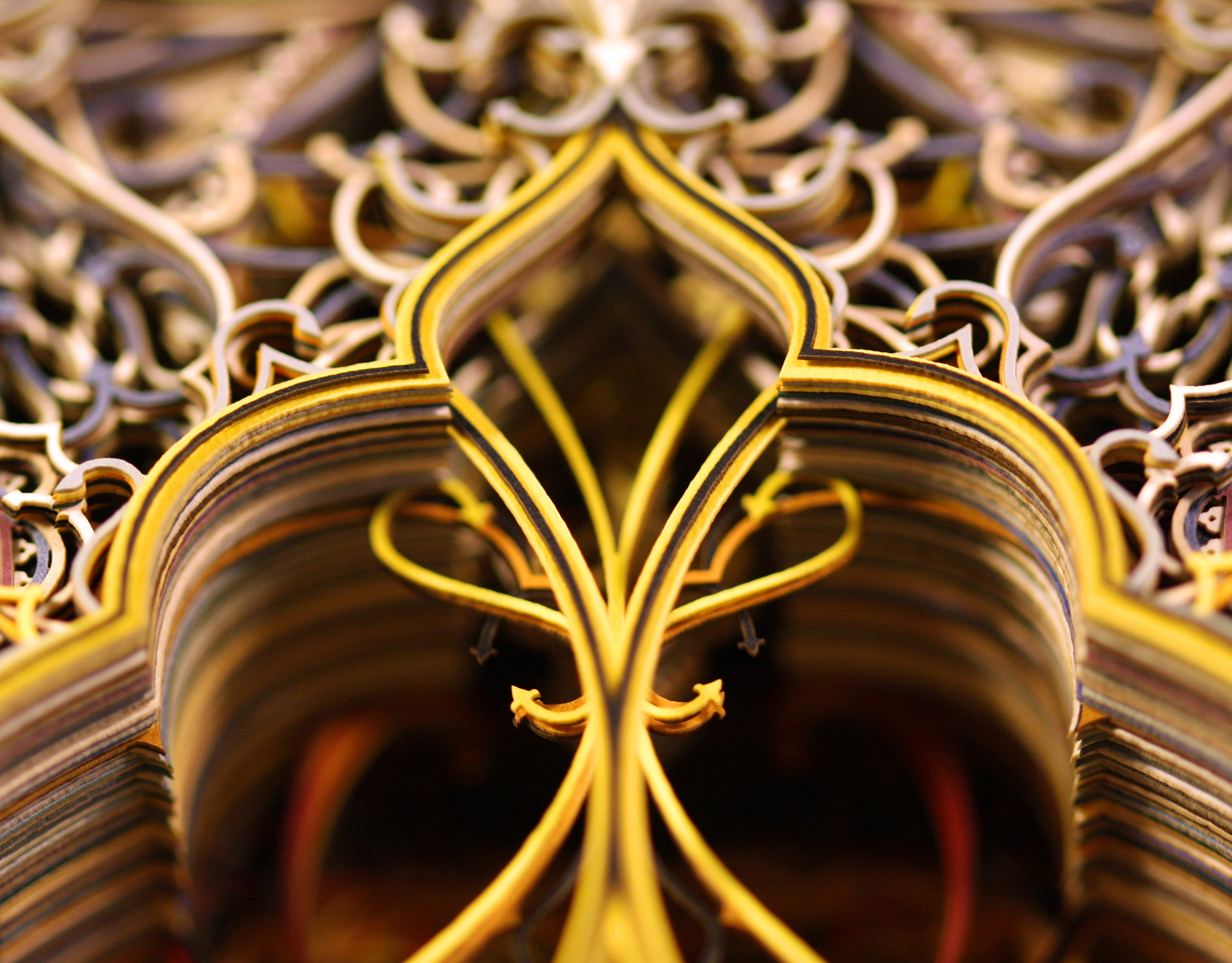
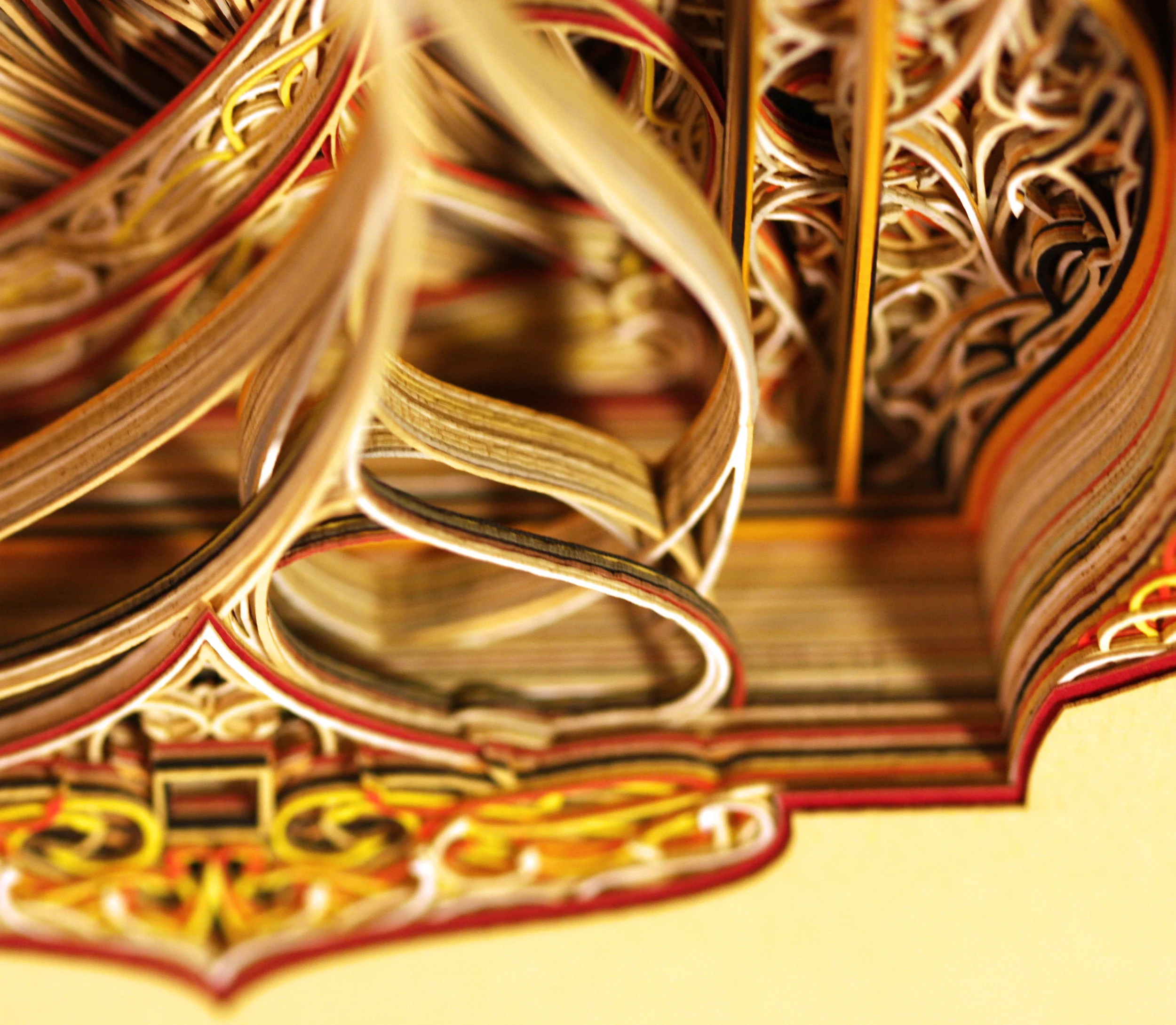
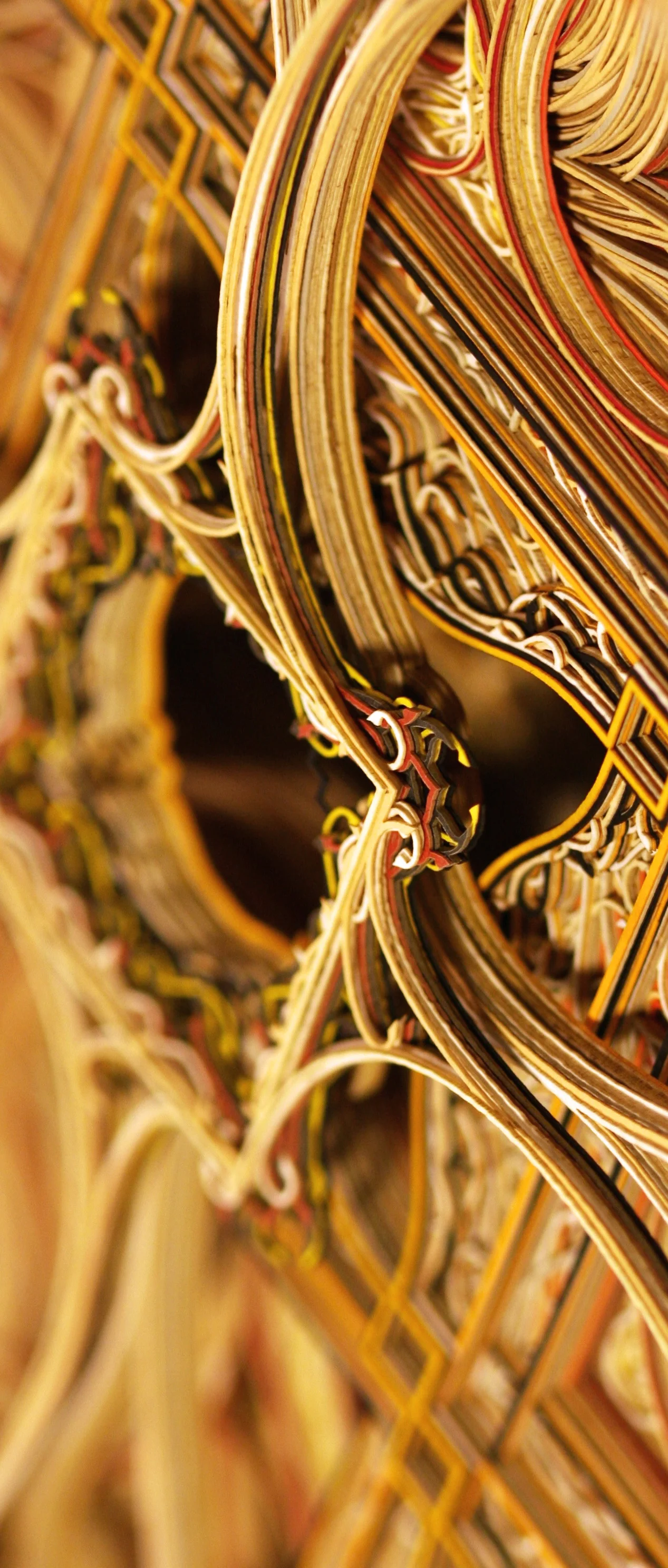
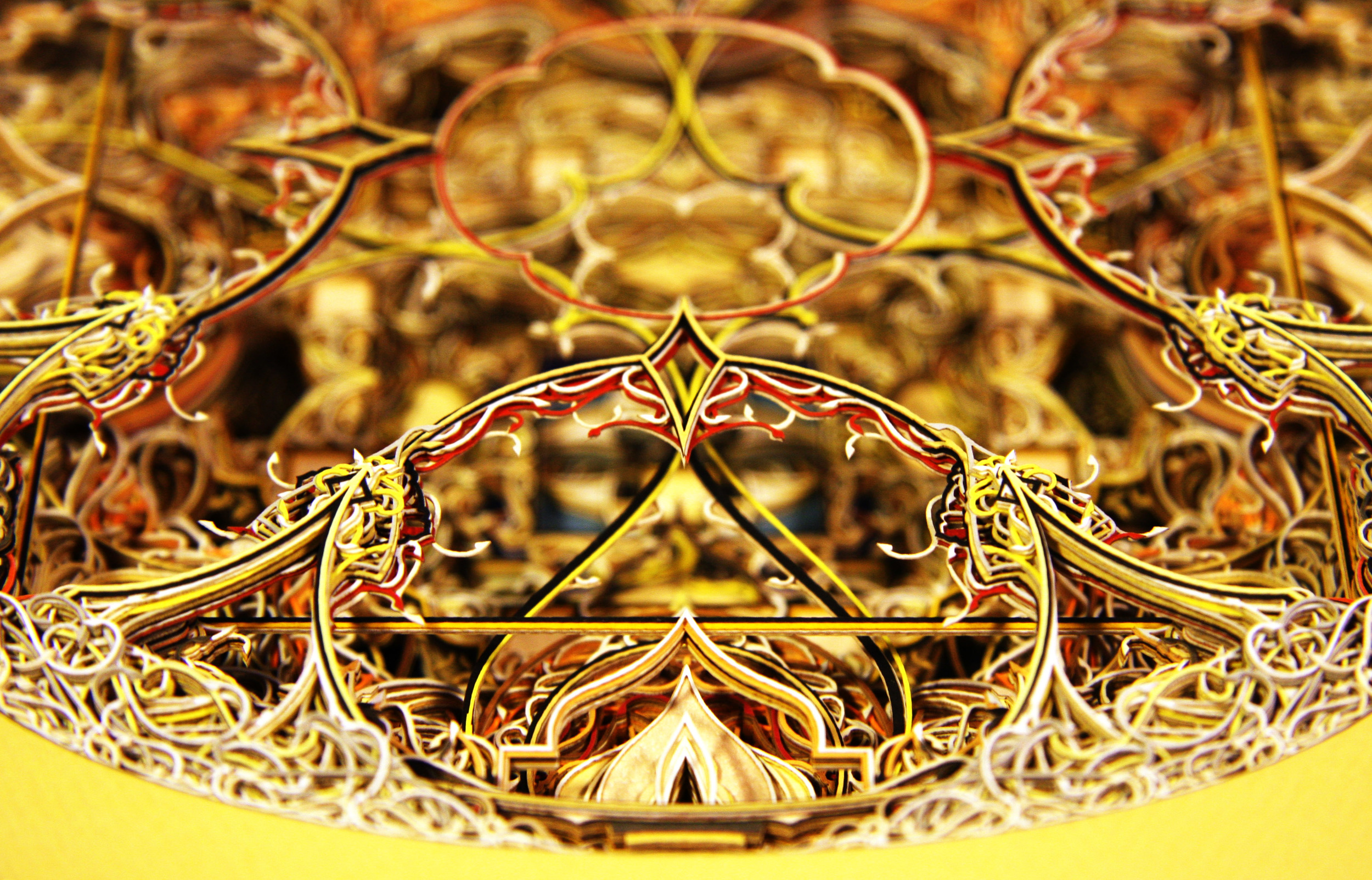
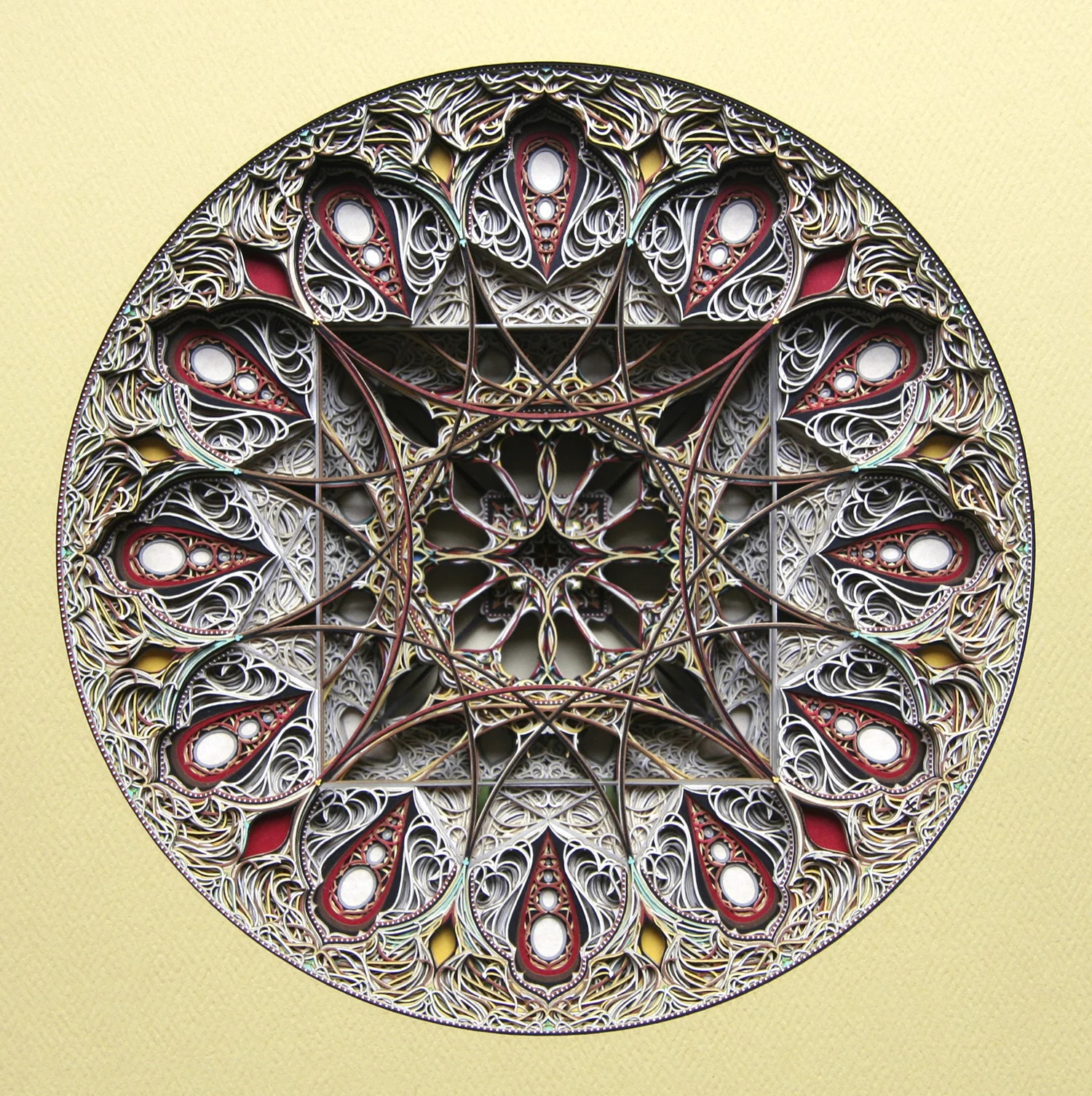
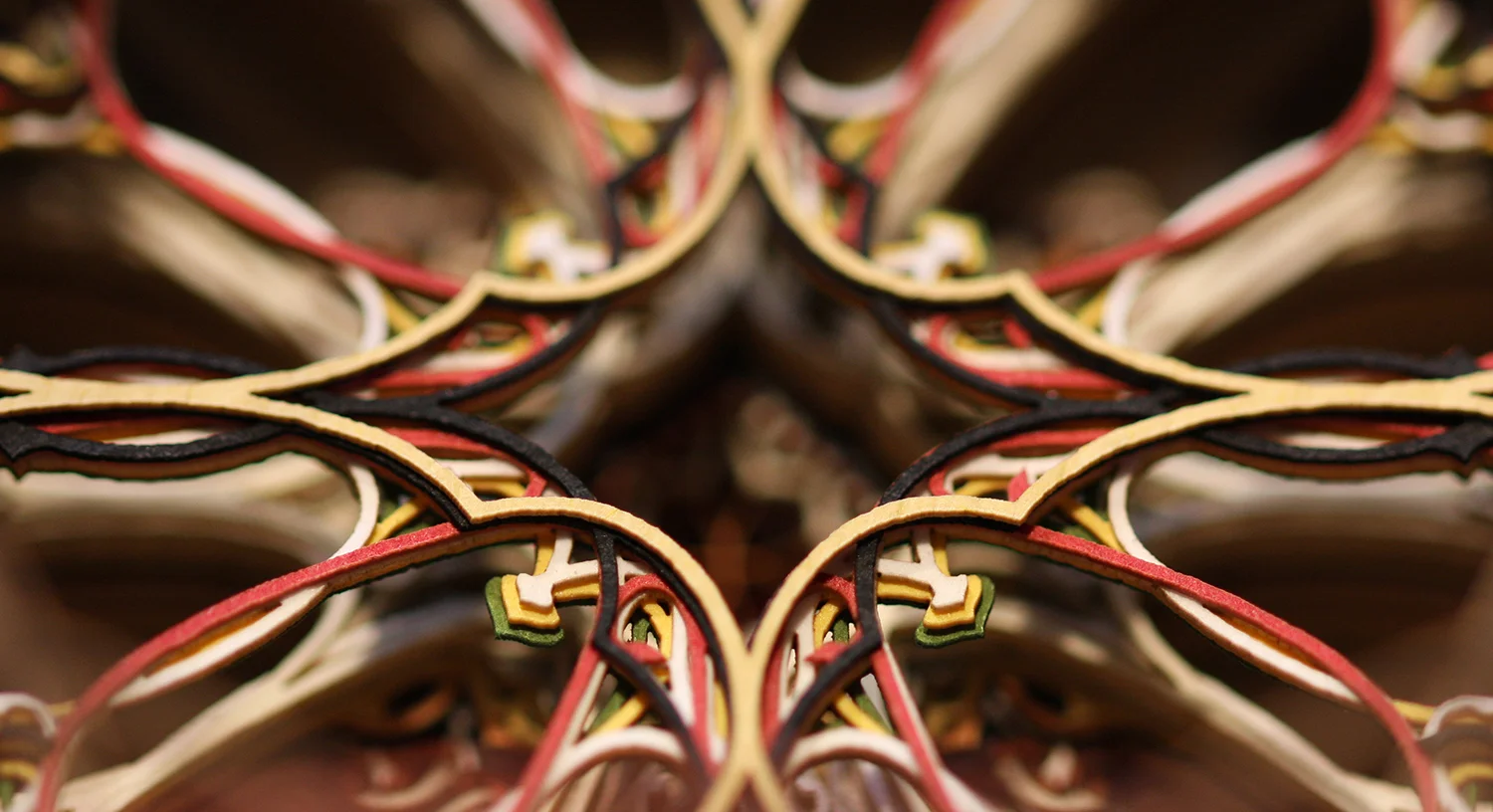
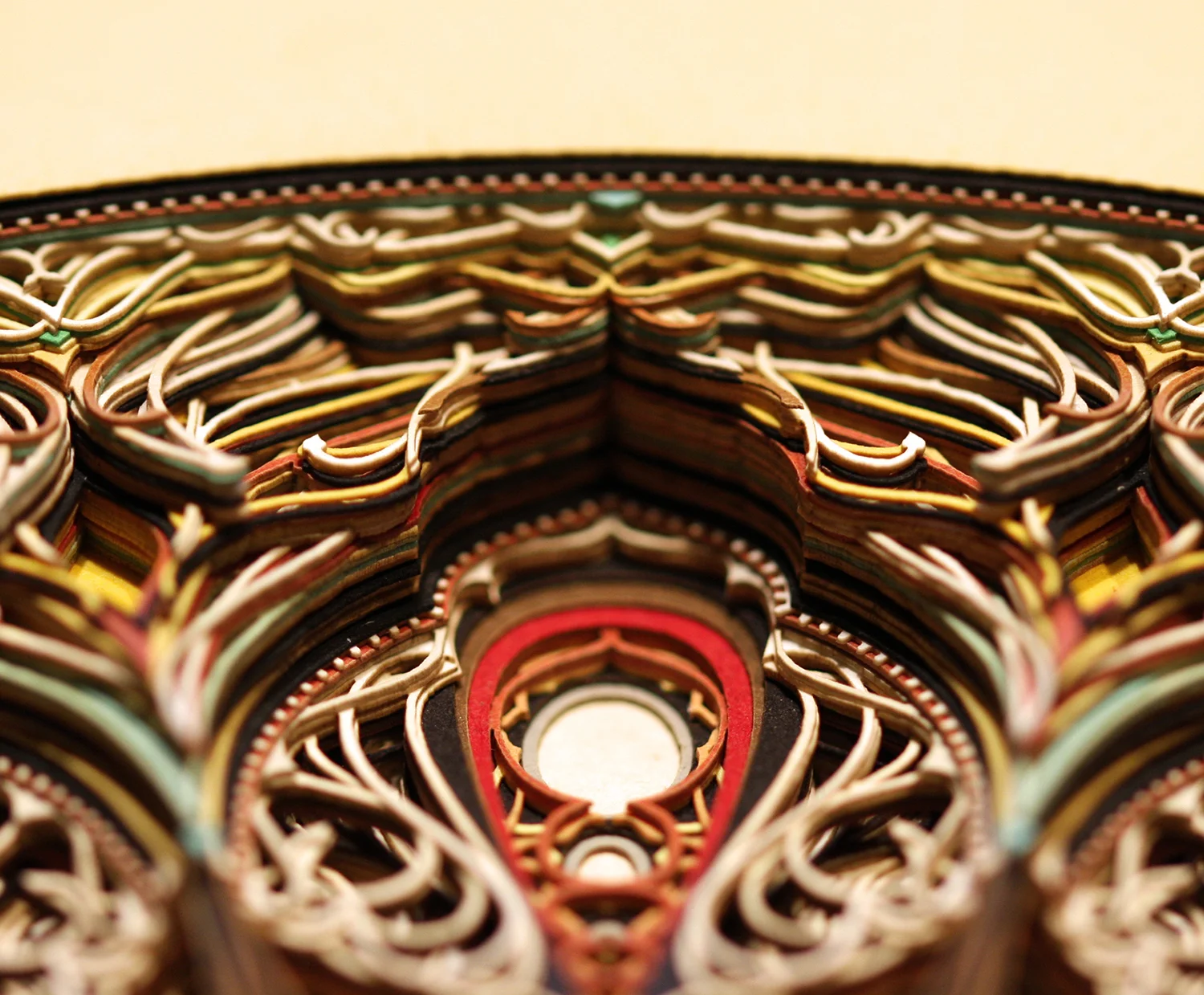
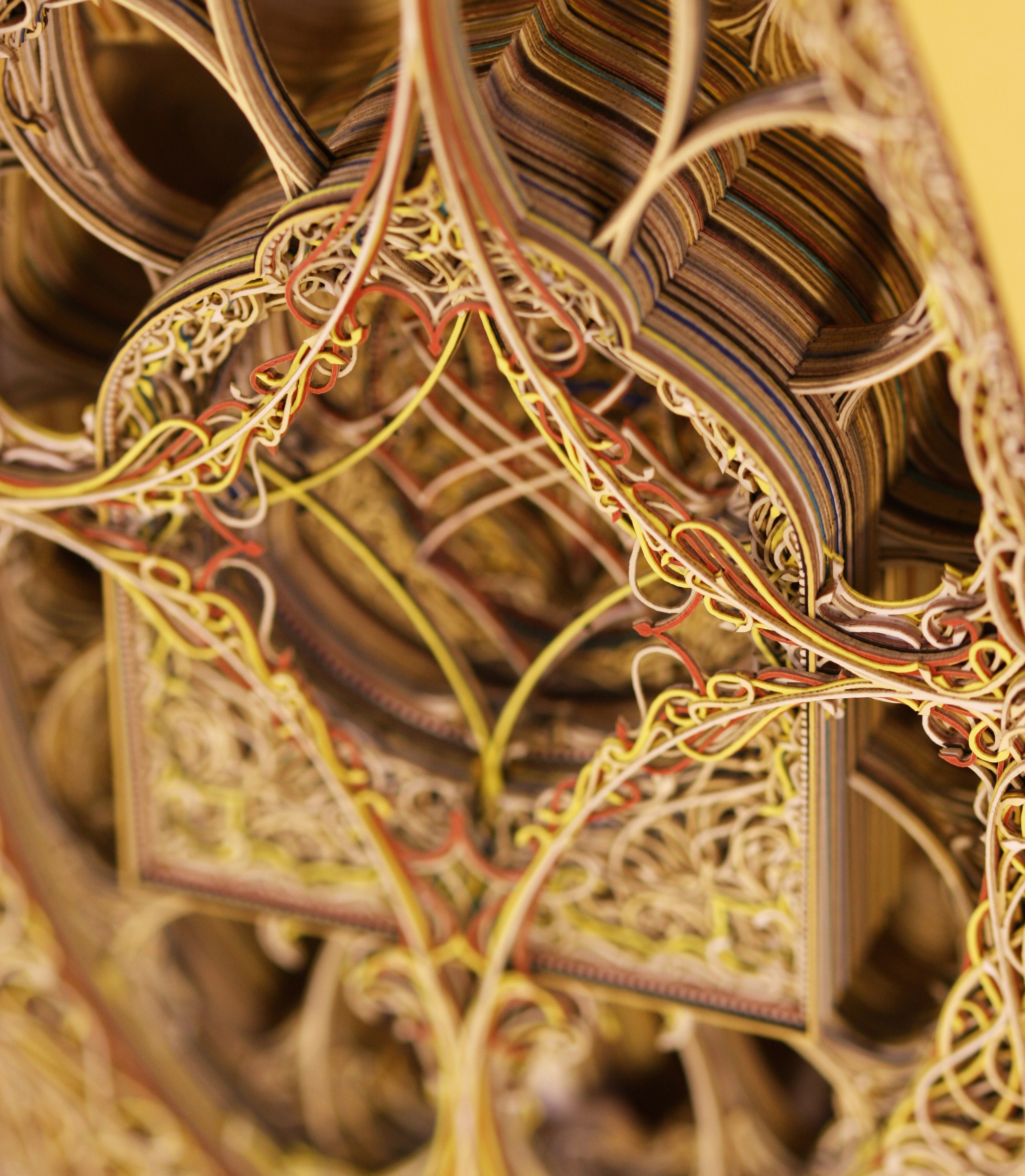
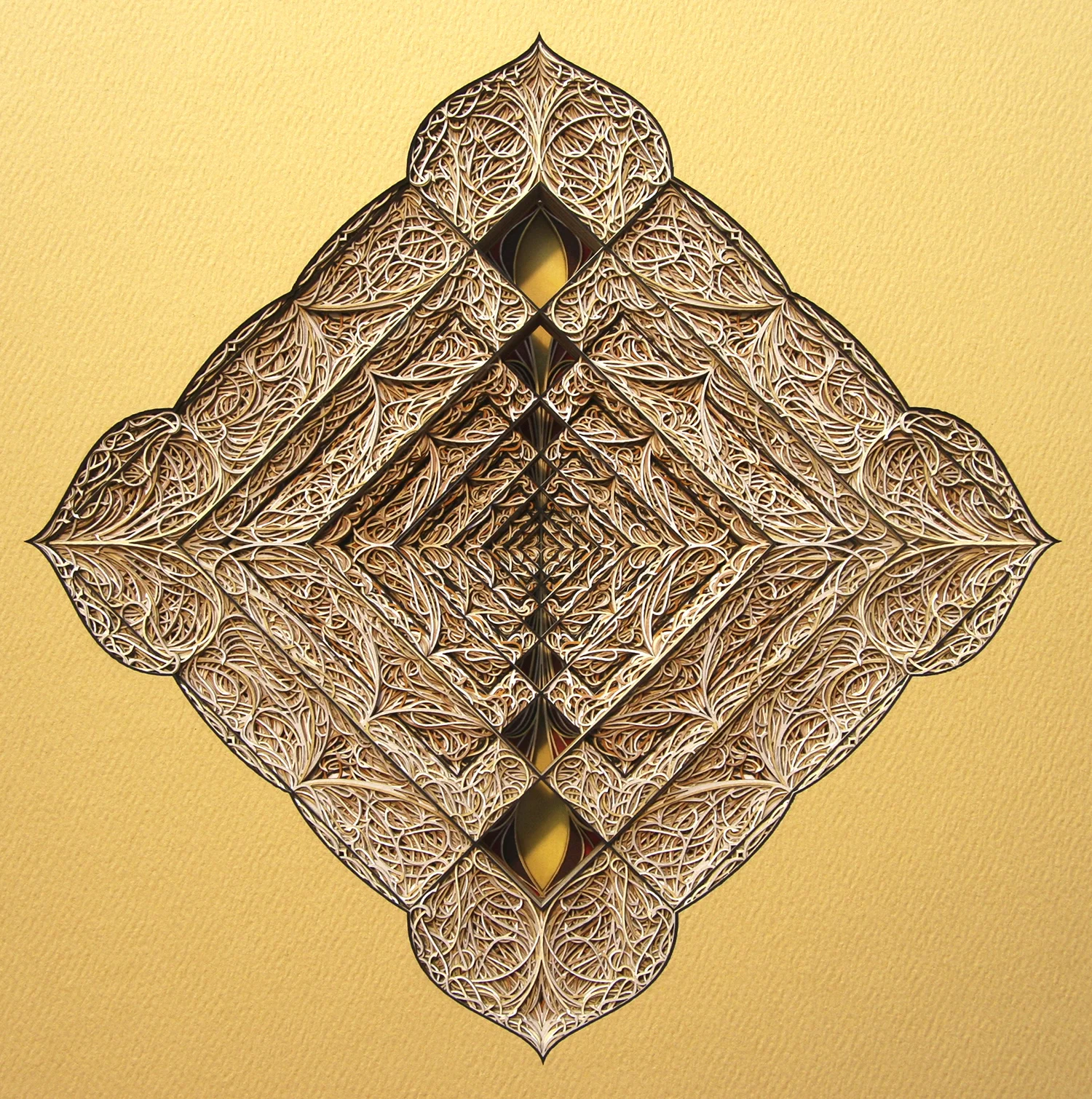
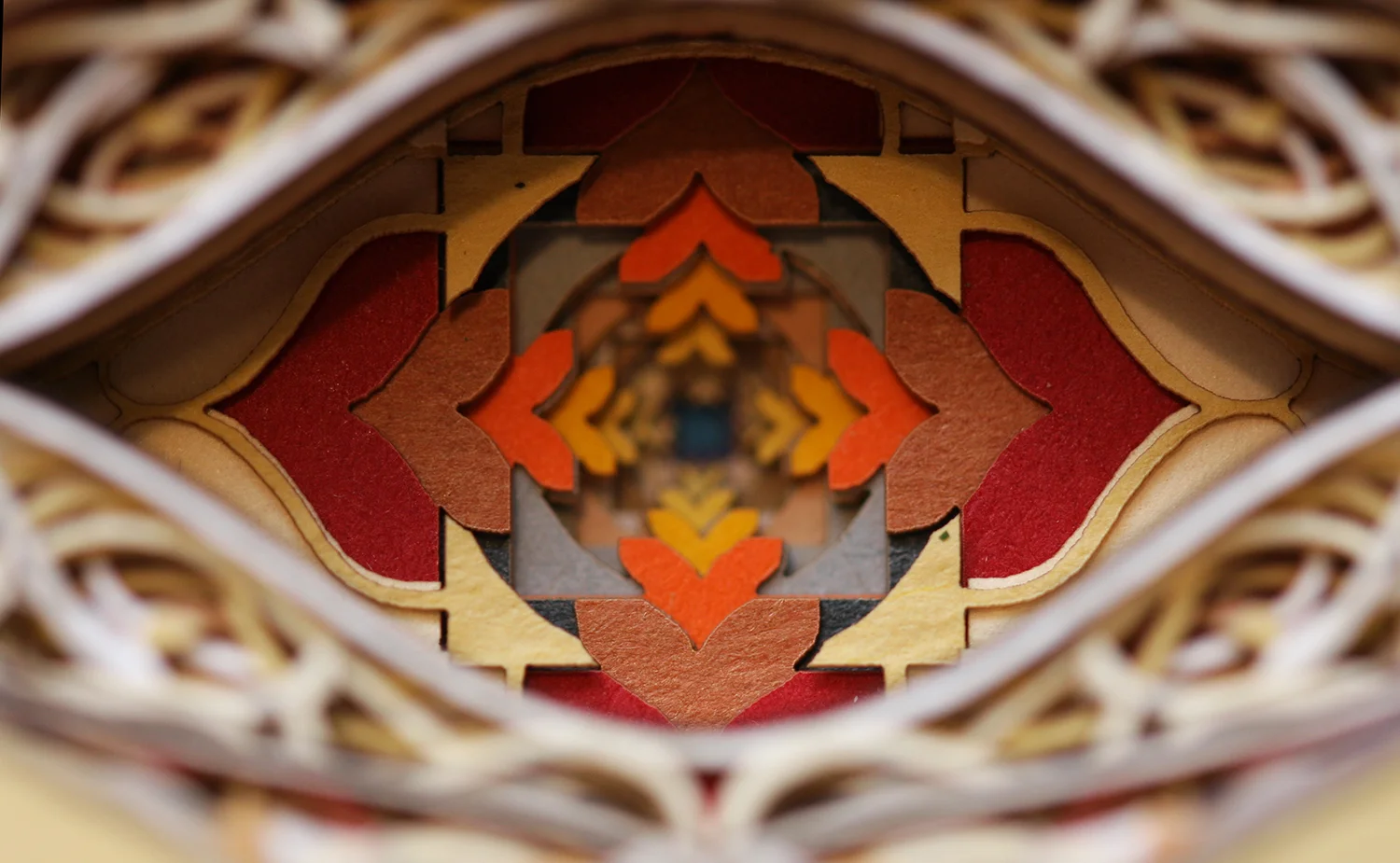
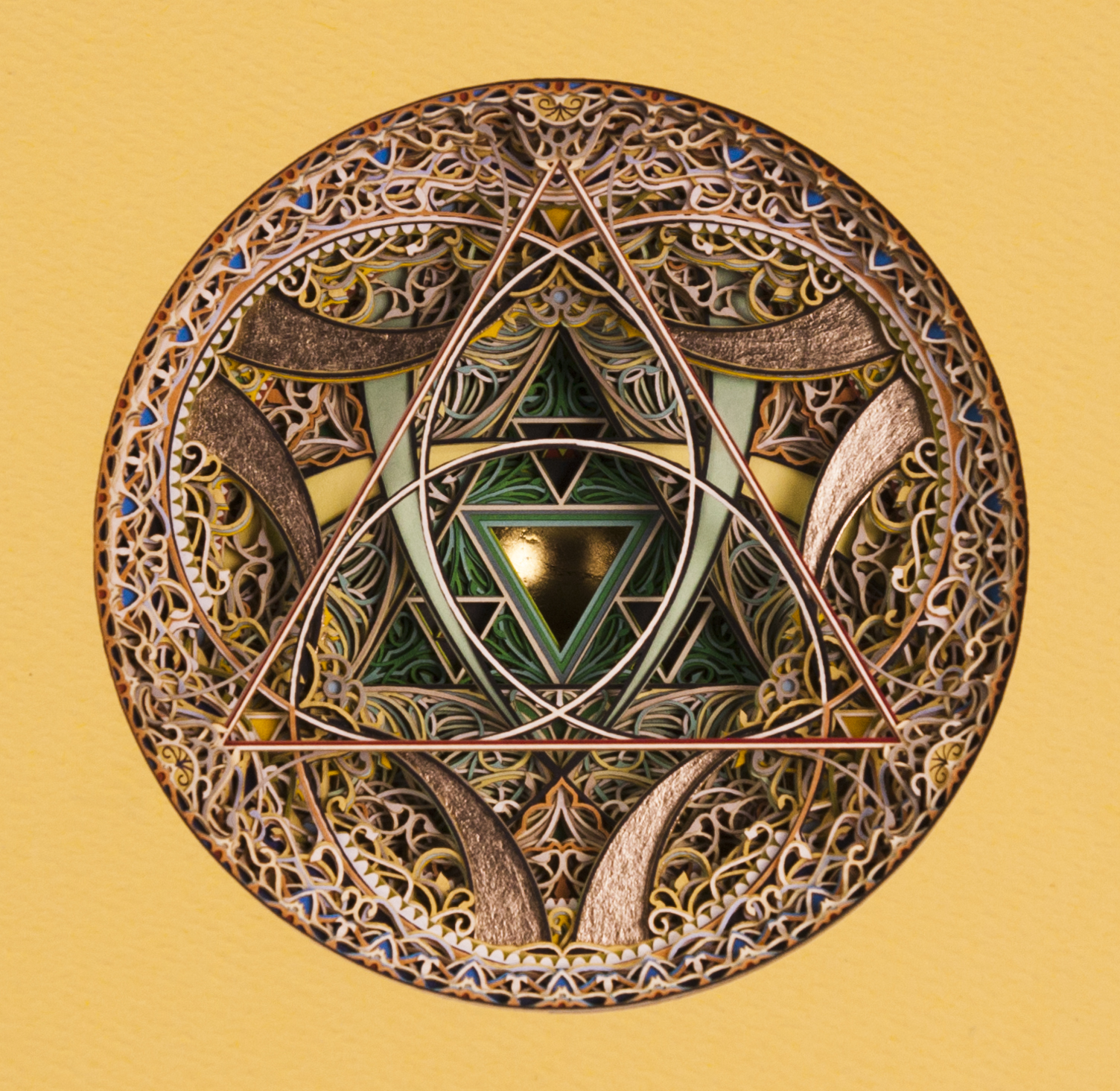
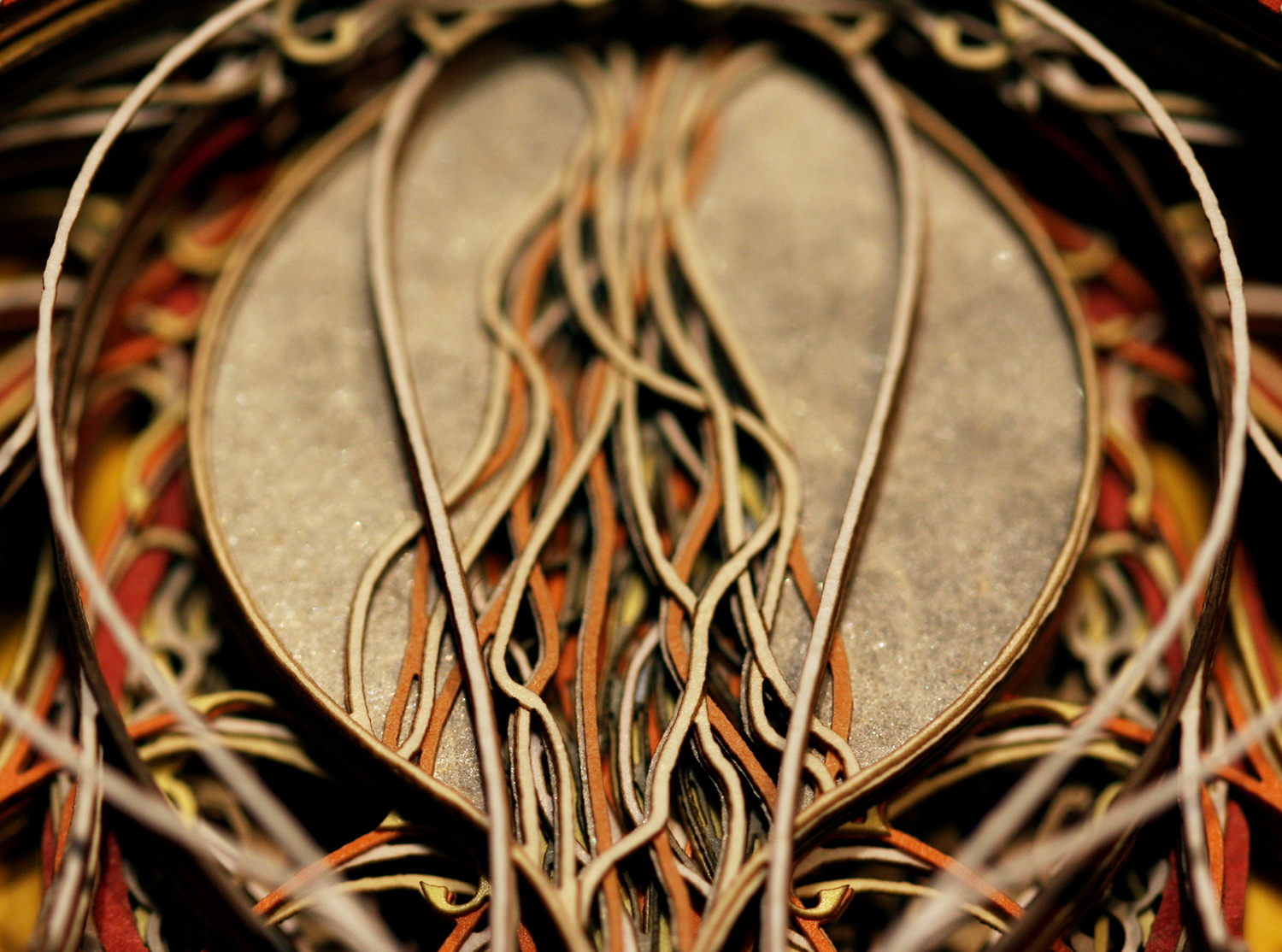
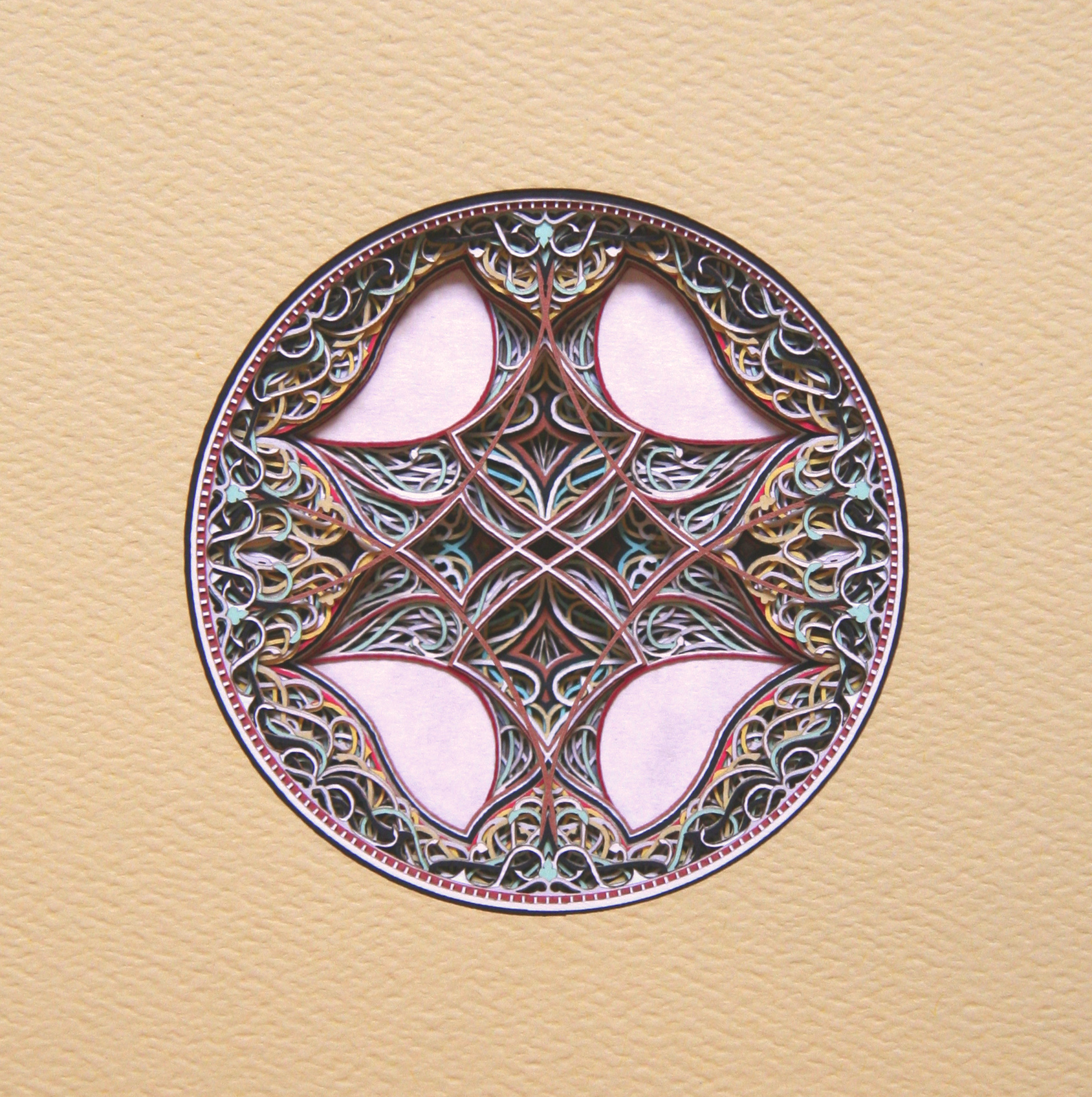
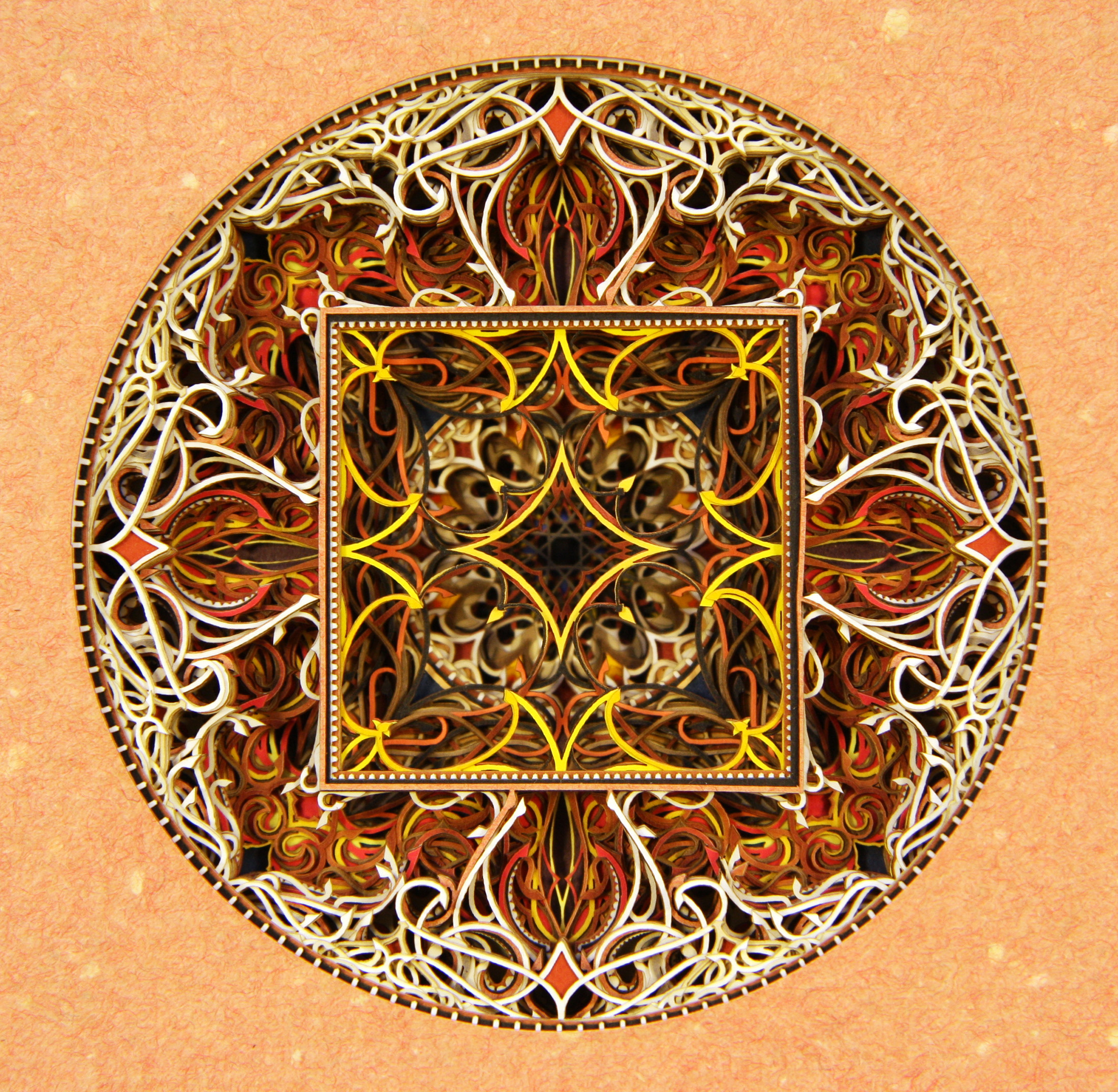
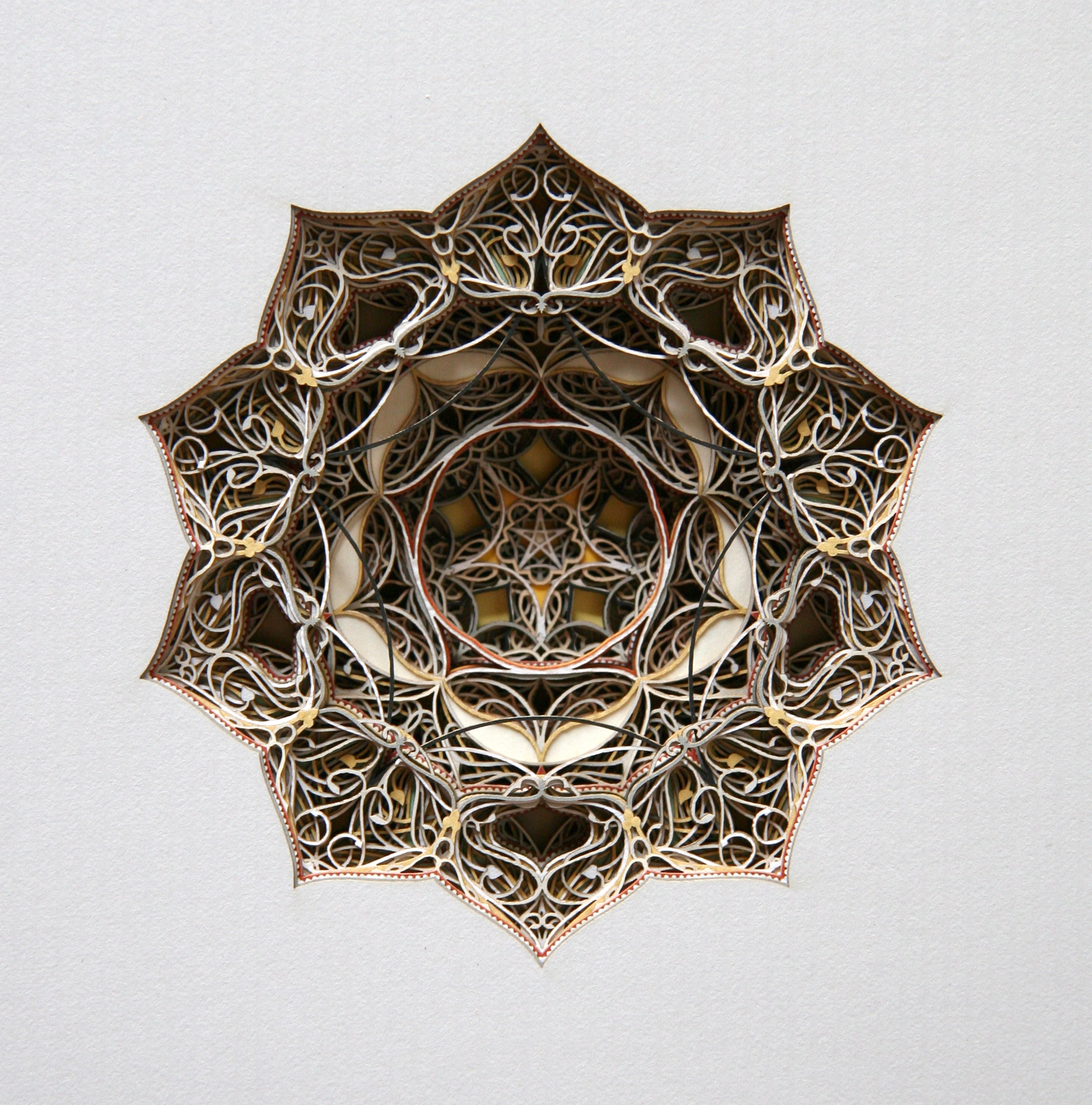
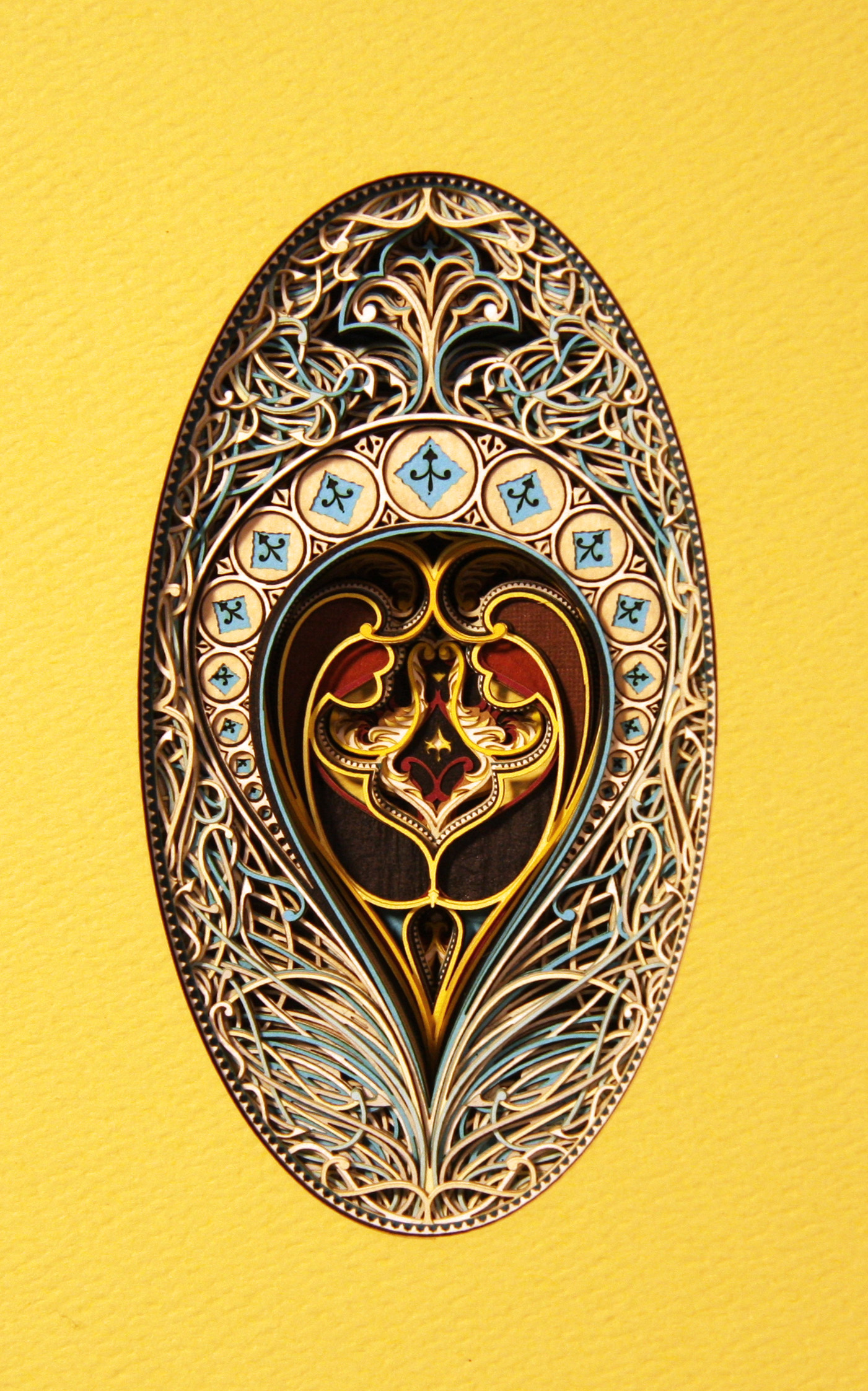
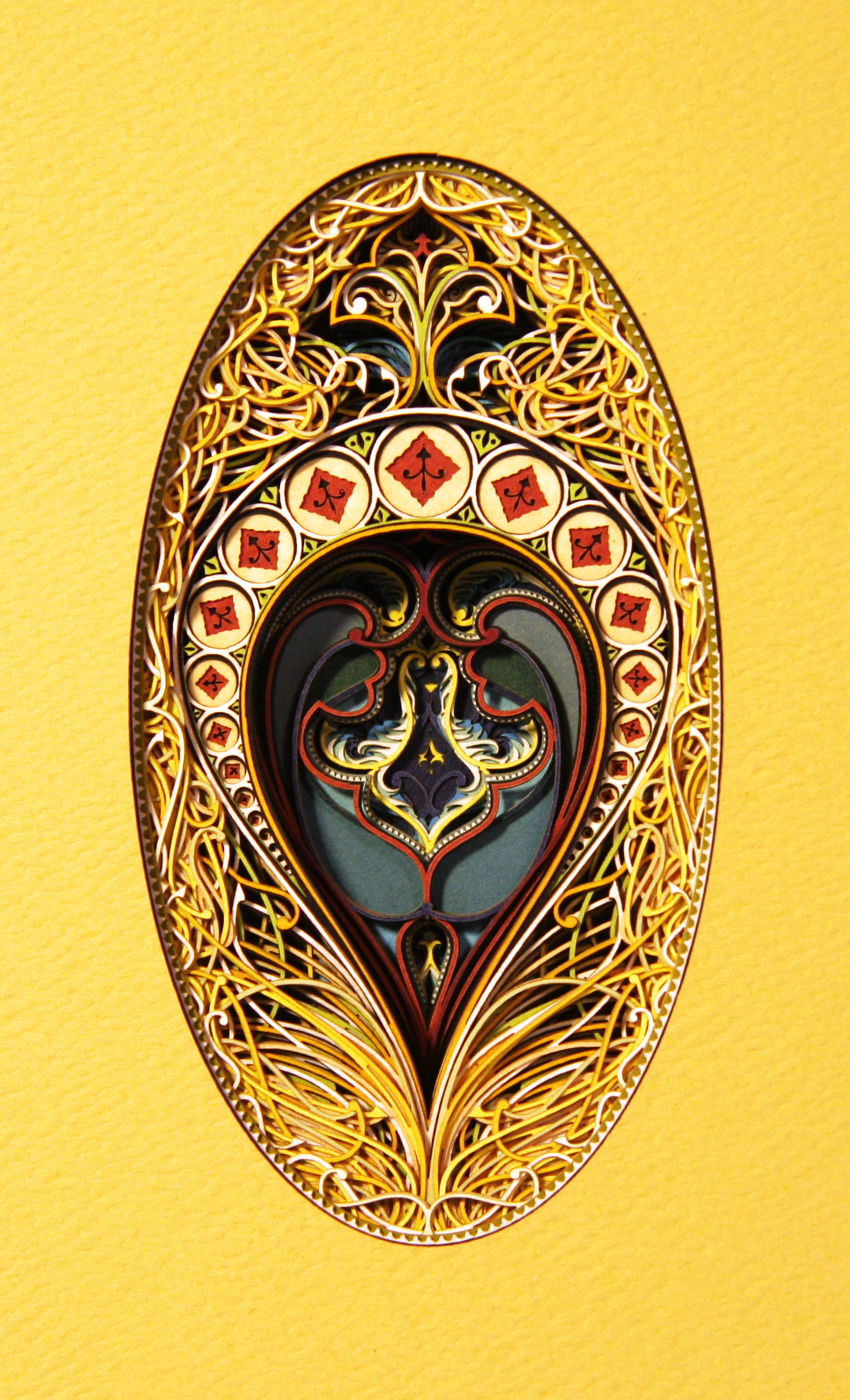
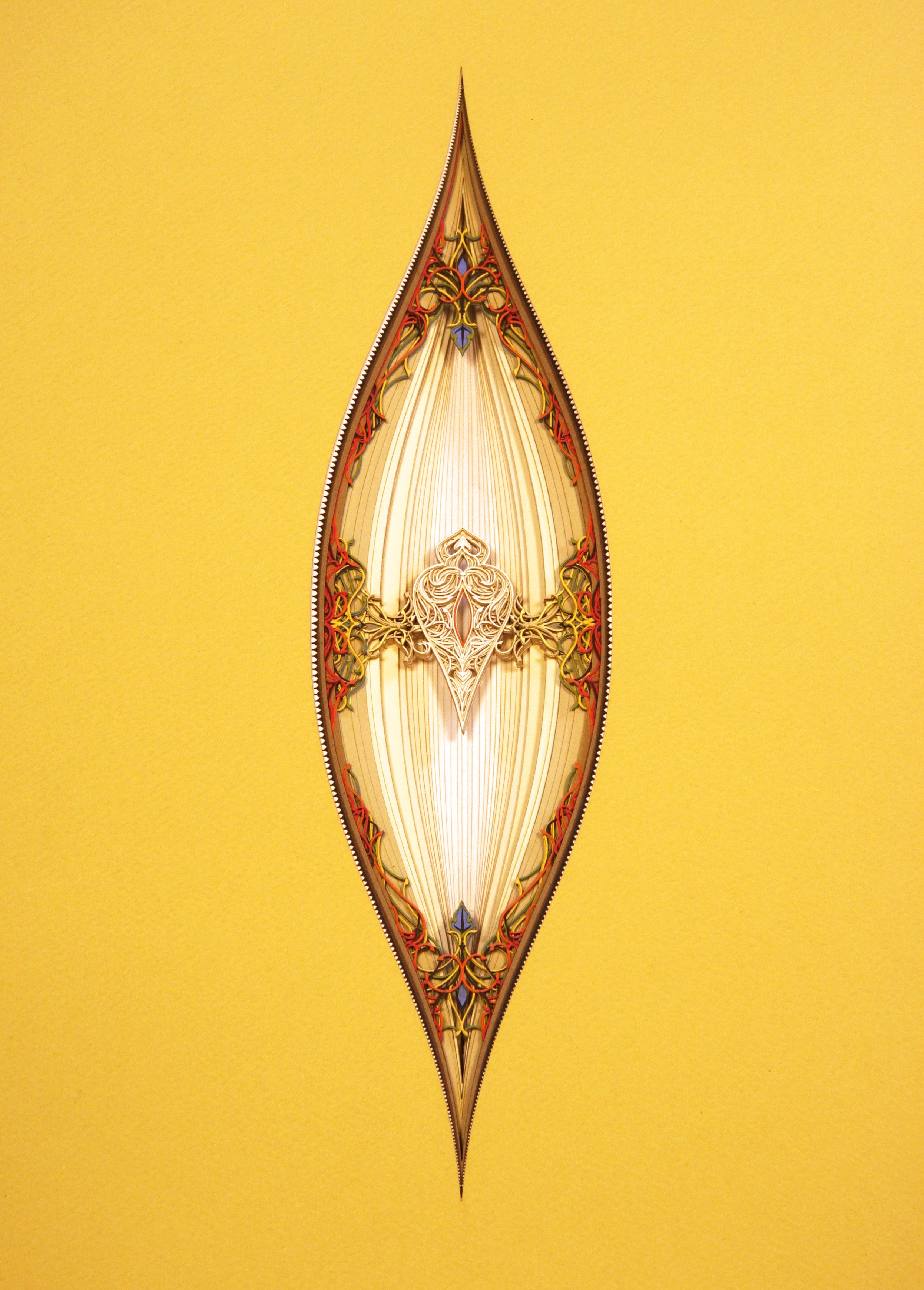
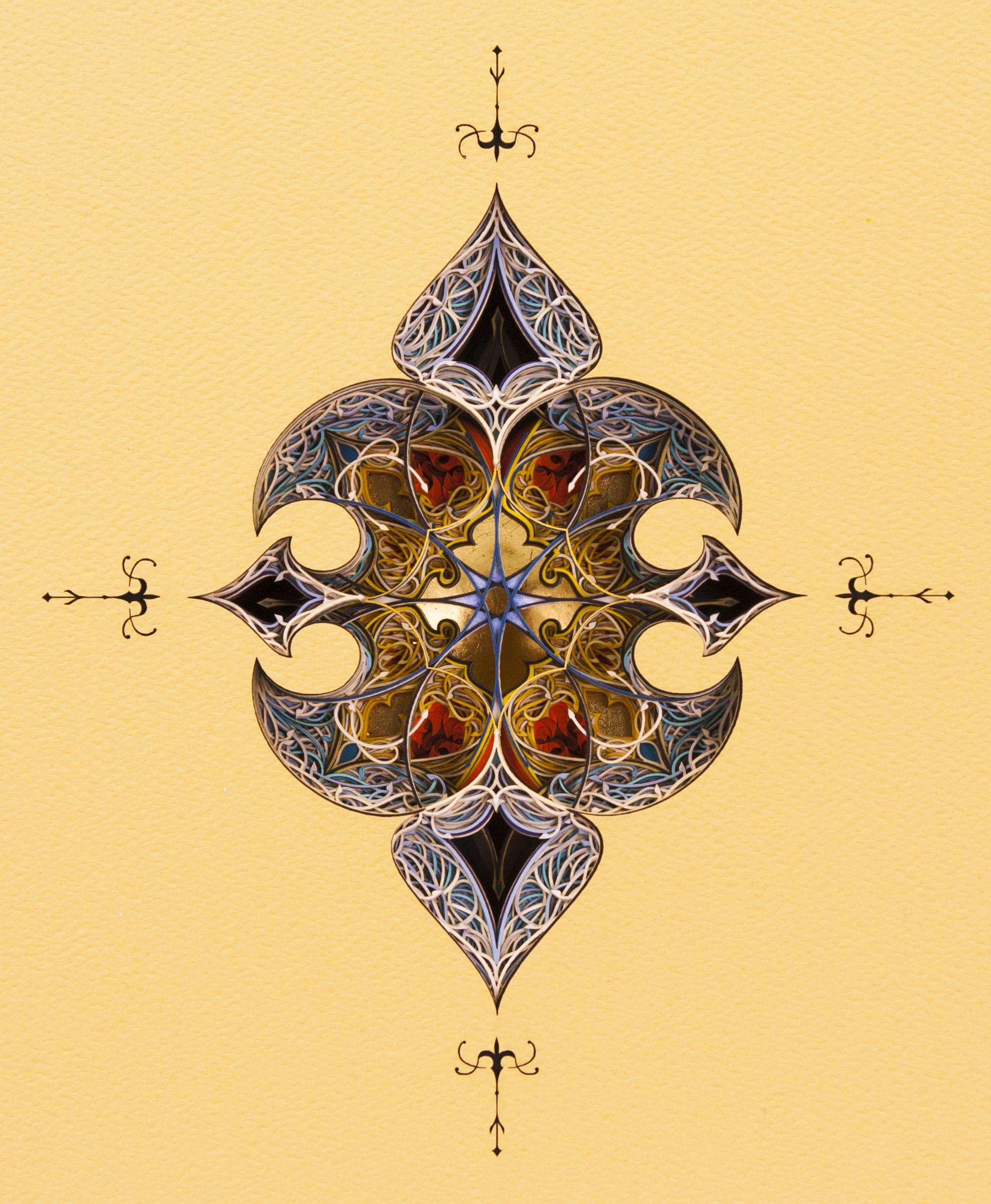
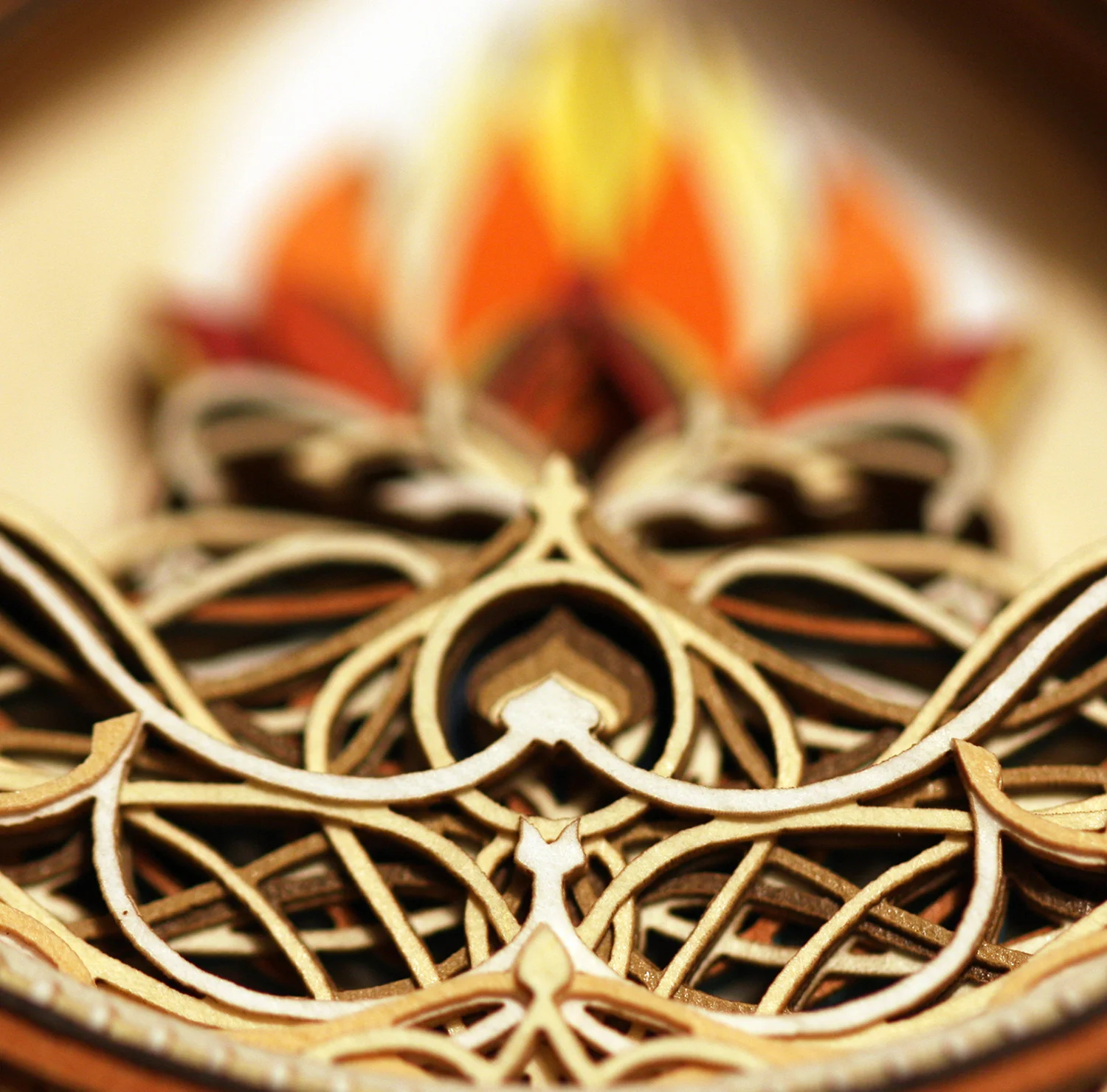
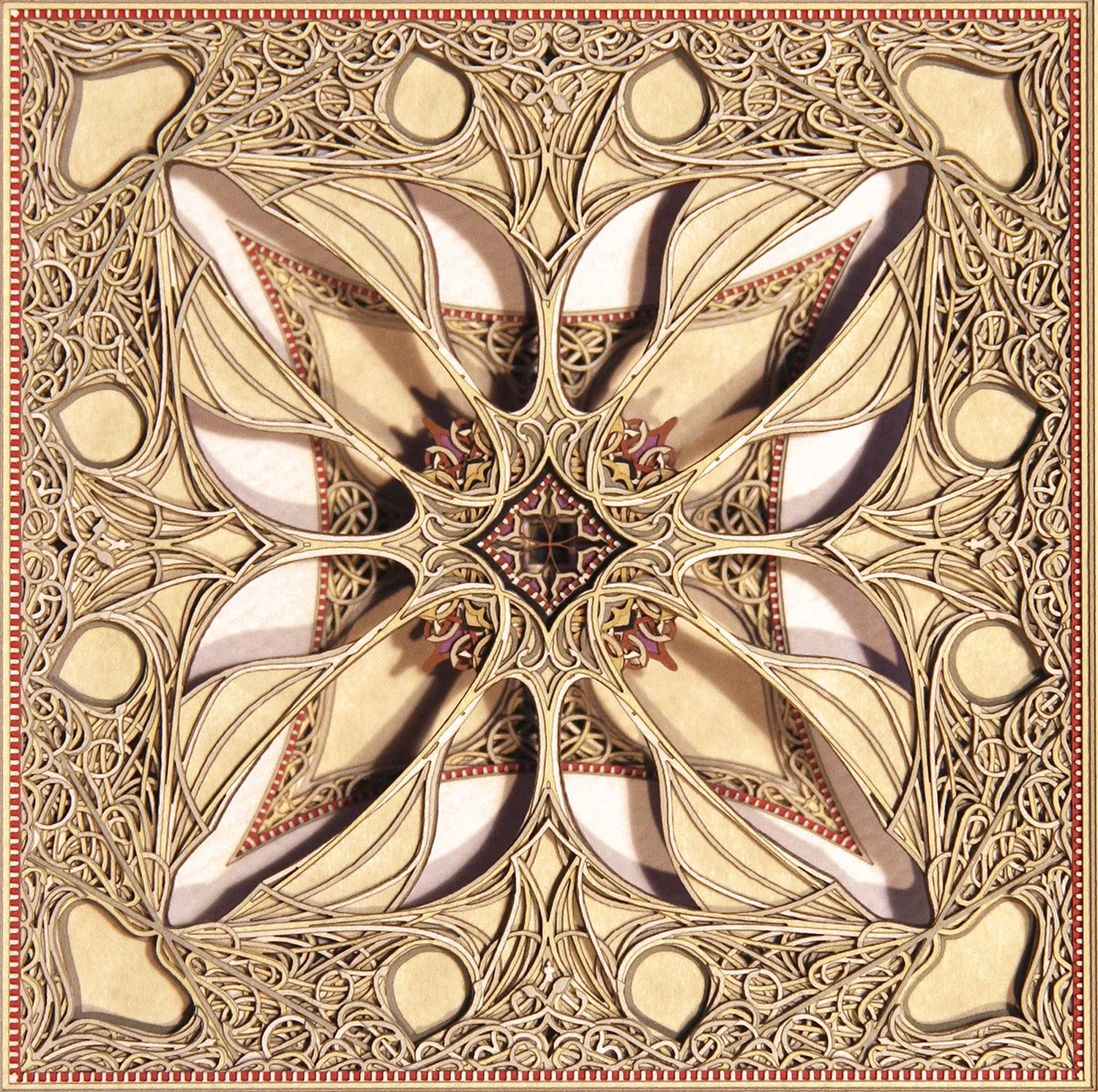
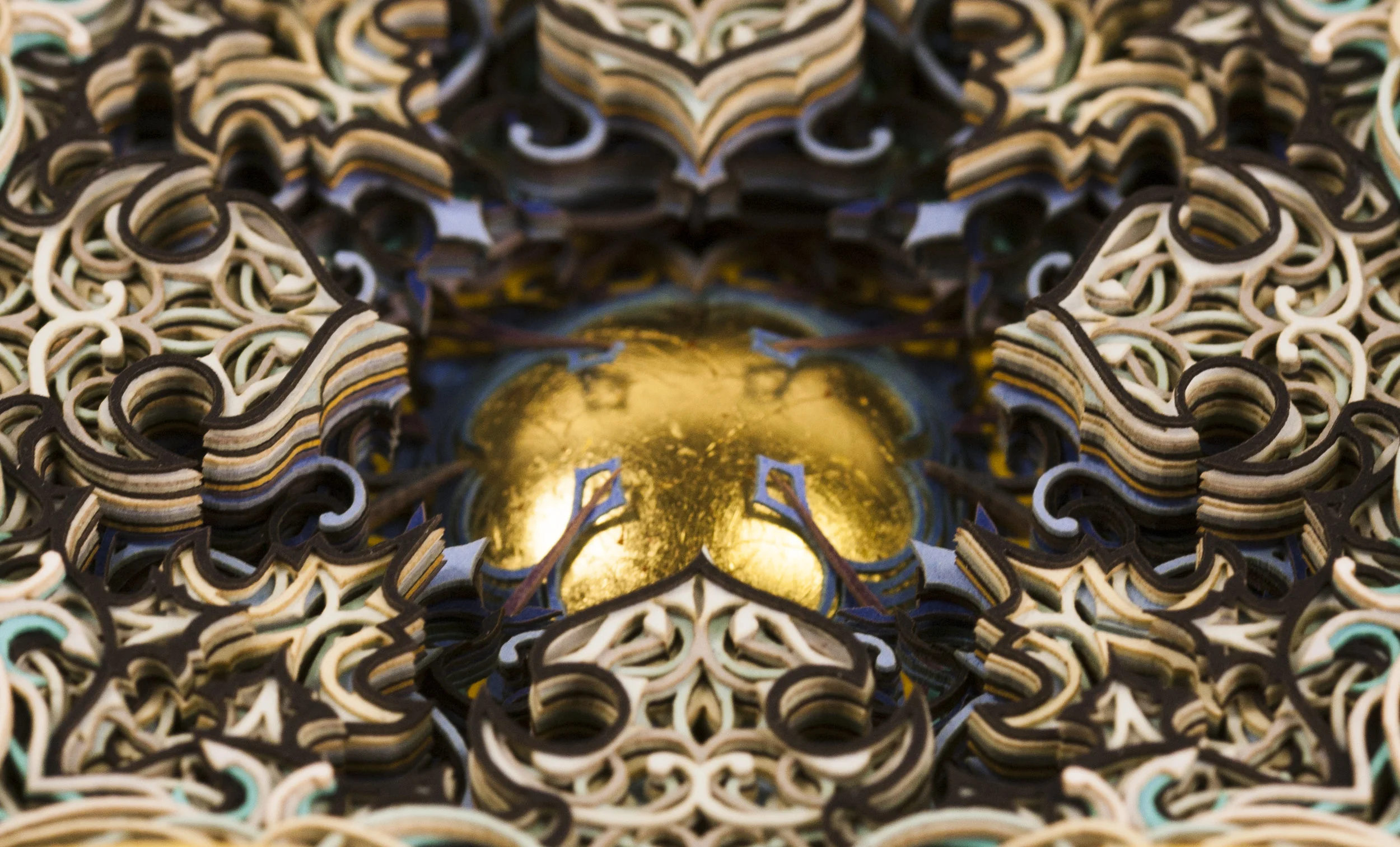
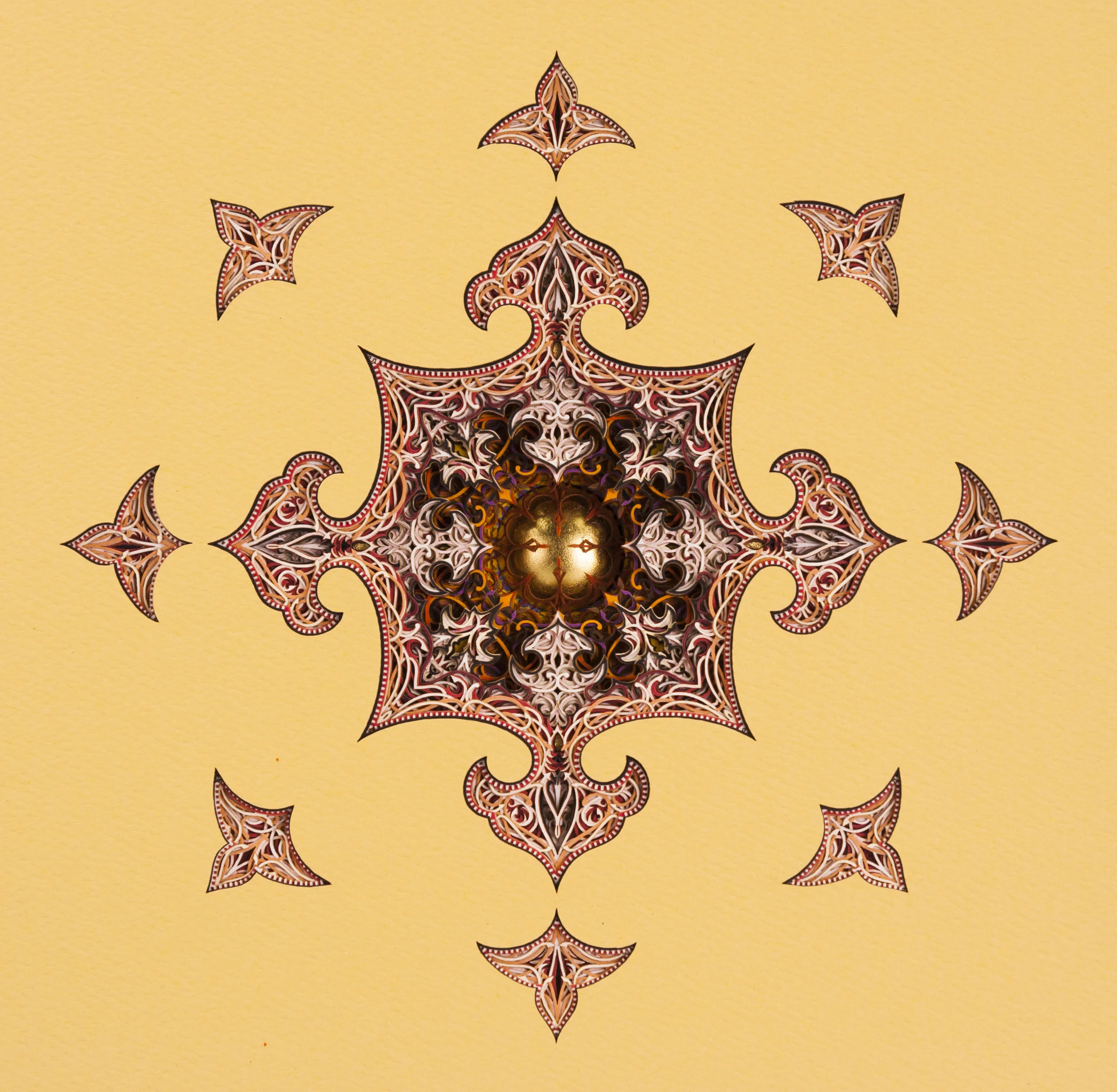
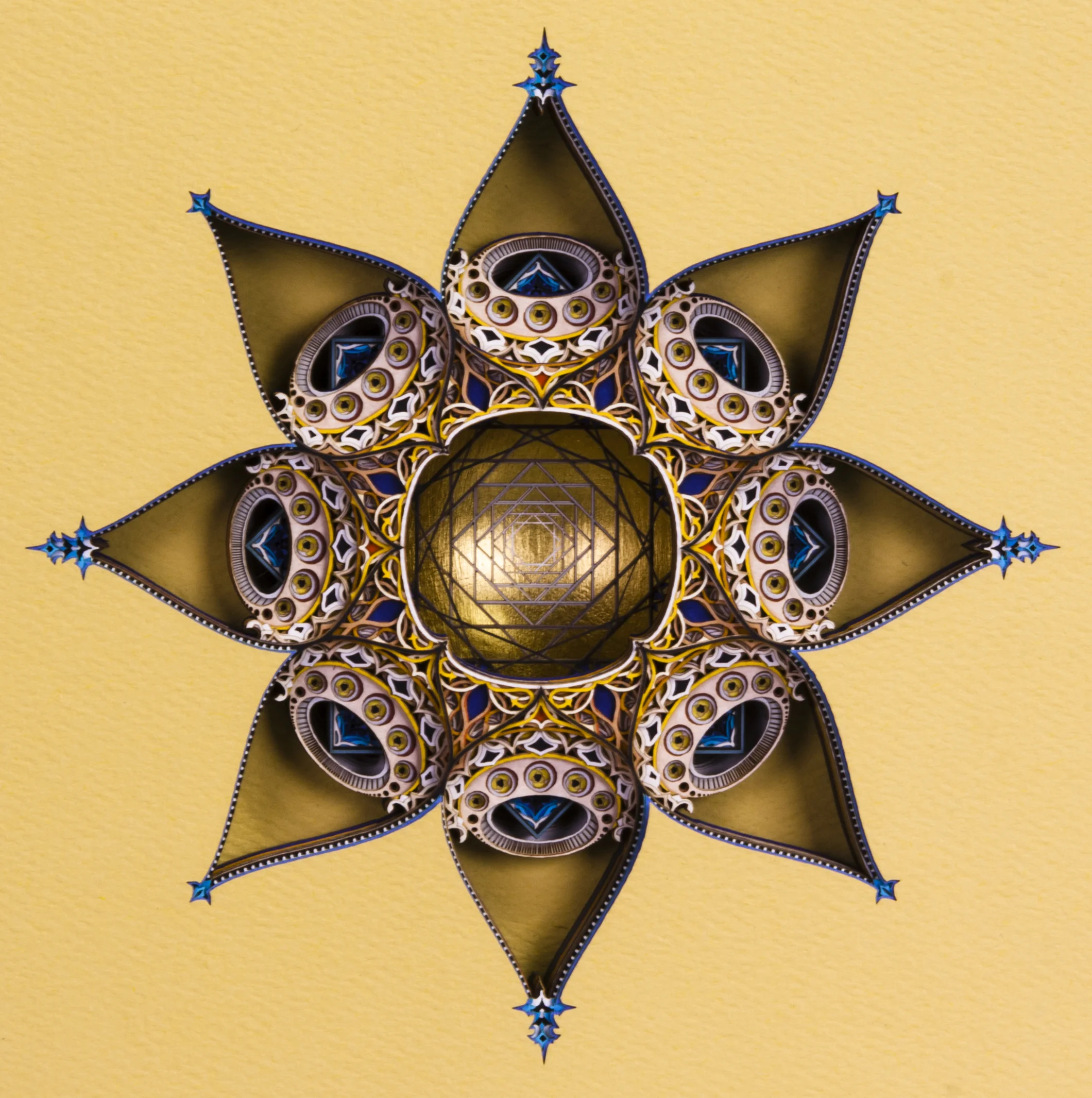
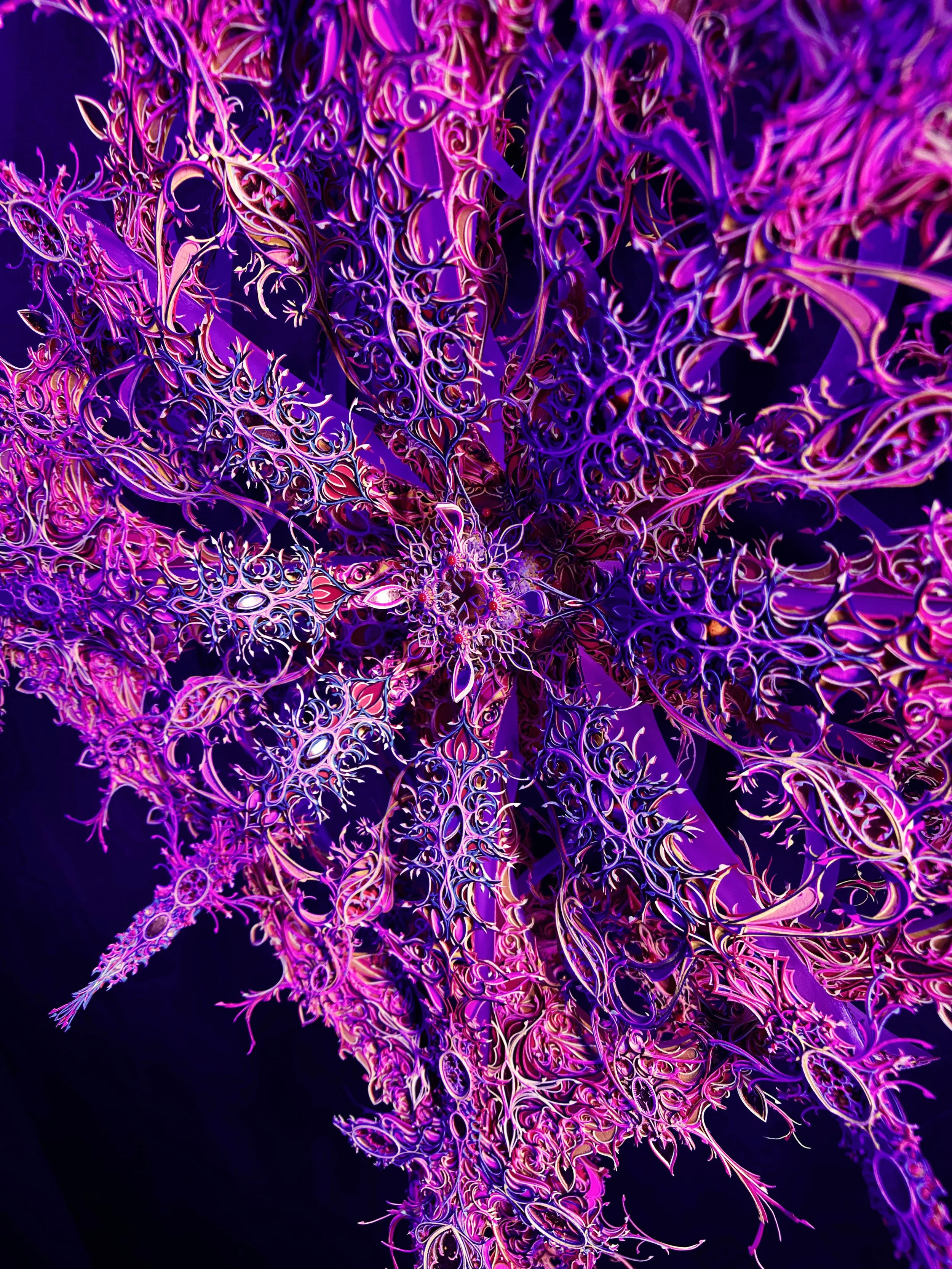
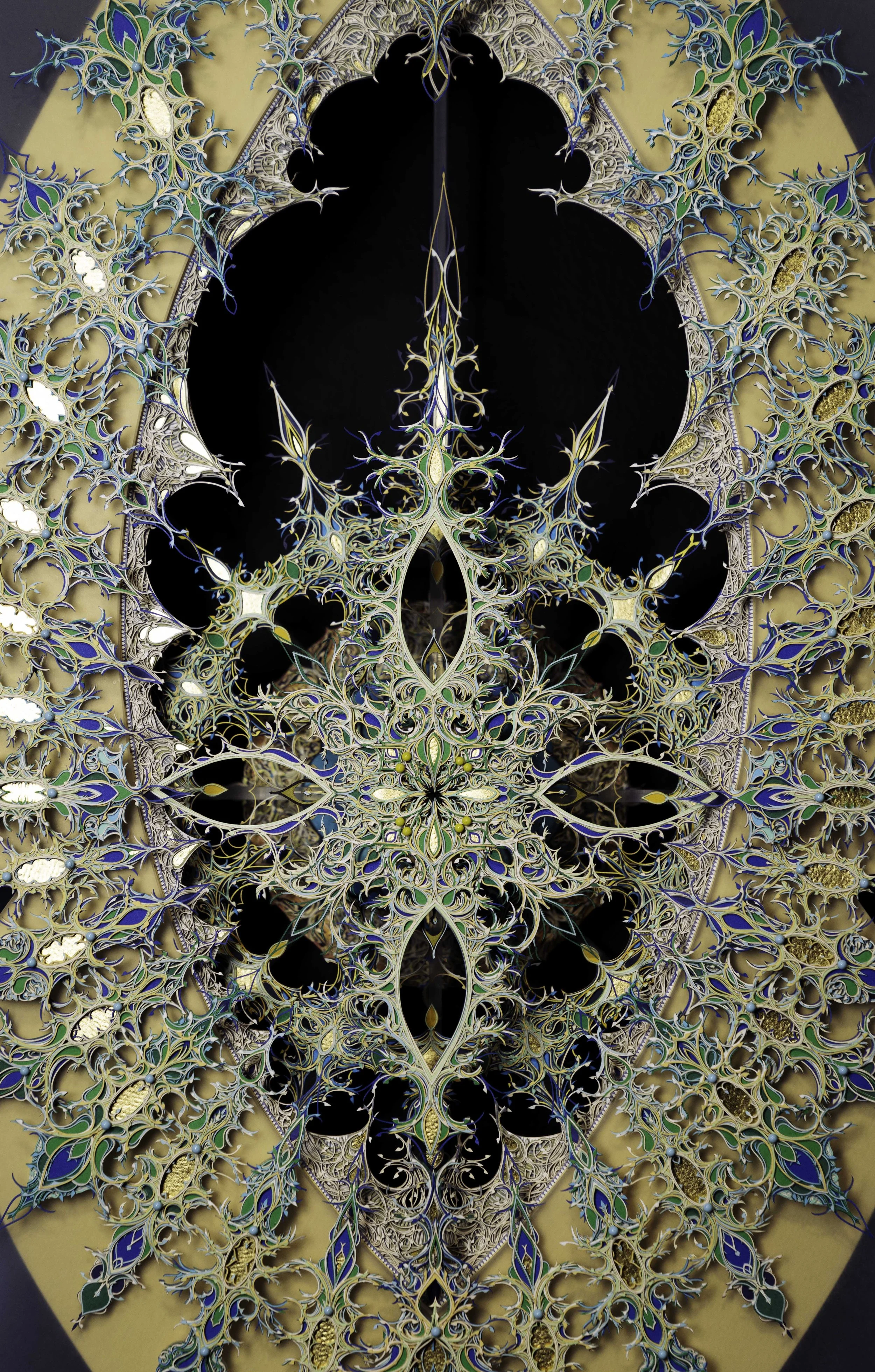
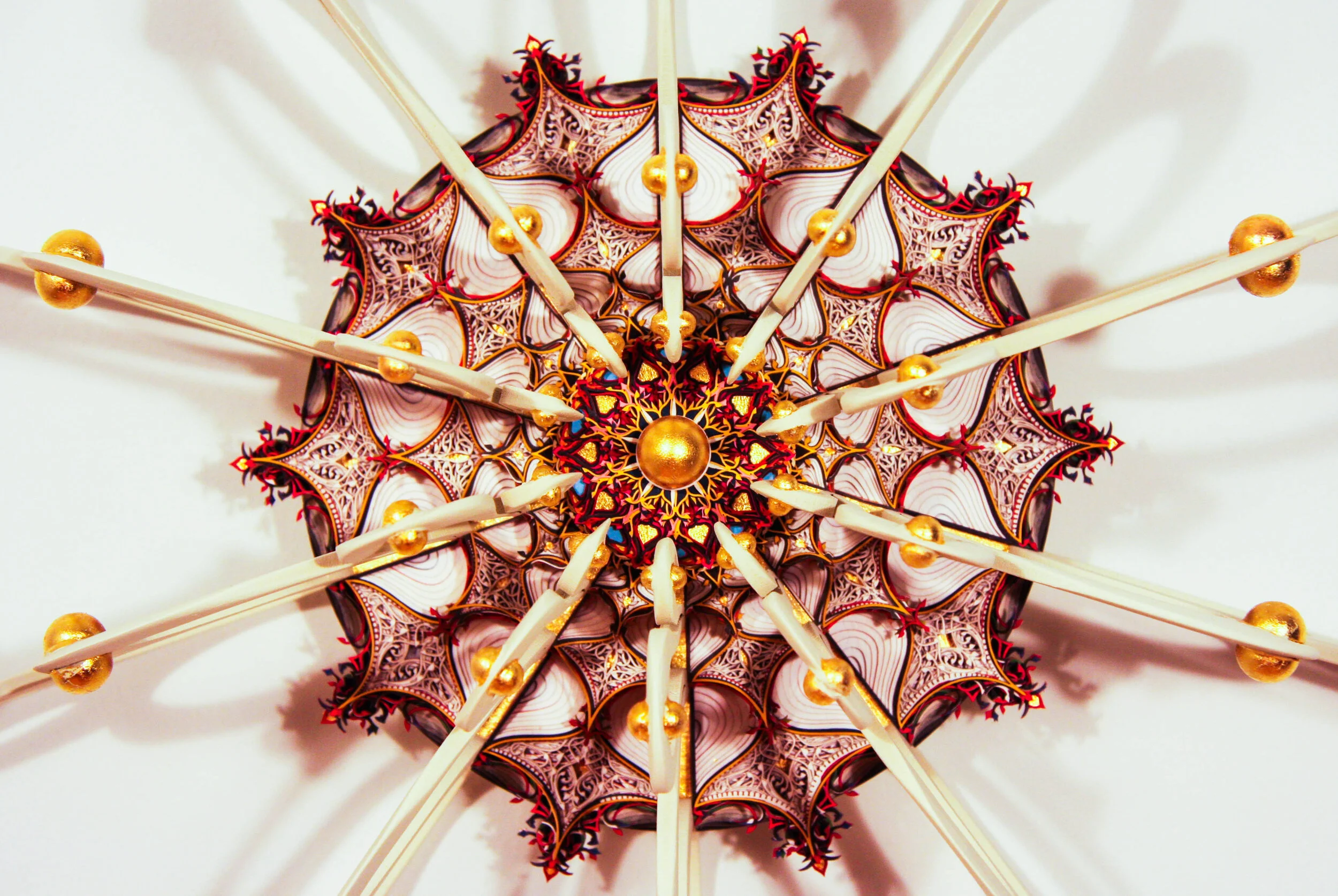
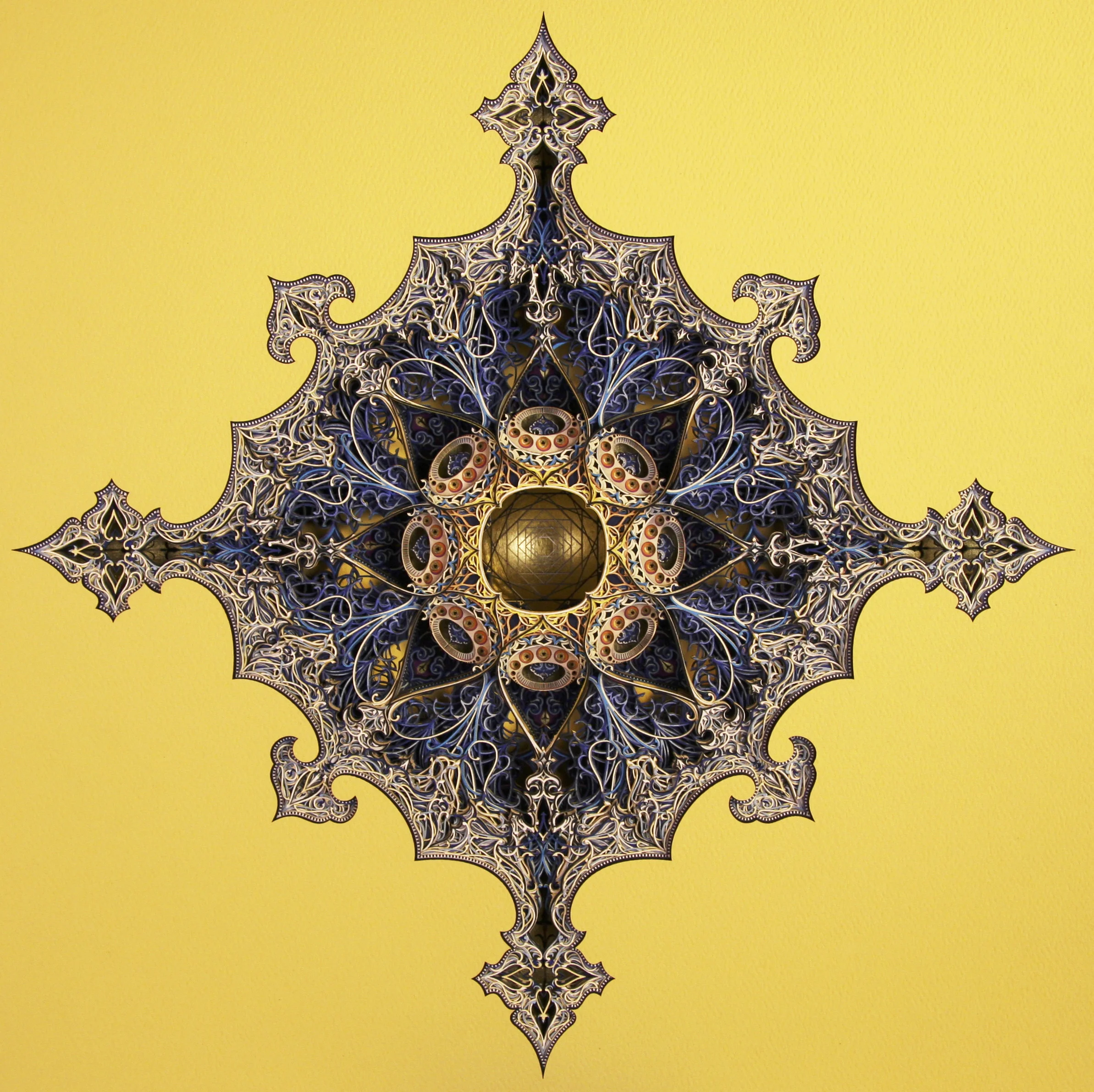
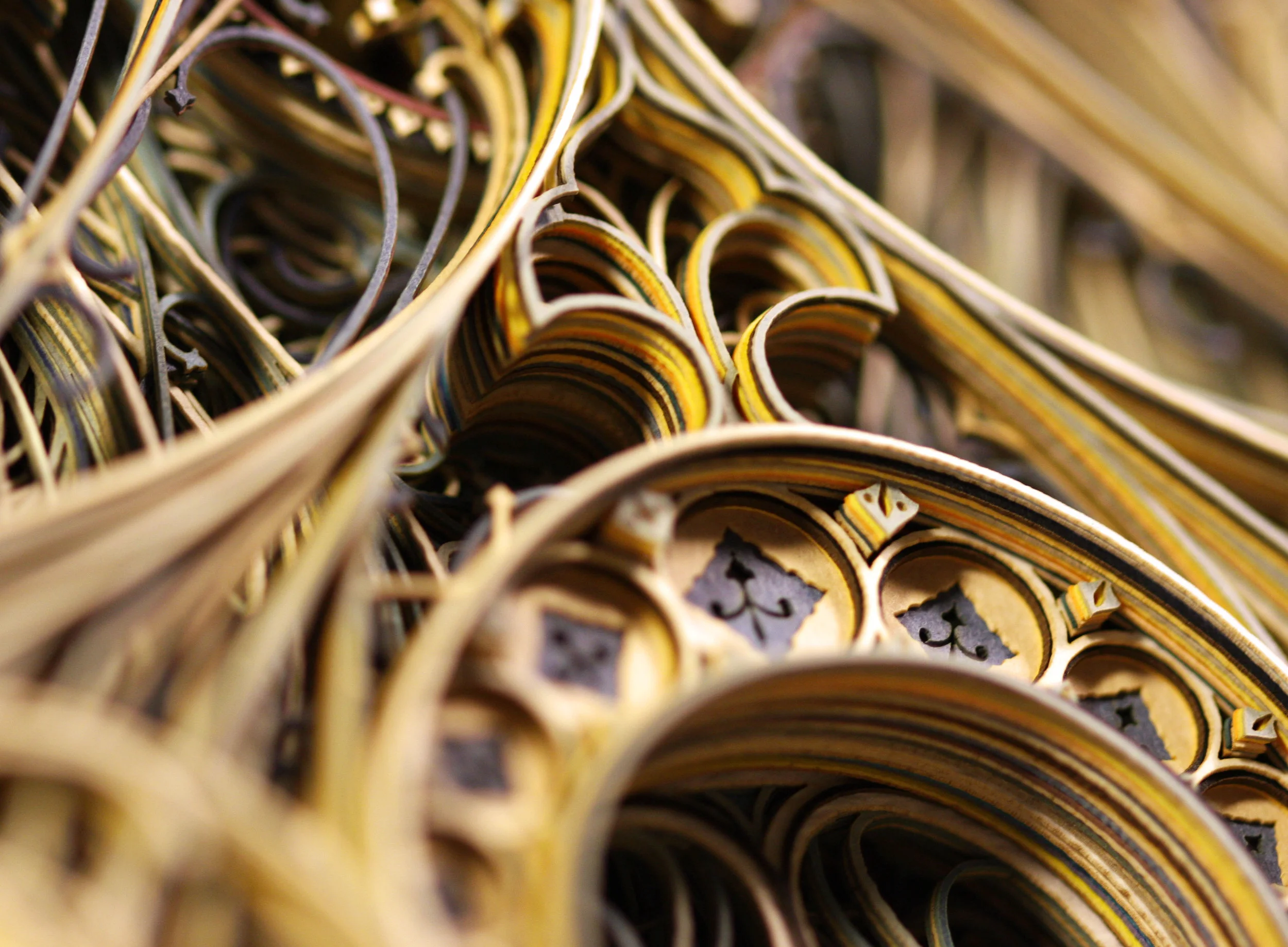
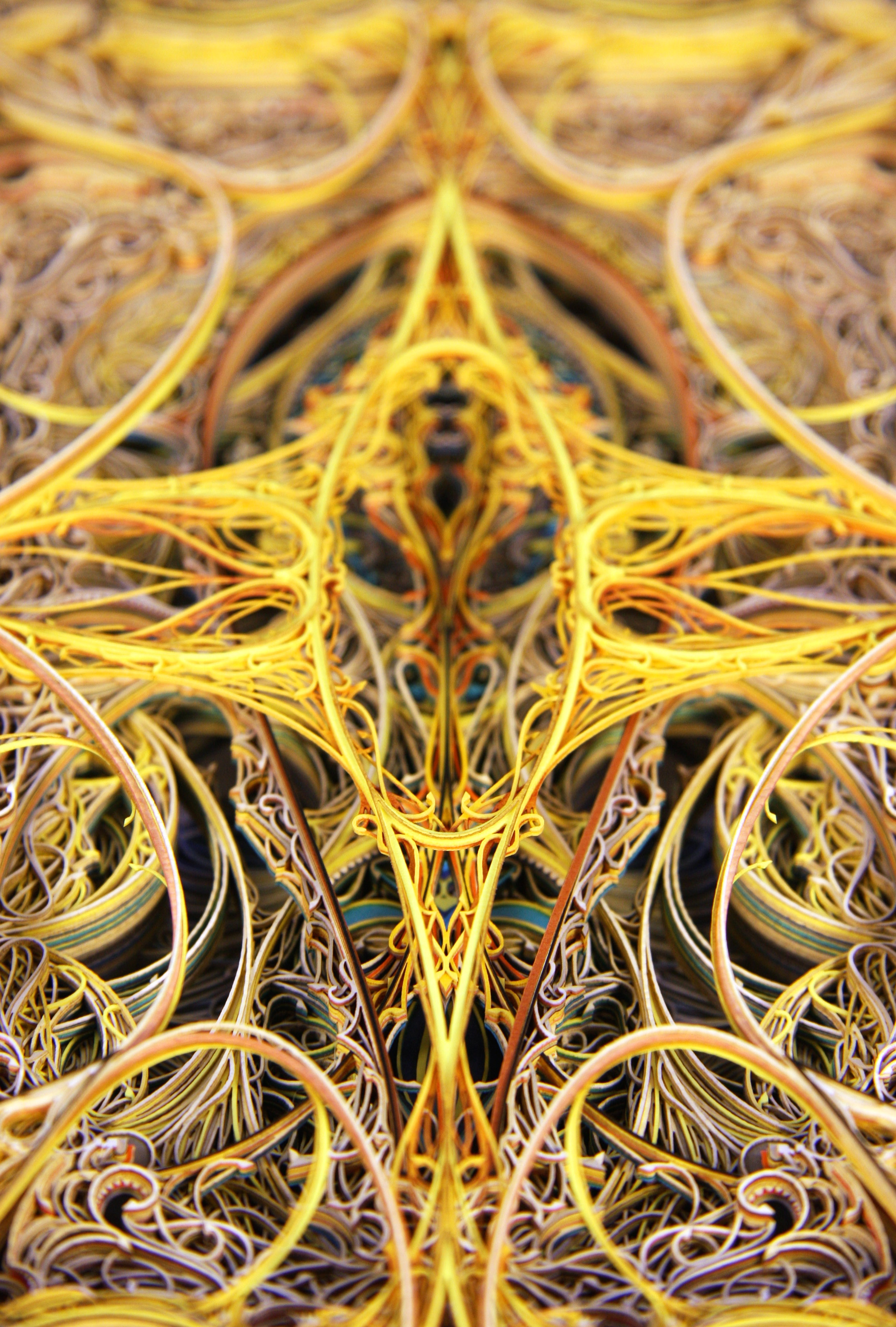
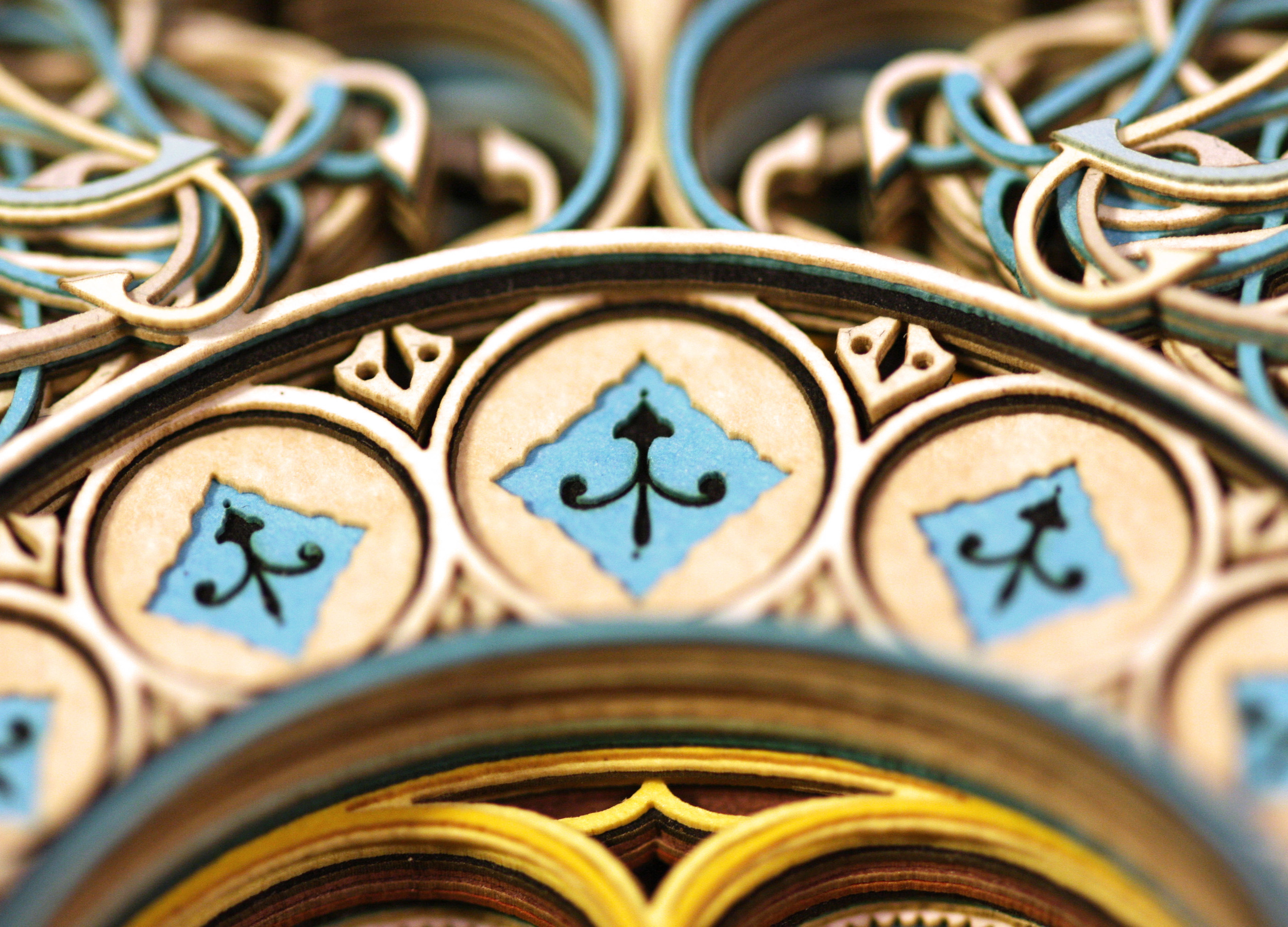
The central composition is cut from 98 separate sheets of paper. The horizon seascape was created from a digital photo of the Ipswich Bay of Massachusetts, printed and painted on canvas with oil and acrylic.